Category Archives: Faith & Science

Astronomical Love

I like astronomy. I suppose my fascination with it first came about through a number of sci-fi films. I can easily escape the busyness and burdens of life by losing myself in an old Star Trek episode or imaginative films like Mission to Mars, ContactSunshine, Prometheus, etc. I admit that I’m a nerd like that.

Did you see Gravity? Good movie, but a little stressful. I left the IMAX theater feeling as if I had actually been to space.

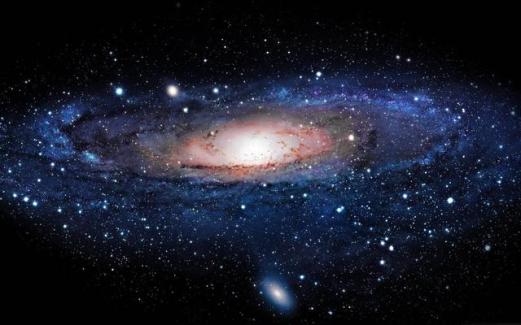
So there is the “escape” aspect of sci-fi and astronomy, but it’s primarily about the mystery and wonder of the universe—a universe that God created in love ex nihilo. I can’t help but think about the majesty of it all.

It’s just as David describes in Psalm 8:3-5 (NIV).

“When I consider your heavens,
    the work of your fingers,
the moon and the stars,
    which you have set in place,
what is mankind that you are mindful of them,
    human beings that you care for them?
You have made them a little lower than the angels
    and crowned them with glory and honor.”

I’ve lost count of how many times I’ve looked up at the night sky, peered through a telescope, or watched How the Universe Works on the Discovery Channel and remembered the words of the psalmist.

I’ll never forget a dear philosophy and ethics professor from college describing how he came to faith by gazing at the vast star-lit sky overhead. He experienced the love of God in that moment. It transformed him.

When I survey the heavens, I too think about God’s astronomical love.

God’s love is greater than the mysterious gravitational pull of a black hole. His love is more astonishing than the mass density of a pulsar—far more brilliant than the beacon of light emitted into deep space by its revolution.

His love is the greatest force in the universe. Yet we’re not crushed by the weight of it, nor are we blinded by its light. Instead, we’re illumined by this love and set free by its salvific power. We’re made lighter in his love.

While I marvel at the beauty of the universe, and I’m left in awe by the works of his hands, it is the cross of Christ that is God’s masterpiece. It is the cross that gives meaning to love and accentuates the mighty cosmos.

The Creator’s astronomical love has been clearly revealed in the cosmic Christ. And this same Christ, through whom God created the heavens and the earth (Col 1:16), loves YOU!

Reflect on this liberating truth today, tomorrow, and as long as you have breath. Remember his love the next time you look up and see what he has made. And never forget that you are his most prized possession.

D.D. Flowers, 2014.


Does God Exist?

It may sound strange that a Christian pastor and teacher would ever doubt the existence of God, but I confess that I have had moments where I stop and ask, “Does God actually exist, or have I been duped?”

For me I suppose it’s more like nagging thoughts or questions instead of a serious crisis of doubt. Nevertheless, I admit that my analytical mind can on occasion find it hard to take in Christian theology.

I believe this is perfectly normal for anyone who believes that faith involves reason and the embrace of mystery. As we learn and move forward in our journey, we often revisit some of the most basic presuppositions of our faith. It’s OK. It’s good. It’s healthy and should be done as needed.

Let’s be clear about this… Jesus never asked anyone to leave their brain at the door in order to have faith. But he does tell us that we must be willing to believe things unseen if we’re going to grow into faith-FULL people.

I have concluded that belief in God makes good logical and scientific sense. I’m most convinced by the historical resurrection of Jesus than anything else.

While this wasn’t the way I first came to believe in God, it has since become important to me as I learn to love God with all of my mind.

I have studied and taught on the classical arguments for the existence of God. If you’re not familiar with them, here they are in a nutshell:

  1. Cosmological Argument – everything has a cause, God is the initial “First Cause” of the universe. Therefore, God must exist.
  2. Ontological Argument – can’t conceive of anything greater than God. Therefore, God must exist not only in our minds but in reality.
  3. Teleological Argument – evidence of design and purpose point to Creator. Therefore, God exists as grand designer and chief engineer.
  4. Moral Argument – our sense of morals and values come from a moral Creator. Our innate sense of morality proves that God exists.

I think that in order to fully appreciate these arguments, we must do good philosophy and theology because they truly go hand-in-hand.

Put on your thinking cap and take a look at the following video on what is known as the Kalam Cosmological Argument, made by ResonableFaith.org

Were you already familiar with these arguments? Which argument do you like best? Do you think these arguments are helpful? What do you think about the Kalam Cosmological Argument? Share your thoughts.

D.D. Flowers, 2013.

Check out these science-related posts:


Blog News & Update 3/4/13

Hello blog readers and subscribers! Last year I expressed my intent to send out a Blog News & Update at the end of every month. I let January and February slip by me without an update, but it turns out that posting periodically works better anyway.
So maybe I’ll do a bi-monthly update instead.

I wanted to let you know that I’m going to be out of pocket this week. I’m not even sure if my mobile will work all that well where I’ll be this week, much less the internet for blogging. In case you’re wondering, I’ll be enjoying creation in the Davis Mountains of West Texas.

Since I’m going to be away this week, and I know that many of you are new to the blog, I thought it would help to list 10 of the most popular posts from the last several months. Here’s your opportunity to catch up on the blog.

Please SUBSCRIBE to the blog if you haven’t already. Exciting stuff is coming this month. Stay tuned for fresh new posts!

Finally, take a few seconds and “LIKE” my new Facebook page.

Viva La Revolution!

D.D. Flowers, 2013.


In Awe of the God of Science

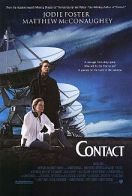
220px-Contact_ver2The movie Contact (Robert Zemeckis, 1997), starring Jodie Foster & Matthew McConaughey, is definitely one of my all-time favorite Sci-Fi films.

The film is adapted from a Carl Sagan novel by the same name. Sagan (1934-1996), an astronomer, cosmologist, and astrophysicist, was a self-professed agnostic. He spent most of his career as a professor and director of planetary studies at Cornell University. And he was a major supporter of SETI (Search for Extra-Terrestrial Intelligence).

Sagan was a brilliant scientist, but like a true naturalist he was doubtful of God’s existence. Which is what makes the movie Contact so interesting.

Jodie Foster plays Dr. Eleanor “Ellie” Arroway, a MIT grad and agnostic scientist working for SETI. She listens for radio transmissions in outerspace until she eventually receives a signal repeating a sequence of prime numbers. The signal is from the star Vega, 25 light years away.

After the initial contact is made, the world undergoes mass hysteria and fear. Some believe it’s the end of the world, others can’t contain their excitement. What does it all mean? What will happen next?

We meet some interesting characters along the way. There is the leader of the “Conservative” Coalition who wants to suppress the new discovery out of fear. There is a Christian fundamentalist who preaches that the devil is at work in science and that God will judge all scientists. He even resorts to violence in an attempt to stop NASA. But nothing can stop Ellie.

In time it becomes clear to Ellie (Foster) and her colleagues that the signal outlines plans to build a machine. What was thought to be some sort of space craft turns out to be a portal into another dimension which transports Ellie to Vega and back again. Ellie was gone for hours, but it was only seconds to everyone else. What she experienced will change her forever.

Throughout the film Ellie had been in conversation with Palmer Joss (McConaughey), a renowned Christian philosopher. Palmer challenged Ellie to consider that faith and science were not mutually exclusive.

While Palmer may not be the most straight-laced believer you’ll ever meet,  he deeply cares for Ellie and her unhealthy skepticism. He believes in her and wants her to accept a very real aspect of knowledge… that of faith.

But Ellie wants proof and evidence for everything. Knowing that Ellie lost her beloved father at an early age, Palmer asks, “Did you love your dad?” Ellie says, “Yes, very much.” Palmer replies, “Then prove it.”

The following video captures one of the final scenes from the film. Ellie (Foster) is being questioned by a congressional committee about what she experienced in the machine. She finds herself saying the same thing Palmer had told her about faith, only she had scoffed at it earlier in the film.

Palmer looks on as Ellie reveals her transformation.

Watch and ponder the relationship between faith and science. I find them both mysteriously intertwined, as I stand in awe of the God of science.

The church has often been guilty of setting the Scriptures (divine revelation) up against science (natural revelation). Let’s consider how we can hold both theology and science together. It’s time to move beyond the culture wars and allow science to reveal the glory of God.

D.D. Flowers, 2013.