Tag Archives: t. austin-sparks

Jesus Manifesto

Moving Forward in Exploration of Christ

A Book Review of “Jesus Manifesto: Restoring the Supremacy and Sovereignty of Jesus Christ” by Leonard Sweet & Frank Viola

I can hear it now, “Do we really need another book about Jesus?” Apparently so, considering that as we entered the twenty-first century only 4 books out of the top 100 were about Jesus (Christian Book Association).

In Jesus Manifesto, Leonard Sweet and Frank Viola combine their voices to trumpet a resounding reminder that we never “graduate beyond Christ” in the Christian faith. And Christ isn’t found only in the center of things, but along the “corners and on the edges” as well.

Sweet and Viola believe we have created a “narcissistic” and a “best-seller” Christianity which is “self-centeredness wrapped up as ‘spirituality,’ which has become the latest fashion accessory for the person who has everything” (p. 100).

There is indeed much to be disheartened with in Christianity today. Yet, there is a growing number of evangelicals that are discovering that pop-culture Christianity is leaving them high and dry. “Whether they realize it or not,” says Sweet and Viola, “people are looking for a fresh alternative—a third way” (p. xiii).

As I look across the present post-modern landscape of Christianity, I see several camps of believers pushing their way through the crowd to stand on the rooftop of evangelicalism with their megaphone in hand (i.e. books, magazines, blogs, etc.) proclaiming the “real” gospel.

There are several current groups and “movements” that are all trying to highlight the neglected sides of historic Christianity. We have the reformed “defenders of orthodoxy,” the emerging brand, the missional-minded, and the organic house church folk, just to name a few.

I do believe that most of the people in these groups truly love the Lord and his church, but many of them are in danger of becoming preoccupied with some thing else other than Christ.

Sweet and Viola believe there are three features present in every spiritual awakening in the Christian church: (1) a rediscovery of the “living Word,” or the Scriptures and its authority; (2) a rediscovery of the living Christ and His supremacy; and (3) a rediscovery of the living Spirit and the Spirit’s gifts and power to manifest Christ in the context of that culture.  (p. xvii)

We’re living in some hot times economically, politically, and socially. Christians are engaging in an exchange of ideas (not without some name-calling and finger-pointing). It’s evident that even those who have been the most outspoken for the “supremacy of Christ” and right “doctrine” have succumbed to rhetorically burning people at the stake in the name of Jesus.

Where is Christ in word and deed? Sweet and Viola write, “Whatever you are occupied with comes out of your mouth. It’s what you talk about most of the time” (p.19). And we should not just be hearers of Jesus only, but doers of Him.

Is “mission” our center?  Is it community? Some say it’s preaching and others… ministry. If we say that Christ is central and supreme, what does that mean concerning justice? What does His universe look like when we are first seeking Christ and His Kingdom?

When Christ is not central and supreme in our lives, everything about life shifts out of orbit and moves out of kilter. So for Christians, our first task is to know Jesus. And out of that knowing, we will come to love Him, adore Him, proclaim Him, and manifest Him. (p. 2)

That’s why this book has been written. It addresses the present challenges we face as many “things” compete for the centrality and supremacy of the person Jesus Christ. We are called to be “living epistles” or “Jesus Manifestos” in our world. It’s about being true to Christianity.

So what is Christianity? It is Christ. Nothing more. Nothing less. Christianity is not an ideology or a philosophy. Neither is it a new type of morality, social ethic, or worldview. Christianity is the ‘good news’ that beauty, truth, and goodness are found in a person. And true humanity and community are founded on and experienced by connection to that person. (p. xvi)

Finally, Jesus Manifesto has been purposely written in an “ancient devotional tone” of writing. In the spirit of Watchman Nee, Jeanne Guyon, Andrew Murray, and T. Austin-Sparks, this book is a fresh call to the post-modern church: “Let us fix our eyes on Jesus, the author and finisher of our faith…” (Heb. 12:2).

And let us move forward in exploration of Christ Jesus our Lord.

“So then, just as you received Christ Jesus as Lord, continue to live in him, rooted and built up in him, strengthened in the faith as you were taught, and overflowing with thankfulness.”   Paul, Colossians 2:6,7

Can we, as the Christian church, agree upon the person of Christ? “Receiving Christ also means receiving all who belong to Him” (p. 147).

Will you sign the Jesus Manifesto?

Others who have signed

“One more sign of a Christianity that is beginning to look like Jesus again. Our great challenge over the past few decades has not been one of right believing but of right living. Viola and Sweet create a harmony here that invites you to give the world a Christianity worth believing in … after all they will know we are Christians, not by our bumper stickers and t-shirts — but by our love.” 
Shane Claiborne—author, activist, and recovering sinner    http://www.simpleway.org

“From beginning to end, authentic Christianity is all about Jesus and, ultimately, nothing but Jesus. No one has proclaimed this more clearly and persuasively than Viola and Sweet. Jesus Manifesto is an important and powerful prophetic call for the Martha-like Church to get back to doing “the one thing that is needful.” 
Gregory A. Boyd—Senior Pastor, Woodland Hills Church, Maplewood, MN; Author, Present Perfect, The Myth of a Christian Nation, and The Jesus Legend.

“This is a really exhilarating reintroduction to a Jesus who seems sometimes to have become a stranger to the Church; a passionate and joyful celebration of God with us, which cuts right through churchy quarrelling and brings us back to wonder, love and praise – and the urgent desire to make Him known to all.”  Rowan Williams—Archbishop of Canterbury

“I look for books that call us to love Jesus and make His name more widely known. In Jesus Manifesto, Sweet and Viola ask us to step away out of the “Youniverse” (their word) of narcissistic religion and away from the pop-culture Jesus who is just a nice man. Throughout the book, they exalt Jesus as the divine Savior and ask the church to do the same. I believe this book will spark a renewed love for Christ by pointing us to the deep mystery of His person. You will be motivated to love and serve more deeply as your life is focused on Jesus the Messiah.”
 Ed Stetzer—President of LifeWay Research http://www.edstetzer.com

Read more endorsements at:  www.thejesusmanifesto.org

Buy Jesus Manifesto: Restoring the Supremacy & Sovereignty of Jesus Christ (Thomas Nelson Publishing, 2010) on discount today (6/1/10) at: www.amazon.com

And please take a few seconds to give this review a helpful vote at amazon.  Thanks!

Len Sweet & Frank Viola

Leonard Sweet occupies the Chair of Evangelism at Drew University in New Jersey and contributes weekly to sermons.com and a podcast, “Napkin Scribbles.” He has authored numerous articles, sermons, and forty books.   www.LeonardSweet.com

Frank Viola is a best-selling author, international conference speaker, and a personal friend. His books include Finding Organic Church, Reimagining Church, The Untold Story of the New Testament Church, and the best-selling From Eternity to Here.   www.FrankViola.com


The Community Life of God (Book Review)

The God Who Is Relationship

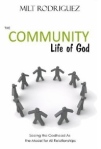
A Book Review of “The Community Life of God: Seeing the Godhead As the Model for All Relationships” by Milt Rodriguez

“God is not an individual” says Milt Rodriguez.  “He is a fellowship of three Persons; the Father, the Son, and the Holy Spirit” (p.14).

In The Community Life of God, Milt Rodriguez weaves together the story of God’s desire to plant himself in His people.  God’s image is a “communal” image.  The Lord created man in His image of community.  And taking from the Tree of Life (i.e. Christ) is to take from the relational God.

It was in the Garden of Eden that the serpent sought to keep God’s image from becoming a reality in the hearts of men.  The enemy of God presented man with individual living out of his own soul-life (i.e. will, emotions, intellect).  Instead of man pursuing spiritual living after taking from the communal life of God, he experiences separation from God and other men.

Rodriguez proposes that much of Christian activity today is spent furthering the individualistic mindset that is so popular in our culture.  Even when believers come together corporately there is not an understanding of God’s image among us.  Church life ought to be more than socializing and individual Christian ministries.

Milt writes, “Personhood and identity can only be defined by relating to others. You will never truly “find yourself” until you are living in the community life of God” (p.62)

What is the sort of fellowship the Lord desires among his ekklesia?

“This fellowship is the place where there is nothing to hide. Complete truthfulness and complete honesty rule here.  The Father, Son, and Spirit do not hold back anything from one another… there is no fear of loss” (p. 116).

As Christian Smith has written, “Community means more than having lots of meetings. It means jointly building a way of life, a group memory, and a common anticipated future.” (Going to the Root: Nine Proposals for Radical Church Renewal, p.2)

In order for us to experience the community life of God, we must embrace the cross.  Rodriguez says there “will be one brother or sister who rubs you the wrong way.”  It is there we embrace the cross and learn “they are part of the same body as you. You belong to them and they belong to you” (p.152).

Finally, this community life of God cannot work in meeting once a week.  We all know this to be true, but still we place other things before God’s heart.  We sacrifice the church on the altar of family, jobs, and personal ministries.

Milt says, “He (God) wants you and me and every other believer to be actively involved on a daily basis. This is why we were born.  This is why we live on this planet” (p.170).

Brothers and sisters, if we are going to participate in God’s eternal purpose, we must be intentional about our relationships within the local ekklesia of Christ.  We must give and receive sacrificially in order that we might know the God who is within Himself, relationship.

There have been many books written on the church being rooted in the Triune image of God, but this one delivers in a simple and easy-to-read presentation.  I recommend this book to all of those who are longing to discover that the church is born out of the very heart of the relational God.

What others are saying?

“This little book provides a clear window into the ultimate source of authentic body life. Delve into its pages and meet the God who is beyond what most of us have imagined, the God in whose collective voice all genuine churches echo.” –Frank Viola, author of Pagan Christianity, From Eternity to Here, and Finding Organic Church, www.frankviola.com

“I was deeply blessed, refreshed and challenged by this book. The author casts the spotlight on the reality and wonder that “God” is really the community life of three persons – a fact virtually untouched in traditional theology. Milt shows from various angles how the community life of God is the foundation of our organic ekklesia life together in Christ.”–Jon Zens, Editor, Searching Together; author of A Church Building Every ½ Mile and “What’s With Paul & Women? www.searchingtogether.org

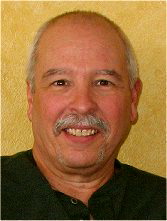
Milt Rodriguez

Milt Rodriguez has been living in and planting organic expressions of church since 1990. He has also authored several books including The Butterfly in You and The Temple Within.  He currently lives with his wife Mary in Gainesville, Flordia.  He is a dear brother in the Lord and I am happy to call him my friend.


Christ the Center

Christ the Center– The Journey from Religion to Relationship

“This is what we speak, not in words taught us by human wisdom but in words taught us by the Spirit, expressing spiritual truths in spiritual words.” Paul, First Letter to the Corinthians

It was a few years ago that I first began realizing that American Christianity does a fine job of polishing its rhetoric to reflect a Christ-centered creed, but its practices are far from resembling Jesus of Nazareth in the Gospels. It speaks of spiritual things and words that have not been taught by the Spirit.

Human wisdom has produced a religion founded on doctrines and teachings about Christ, and we are continually being diverted from knowing Christ by way of relationship.

Having spent seven years in vocational ministry within the institutional church, I can personally attest to the constant struggles that come by attempting to implement a New Testament church life in the present model of institutional Christianity. I learned all the right words, memorized all of the correct doctrines, and made the Bible the passion of my life.

I (like so many others) believed that the more Bible I could master the sooner we would see “revival” and a restoration of the church. If this passion for the Bible became contagious throughout the entire church (I thought), then the church will be what she was created to be. Everything will come together, right? Quite the opposite for me.

This is when everything fell apart.

Leaving Religion

I left vocational ministry in September of 2006 to follow Jesus in search of a religionless Christianity. In a relentless pursuit of the Person of Jesus in the Gospels, I found that I could no longer be faithful to Christ within a system that makes a nice living off of talking a great deal about Jesus, but seemingly unwilling to follow him beyond the boundaries of tradition and empty clichés.

I had my fill of religion and felt like I was only spinning my wheels. I was exhausted in my efforts to see any kind of resemblance to the simple yet powerful church life described in the book of Acts. I was tired of feeling that all my efforts were self-defeating. I was burnout and more than willing to rethink everything I knew about Christ and his church.

I have only Jesus to thank when it comes to the strength it took to leave this burdensome life behind. It was a little scary, but my knowledge of the Scripture told me there must come an exodus and an exile before there can be a restoration.

As religion becomes smaller and smaller in the rearview mirror of this vehicle called “my faith.” I am finding the call of Jesus a satisfying cross to embrace.

I am finding that my past burdens were largely brought on by self. I had a work-centered faith that I passed off as “Christ-centered” while living amongst many folks that were largely self-centered and disinterested in knowing Jesus beyond the Sunday school quarterly.

All of this produced in me an experience of extreme highs and lows. Everything about the way we taught and practiced our faith kept God at a distance it seemed. This was my greatest frustration.

I am happy to say that the Prozac popping Santa Claus god is now dying a slow death. I am learning of a Lord that loves me beyond anything I have ever known. And this love attracts me to his Person. It calls to me and tells me there is more. It tells me that I will never be able to experience the full depths of his being, but that I should continue trying evermore.

The Word Became… Ink?

“Bible instruction can easily be diverted from its God-intended purpose: love of God and fellow human beings. In its place is a new, lesser purpose: the Bible as an object of curiosity and fruitless spiritual debate.”
Tom Hovestol, Extreme Righteousness: Seeing Ourselves in the Pharisees

As I look back on my journey with the Lord, I see his wonderful patience with me. My spiritual birth began with an intimate knowledge of him in my spirit. How else would any of us receive eternal life without this engagement with Christ? Yet, this relationship, this intimate knowledge of the Person of Christ, quickly became secondary to the things I could learn about him with my mind.

I didn’t understand Paul’s words, “just as you received Christ Jesus as Lord, continue to live in him…” (Col. 2:6).

I do not mean to present some false dichotomy between me learning about Christ with my mind and knowing him in my spirit, but let’s be honest, you can easily do one without the other. And I would venture to say that most people confuse the first with the later.

The Pharisees did this and Jesus called them out for it. They studied the Scripture, but did not know the Lord. They did not recognize God in the flesh. They were zealous for the written word but rejected the Word made flesh.

Despite their expectations about Messiah, they were given ample opportunity to embrace the living Word, but instead chose a religion filled with human rules and regulations. What was intended for life only brought death. It enslaved the people and kept them from knowing the Lord (Matt. 23:13-39).

“You diligently study the Scriptures because you think that by them you possess eternal life. These are the Scriptures that testify about me, yet you refuse to come to me to have life.” Jesus, The Gospel of John

I have found that we can still read the Scriptures like these infamous Pharisees. I obtained a degree and spent years studying the Bible. Like the Pharisees, I believed that a strict orthodoxy was the key to revolution.

Like so many popular reformed theologians today, it is believed that correct doctrine and defending the “truth” in the culture is the secret to God’s Kingdom coming to earth. These men boldly rebuke “heretics” and don’t mind offending you for the sake of their personality. And of course, all of this is done in the name of Christ. This is what so many believe to be “Christ-centered.”

When Sola Scriptura (i.e. Scripture alone) is your war cry, you have no choice to make for yourselves a Bible-centered life that is disconnected from Christ the living Word. A faith built on a passion for doctrine demands the same attitude that put Jesus on the cross.

In this kind of life, the Bible becomes an end unto itself. And whatever a person needs to do to further “correct” doctrine and defend the Bible is permissible in certain circles of evangelicals today. They are quick to denounce the sincere pursuit of others who seek a Christ that is more than a few theological bullet points and sin-centered sermons littered with meaningless clichés.

The least we can do is question the approach of these modern-day Pharisees who are Christ-centered in their language, but only promote teachings that disregard the way of Jesus. These men use the Scriptures to defend Christ, but do so in a manner that offends the heart of God.

“The holy writings are valuable for those who use them right,” testified one Anabaptist at the Regensburg trials in Bavaria. “But their misuse is the source of all heresy and unbelief. To the scribes and the Pharisees the holy writings were not a guide to Christ, but a hindrance and eventually a punishment.” Peter Hoover, The Secret of the Strength: What Would the Anabaptists Tell This Generation

Wait! Isn’t doctrine important? Yes, but right doctrine comes from a close examination of the Person and work of Christ in the Gospels. It comes from an intimate knowledge of the indwelling Christ. From my own personal experience, I believe it is because of our failure to give attention to Jesus in the Gospels that we have interpreted the letters of Paul as merely instructions on doctrine instead of an exposition of Jesus and his Kingdom come on earth as it is in heaven.

“My purpose is that they may be encouraged in heart and united in love, so that they may have the full riches of complete understanding, in order that they may know the mystery of God, namely Christ, in whom are hidden all the treasures of wisdom and knowledge.” Paul, Letter to the Colossians

I don’t know what I did with verses like the one above before the Lord gave me eyes to see and ears to hear. It wasn’t until I became intrigued with Christ as Person that I began to see a spiritual revolution in my own life. When I made Christ my only doctrine and concerned myself with the fact that his very Person lives within me, I was then able to begin a journey from religion to relationship; from rhetoric to revelation; from intellect to indwelling; from academia to apprehension.

I was trained in the historical-grammatical approach to studying the Scriptures. Mostly due to immaturity, I had not learned to bridge my intellect with my spirit. Bible study was simply an intellectual exercise.

Sure, there were many times I had some sort of spiritual encounter and sensed the Lord working in my life through it all, but I now see that the written word of God had become a substitute for actually knowing Jesus in spirit and in truth. The Scripture was not ushering me in to knowing Christ in personal experience. Therefore, my transformation was slow and my strength was limited to what I could do on my own. The Lord allowed this for a time.

This Bible-centered life was evident in my passion for doctrinal purity. I was not yet aware of the full measure of the indwelling Christ and how to study the Scripture out of that life. It was like living with someone in your house but rarely speaking to them.

I was learning a great deal “about” Jesus, but had a difficult time making it to the couch to sit and chat with the lover of my soul. I allowed my analytical mind to be entertained by theology, but my spirit was desperately longing to kiss the face of God.

“The word of God states that the truth shall make us free, but how many times truth is merely a doctrine to us. Our eyes have not been opened to see Christ.” Watchman Nee, Christ: The Sum of All Spiritual Things

I did not feel free in my spirit. My soul was restless. I believed that all I could aspire to was to be filled with more Bible and great theological ideas. I constantly struggled with a distorted view of God. I knew what the Scriptures said about the closeness of God in Christ, but I didn’t have the experience to go along with it.

I just kept yearning after the Lord and seeking to find him in one teaching after another. And when the Lord is a teaching instead of a Person, you die for teachings (believing them to be Christ) and you attempt to rid the church of all who disagree with you. I don’t believe I ever gave myself over to that completely, but I did see plenty of older folks that had.

When the Lord is found in a teaching and you have no working knowledge of Christ, you are not content to let the Person of Jesus deal with the shortcomings of others and the errors of the church. When your God is restrained to paper and ink, you can’t know him in the flesh. And you must know, the Word “became flesh” (Jn. 1:14).

The incarnation of God is mankind’s only hope. This is becoming less and less something to simply “Amen!” and move on about your business. It is for me, becoming everything.

Bible-Centered or Christ-Centered?

“The cumulative effect of all parts of the Word of God is to bring you to Christ.”
T. Austin-Sparks, The Centrality and Supremacy of the Lord Jesus Christ

Is there a need for proper interpretation of the Scriptures? Most definitely! However, we must understand that this interpretation does not end in a study of the context of Paul’s letters to the Corinthians. It ends in a dazzling display of Jesus! It culminates into a spiritual apprehension of Christ. And this is something only he can give you when the “Divine quest” for the Person of Jesus is at the center of your being.

Until Christ is all that you desire, you will continue to know frustration and heartache.

We can’t gain knowledge of Jesus and an inward apprehension of him and receive shady theology in return. It is in knowing Christ that we understand what birthed the writings of the apostles. It is only then that we may receive proper instruction on worship and how the believer is to relate to a world marked by estrangement.

Christ is not a teaching or a “Bible-study”, he is a person to be cultivated in human experience. This may begin out of a sincere longing to know Christ in our mind and much study of him with our intellects. But in the end it ought to lead us to a knowing him in the depths of our spirit. It is only then that we partake of the bread of life. It is only then that everything finds its proper place.

This is where evangelical Christianity has fallen to its greatest depths. Since the Protestant Reformation, it is the written word of God that has become the highest attainable goal. The Anabaptists believed this to be the mightiest error of Luther and company.

The “Reformers” of the Catholic Church clung to Scripture, not to Christ. They rested in doctrines alone and thought it strange to speak of Christ as your closest friend. Folks that talk this way, these “mystics”, were burnt alive and met their end in martyrdom. And they are still to this day read with caution and some with disdain.

According to the testimony of those they persecuted, the Protestants rested in grace and did not live in the power of the resurrection. Their strict interpretations of the Scripture and their zeal for orthodoxy actually led them down a path of anti-Christ. Their failure to let go entirely of the church that Constantine built produced in them a deception that can only be matched by the men that cried out for the death of Jesus.

Knowledge that comes to us apart from the indwelling Christ will puff up the most sincere of men (1 Cor. 8:1). Knowledge obtained without first having passed through the cross of Jesus will always lead to sin. It is here where many believers find themselves. They have learned the appropriate rhetoric of Christ-centeredness, but their words are not born out of a revelation from the Lord himself. They easily find themselves continuing on with right speech, but their actions actually begin to prove that something else is at work.

It is not long and this person finds that their faith is filled with all kinds of contradictions and empty clichés that have no practical meaning for their lives. They sound holy, their words reflect a sort of biblical Christology, but their spirits are not governed by the life of Christ. They have not experienced the faith that is continually being born from above. What they have has not been given to them by Jesus in their spirit.

There is no inward reality of the indwelling Christ shaping them and molding them. The Person of Christ is not guiding their every step and speaking to their hearts. They have a few momentary spiritual glimpses into the Lord but the rest is just adrenaline and good intentions.

What is the Bible? Simply stated, it is the Spirit-inspired written testimony of men about the living God coming to earth and revealing himself in Jesus Christ of Nazareth. How has this collection of writings we call “The Bible” become the object of so much division among believers? “Is Christ divided?” What have we done with Paul’s warnings of division in the Body of Christ? We have celebrated them in what we call “denominations” and we treat this as a good thing.

Our passion for doctrine has blinded us to the many contradictions we have embraced. And we continue to find reasons not to abandon 1700 years of institutional Christianity founded on the ideas of men that can’t be justified by the Scriptures.

This is another piece of twisted evidence that the Bible is not being read as a testimony of the Christ presented in the Gospels. It is not being studied and read for the purpose of apprehending Christ in community, but for the mere propagating of a doctrine, a mission, a program, a ministry or a movement. We are guilty of worshipping the biblical text instead of the One it reveals.

We can know we have done this by the many ways we have violated the Person of Jesus and contradicted his example left in the Gospels. Having lived this way, we may only say that we are “Bible-centered” or “Paul-centered” or better yet, “Mission-centered.” But we dare not say we are Christ-centered when Jesus is not our only concern. If the Lord has not yet revealed to us that out of Christ comes the church, then we must wander a little while longer.

“I consider everything a loss compared to the surpassing greatness of knowing Christ Jesus my Lord, for whose sake I have lost all things. I consider them rubbish, that I may gain Christ and be found in him…” Paul, Letter to the Philippians

Conclusion—Christ the Center

We may say Christ is central and supreme in our lives, the church, the world, and the cosmos, only after we have put our hand to the plow of his Person and work; after we have forsaken all others for his namesake. Once we are willing to lay all else aside to experience the depths of who he is, we may call him “Lord” with complete assurance that he is indeed the Lord.

Brothers and sisters, it is in these things that the Lord says, “Yes!” The Son has been exalted that we might know him “in whom are hidden all the treasures of wisdom and knowledge” (Col. 2:3). He has become flesh that we might know that “in Christ all the fullness of the Deity lives” (2:9). It is not a method we seek, we seek Christ. Any “good” thing outside of Christ is dead! It is not a thing we desire, it is a Person. Will we continue running after dead things in Jesus’ name?

On this journey from dead religion to a living relationship, I have occasionally asked myself, “Am I making too much of Jesus? Is it all really this simple?” And I hear the Lord speak, “Come to me, all you who are weary and burdened, and I will give you rest… for my yoke is easy and my burden is light” (Matt. 11:28; 30).

Well, I must say I am finding that “yoke” much easier than before. But, could I be oversimplifying things and reducing the Gospel message? (I smile with a faint chuckle) What else is there but Jesus? Very confidently I reply, “Nothing of any worth.”

Let us press on in the journey of experiencing the depths and riches of Christ Jesus our Lord. No other purpose will satisfy the heart of God or our own groaning for a savior. May we give up our Christ-less “Bible studies” and our foolish church practices that not only hinder, but replace our Center.

Through the power of his resurrection we may break free from religion’s chains and discover a truly Christ-centered faith.

Suggested Reading:

“The Centrality and Supremacy of the Lord Jesus Christ” by T. Austin-Sparks
“Christ: The Sum of All Spiritual Things” by Watchman Nee
“The Secret of the Strength” by Peter Hoover
“The School of Christ” by T. Austin-Sparks
“Extreme Righteousness: Seeing Ourselves in the Pharisees” by Tom Hovestol
“Christ the Center” by Dietrich Bonhoeffer
“The Normal Christian Life” by Watchman Nee
“Bethany: The Lord’s Heart for His Church” by Frank Viola


Religionless Christianity

“…you and I will never be Christians, or servants of the Lord, in real spiritual life and effectiveness beyond the measure of our inward apprehension of the Lord Jesus.” T. Austin Sparks, The Centrality and Supremacy of the Lord Jesus Christ, 10

Why are we wasting precious time and energy attempting to answer the problems with the church today by tweaking the old paradigms?  We ask the wrong questions within a broken and flawed model of the church that Constantine built.  Our problems grow greater still. We must begin asking the right questions.  We must allow the Lord to exchange our old paradigms for new ones.

This sort of revolution will only come by us truthfully asking the Lord to give us the right questions and reveal to us the true knowledge of his Son Jesus Christ. How do we know which questions are wrong and right?  How is it possible for old paradigms to be crushed underneath the feet of brave revolutionaries?  The Scripture is the key because Christ is the treasure within it.

The written word of God unlocks the living Word of God who is Christ Jesus our Lord. Ultimately, He is the answer we are looking for. He is the pursuit of our hearts whether we recognize it or not. Unfortunately, too often, believers stop short of their purpose for living. They settle for some other passion other than the master. The answer is not found in a method, movement, or post-modern program.  It is not found in 12 steps, purpose-driven products, or some other religious gimmick published by Zondervan. It is Christ; he is the answer to our problems in the church today.

So, in order to see a biblical image of Christ we must ask questions which are biblically sound instead of denominationally or culturally colored with bias and misconception.  We must forsake everything else but Christ. Dietrich Bonhoeffer stated it best when he said, “Besides Jesus nothing has any significance. He alone matters.” The Cost of Discipleship, 59

Question Everything

When we speak of religion… our concern first and foremost must be, “What does the Scripture say about religion?” We can say a lot of nice, fanciful, and deep philosophical things for and against religion and we can seek to answer our problems by continually asking the wrong questions. When we do not ask the right questions we will most certainly get the wrong answers.

We must leave the realm of the familiar in order to ask the right questions. If we do not leave the familiar, we will continue to ask the same kinds of wrong questions that only lead to a reform of dead religion instead of a revolutionizing answer that brings a radical return to Christ. The only way to have a revolution in thought and practice is to leave the familiar and seek answers outside the previously accepted beliefs and practices of the majority. We must question everything believing that there are answers. Some see this as evil, yet I find it is most productive in the honest pursuit of truth.

To not question, is to accept unexamined truth claims.  To accept unexamined truth claims, even truly biblical ones, would be the same as accepting a lie. In other words, you are taking another person’s digested information and making it your own. If you were to do this with food you would see a very disgusting problem. You chew your own food and digest it yourself. It would be unhealthy, to say the least, if you were to make a habit of swallowing every “truth” that came to you from your “leaders” without first chewing on it and digesting it yourself.  When it comes to spiritual things we are referring to discernment, personal study, and personal experience. The healthy spiritual man will not only discern whole pieces of doctrine, but the words we use to describe our faith.

The one who divides the Word of truth correctly is the one who will go outside his preconceived notions to let the Lord speak whatever he so desires.  Even when it means redefining words in our language or to stop using certain words altogether.

The point I am making is this: If truth is to be discovered, the believer must offer everything up and be willing to let the Lord reveal things that previously were hidden and closed; letting go of previously held understandings so that the Lord may bring new understanding as he sees fit.

The Lord must have your preconceived ideas in order to give you his sight in return.  We must surrender everything be willing to let the Lord tell us we were wrong before he can show us the light of his wisdom. If we do not allow the Lord to do this we will continue to ask the wrong questions and keep getting the wrong answers.  We will fall short like so many men in the history of the church.

Defining Religion

Religion is something we hear spoken of in good and in evil ways.  I recently read a book entitled, When Religion Becomes Evil by Charles Kimball. Obviously, the author believes there are benefits to religion when it is not evil.

The author even went so far to claim that Islam worships the same God of Judaism and Christianity. He believes all religion is capable of bringing about peace in the world.  At the same time, he spoke of the exclusive way of salvation through Jesus Christ. See anything wrong here?

He has asked the wrong questions in his book because he does not allow for a redefining of religion.  Among his many problems, he has a preconceived belief that religion is not inherently evil in itself (i.e. religion is not the problem), and that religion is good or evil, true or false. He will inevitably come up with wrong answers because he is not allowing everything to be questioned specifically, his biblical understanding of religion. It is important that we understand there are several different ways of understanding what is meant by religion.

The popular understanding of religion is found on the lips of the majority today. They speak of religion to describe worshippers of a particular deity or devotion to a set of beliefs and ideas. Webster defines religion this way, “belief in a supernatural power… an objective pursued with fervor or continuous devotion.”

Most professing Christians, ignorant of church history, would describe Christianity as a “religion.” They of course would say it is the only “true religion.”

Learning a Religionless Christianity

I do not consider myself religious in any sense of the word and I make a concerted effort to learn of a “religionless Christianity.” I like to go so far as to distinguish the difference between the religious and the faithful; those committed to man’s unnatural rituals and laws vs. those committed to the natural faith of Christ. My heart longs for this distinction not to be cliché and clever “God talk,” but to sincerely be something totally set apart from man’s religion and our modern American “pop-culture” Christianity. I, along with many others in my generation, seek a faith of Christ free from all forms of religion that threaten to contaminate the natural faith of Christ and the communal Body life that is to ensue around it.

We must know that all religion contaminates that natural faith and Body life. Even religion that claims Christ is at the center.What is false religion? In the past, we have been conditioned to respond in the following ways, “Well, it is Islam… it is Buddhism… it is Mormonism… etc.”  Again, this is thinking inside the box. This reflects culture’s definition. We must speak a new language! Claiming that Christianity is the only true religion is unbiblical. You will not find it in the Bible.

So, what does the Bible say? Some may quickly quote James, “If anyone considers himself religious and yet does not keep a tight rein on his tongue, he deceives himself and his religion is worthless.” At first glance, we might think James is condoning some kinds of religious activity. Yet, a second look, I believe, will reveal that James has absolutely nothing good to say about religion.

As a matter of a fact, the way in which he mentions it is to really tell of its true worth. He goes on to say, “Religion that God our Father accepts as pure and faultless is this: TO LOOK AFTER ORPHANS AND WIDOWS IN THEIR DISTRESS AND TO KEEP ONESELF FROM BEING POLLUTED BY THE WORLD.” (James 1:26-27)

This is the only place in the New Testament where the word thrēskos (“religious”) is used. According to the Expositor’s Bible Commentary, the adjective describes “a person who performs the external acts of religion, such as public worship, fasting, or giving to the needy.” Another source refers to the word as meaning, “the ceremonial service of religion.” It has been used in Greek to speak of the practices of Egyptian priests. The noun form of the word appears but four times in the N.T., two of which are here in James.

The other two times the word can be found in Acts 26:5 and 1 Timothy 5:4. In each case, the word “religion” is not used favorably. It would be accurate to paraphrase James as saying, “Religion is in fact worthless. It is man’s outward display of works done in the flesh (i.e. looking the part, attending services, being seen by the world, etc.). The faith that the Lord approves of is FAITH PROVING ITSELF BY WORKS BORN OF THE SPIRIT OF CHRIST.”

These works born of the Spirit will largely go unnoticed. For example… caring for widows and keeping your mouth shut when you have nothing to say that will edify… this is real faith in action! You will not find these works on a billboard, but you will find them showing up on the radar of God.

Therefore, the normal Christian life springs from an inward spiritual reality that is expressed in love and purity. Religion is only concerned about those things which are external (i.e. the outward appearance).

Furthermore, religion claims it can effect the internal by way of external modifications. This is not the method that Jesus taught. Who were the examples of the religious in James’ day?  You know them as the Pharisees and Sadducees, the Essenes, and the Zealots.

There is little doubt that James was indeed thinking about these kinds of religious people. This was his context. Continue reading James and this will become clear.  It is the faith of Christ (commonly taught as “faith in Christ”) that is true. It produces real spiritual life that is made manifest by not only listening to the Word, but doing what it says (James 1:22). Our faith is the sum of all spiritual things: Christ Jesus our Lord!

Nothing else is needed but a natural out-flowing of that faith in our lives and in our lives joined with other Christians in the church. Religion is concerned with doing, the authentic faith of Christ is concerned with being. If you will look around you today, you will notice there are many Christians attempting to do great things for the Lord, but have little concern for the actual knowing of Christ and being an extenuation of his person.

The Natural Faith of Christ

Religion trains people to think about the doing.  The New Testament speaks about the being. For example, I bet your evangelistic practices have been influenced by religion to a large degree. Instead of simply being Christ naturally by showing love in lifestyle evangelism… many have resorted to a “in your face” non-stop display of religious solicitation. Many Christians learn an outline, similar in style to a salesman, and only regurgitate it for their client. Is this not unnatural?

When the Lord’s people begin with their primary purpose as doing for Christ, they will fail to ever reach the most important aspect of the faith: being Christ! They will devise many forms of unnatural religious practices and they ultimately will not be able to say with Paul, “For me to live is Christ, and to die is gain.” (Phil. 1:21) They will continue to resort to scheduled “quiet times” and Avon evangelism.  And this is only the beginning of the nasty fruits produced by religious thinking.  If the faith of Christ is ever to be expressed naturally, religion has to go!

Finally, did Jesus say anything about religion? Well, he never gave a discourse over comparative religion, nor did he attempt to build a case that Christianity is the only true religion. However, he did say many things to those who believe themselves to be religious. From these things we see Jesus’ attitude toward religion. In Matthew 6:5 Jesus refers to these religious men as “hypocrites” and that they like to be “seen by men” on the street corners.

In Matthew 22:23-33, Jesus tells the religious Sadducees, “You are in error because you do not know the Scriptures or the power of God.” Remember, Jesus said this to the religious of the religious. He said this to those conservatives and moderates who loved for their presence to be known on the street corners and in the synagogues. These men were highly regarded and respected by the worshippers of God.  And Jesus tells them, “You don’t know the Scriptures.” I believe this reveals the very root of the problem today. Many Christians have relied upon the denominational interpretations of the religious and have rejected the simple plain teachings from those whom the religious have discarded.

Primarily, we have rejected Jesus as being all-sufficient for life and living.  We have failed to discover the endless depths and riches that are found in Christ.  It is much easier to follow the seen instead of the person and the works of the unseen; instead of following the one who asks us to do better than obey some rules, but deny himself that he may live. (Matt. 19:16-24)  Jesus said it will not be on a particular mountain or temple that we will worship (Jn. 4:21-24), not a location or a building, but an attitude of the heart and a place of the Spirit. The Lord rejects the outward display of hypocrites, but says, “Well done!” to the faithful servant who has left all to sit around his feet in natural familial community.

Religious Christianity believes dominance, power, and visible presence is the way by which Christianity wins triumphantly.  Religionless Christianity is in no need of pagan rituals and edifices; no need of political power and the desire to conquer by baptizing the cultural.  Religionless Christianity is relational Christianity.  This faith is simple and its power comes from love and sacrifice.

Are we to say that all religious people are hypocrites? Not exactly. They may be true sincere followers of the Lord only involved in the activities of hypocrites because that’s all they know. They have grown up being taught that religion is a necessary function of ministry in this new and “post-modern” age.

Nicodemus is an example of a religious man, yet a sincere lover of God. He was practicing what he truly believed was the Lord’s will for his people.  Jesus challenged him in his understanding of spiritual things in John 3.

We do not know for certain what happened to Nicodemus after the resurrection, but we do know what happened to another religious Pharisee named Saul. And this man was a Hebrew of the Hebrews, the religious of the religious. Saul of Tarsus left it all to follow Christ into uncharted territory free from religion’s chains! He traded his religion for a faith of Christ that is natural. His aim was no longer serving the letter of the law, but to knowing the “power of his resurrection and the fellowship of sharing in his sufferings, becoming like him in his death, and so, somehow to attain the resurrection from the dead.” (Phil. 3:10-11)

Embracing Religionless Christianity

Therefore, we must say with boldness and confidence, “Religion is rooted in the pride of man finding worth in himself apart from the simple way of knowing and being satisfied with the person of Christ.” It is really an English double negative to say, “false religion” for it can be nothing more or less. All religion is counterfeit life.

Can you imagine how our conversations would change if we would adjust our language and living to this truth? Never again would you tell someone from another religious devotion, “Christianity is the only true religion.”  Doing this would only continue the never-ending cycle of religious talk. You would say nothing new and absolutely nothing that would reveal your true identity: You do not belong to the world! Your faith founded in Christ is out of this world. This is not theoretical talk, but the true language of the alien, stranger, sojourner, and follower of the King whose kingdom is coming!

Religionless Christianity is a return to the simple faith of Christ. It is the only way to communicate who we truly are to a world filled with religion. The world has enough of religion.  It needs true citizens of the eternal kingdom to show it her King. May the Lord keep us from being polluted by the world.  Lord, help us to embrace your person that your life may naturally flow from our spirits.

Note: I have borrowed the phrase “religionless Christianity” from Dietrich Bonhoeffer.  I believe many have misunderstood this phrase.  I’m not sure that Bonhoeffer himself even had a full understanding of what this “religionless Christianity” implies for Christians living in community.  We would do well to ask the Lord to reveal to us its true meaning and begin a much needed dialogue on spiritual revolution instead of religious reformation.

D.D. Flowers, 2008.