 Many evangelicals are drunk on the spirit of the political age. We are often guilty of joining with the crowd that is fear mongering, demonizing people that disagree with us, and misrepresenting the positions of others in the process. We jump to conclusions and often assume the very worst about people, even those in the church.
This is hardly reflective of the suffering servant from Nazareth.
Unfortunately, many evangelical pastors and teachers have become spiritual demagogues for their own ministries, denominations, and causes. Just how bad is it? Well, some believe that ecumenicism is the work of devil worshipping liberals, yet legalism and spiritual narcissism is accepted as the true work of God. I think it’s satanic at the core.
I don’t know how else to put it. It’s evil masked as piety. It’s Pharisaism posing as God’s righteousness.
Ironically, mis-information is rampant in this great age of mass-information. While we have more access to learning than ever before in the history of the world, we’re actually getting dumber it seems.
What is happening? I think it has something to do with our inability to think critically and discern truth from error in a flood of ideas that challenge us, even causing us to doubt our faith.
We feel the world is threatening us so we retreat into an anti-intellectual spirituality, dig our heels into what we believe to be true, and speak loudly to all those who challenge our worldview.
This prompts some folks to believe everything coming from sensationalist media, and from their leaders who they have allowed to think for them. Can we do anything to correct this problem?
I think so. But first we’re going to have to address this judgmental spirit at work among us.
You Godless Liberal!
Let’s start with a verse that’s often proof-texted as “biblical” support for furthering your own personal agenda and pet doctrines. There are many others, but I’ll just address this one.
I urge you, brothers and sisters, to watch out for those who cause divisions and put obstacles in your way that are contrary to the teaching you have learned. Keep away from them. Romans 16:17 (NIV)
I don’t agree with the way this verse and several others from Paul have been used by many evangelical pastors and teachers to condemn others in the Body of Christ as false teachers and heretics (e.g. 1 Tim 1:3; 2 Tim 2:14-16, 2 Pet 2:1-3, etc). Let me tell you why.
The fact of the matter is that Rom 16:17 can be used and has been used to oppose anyone who believes or teaches anything we’ve never heard of or don’t agree with—which is often called “liberal” by those who feel it threatens the foundations of their faith.
What I have found is that most of these folks simply haven’t been exposed to anything other than what their denomination or tradition has taught them to believe, or they have been taught to shun everything that the “gatekeepers” of orthodoxy have told them to shun.
Of course they may just haven’t learned to think for themselves. If that’s not it, they may have the spirit of the heresy hunter.
What kind of person qualifies as a heresy hunter?
If you have a heightened sensitivity to anything that makes you theologically uncomfortable and compels you to hunt down and destroy all who you perceive to be theological terrorists, then you might be a heresy hunter.
I have done it. And I’ve had it done to me. It’s no fun.
It’s this sort of reaction by fundamentalist thinkers who are perpetuating division and causing quarrels in the church today. It’s not people like Rob Bell, Peter Enns, or the “open” scary-theist Greg Boyd that are the real source of division. It’s those who have verbally lynched them.
And while I don’t always agree with the seemingly forever-emerging Brian McLaren, I don’t even see him as a “threat” to our faith. No matter how much your pulpit-pounding preacher says these things with conviction, as we say in Texas, they just ain’t so.
The Gallows of Social Networking
The time it once took for papal bulls, church edicts, and the Baptist Standard to be sent out and circulated, in order to condemn so-called heretics, has now been expedited to the speed of Twitter and Facebook.
Exhibit A: John Piper’s tweet “Farewell, Rob Bell” in response to Bell’s book Love Wins—which sparked debate and an outcry by many evangelicals against our brother, Rob.
In the end, Piper’s tweet only helped Rob publish more books. It was quite the marketing strategy. But it also proved just how unloving and reactionary some have become in the church.
I know something similar has happened to my good friend, Frank Viola. His book, Pagan Christianity?: Exploring the Roots of Our Church Practices (co-authored with George Barna), was the most despised book never read.
And just recently we have seen a backlash against missional church leader Alan Hirsch because of his book, The Permanent Revolution.
We don’t need to burn folks at the stake anymore… we have social networking.
What in tarnation is going on? Is this the Body of Christ? It’s time we rethink our use of social networking, and think about the serious consequences of posting everything we think or feel before having time to process things and respond in a way that honors the Lord.
I know that my record is not flawless in this area, but I’m determined to be more responsible with how I challenge others to think and respond to our neighbors and our enemies. I believe in being intentionally provocative, but there’s no excuse for ugliness in Jesus’ name.
Misjudging People as Heretics
Before we look at what the NT actually says about how to spot false teachers and heretics, let’s first look at a few faulty assumptions made about them in the church today.
Assumption #1: Anyone causing division might be a heretic.
Many Christians think that anyone bringing a teaching that causes division in the church is a sign of heresy or a false teacher at work. That could be the case, but usually it isn’t. It’s important to remember that all of the prophets, including Jesus and the apostles, caused division with their teachings.
Jesus was almost thrown off a cliff in his hometown! Religious folks were always plotting to kill him. In fact, Jesus’ own family thought he had lost his mind and was only stirring up trouble (Mk 3:20-21).
Look at the apostle Paul. Paul brought division in the Jerusalem church over the requirements (or lack thereof) for Gentiles becoming Christians. And some Jewish “super apostles” never gave up trying to undermine his Gentile ministry while he was alive (2 Cor 11:5; 12:11).
It seems clear to me that Paul’s “thorn in the flesh” was the heresy hunters who opposed him at every turn (2 Cor 12:7). Notice that he mentions the thorn in the context of these zealous Judaizers. So, division isn’t always a sign of a false teacher. Take it from Jesus and Paul.
Instead, the problem of division that we have today is mainly caused by heresy hunters and those screaming “witch” or “liberal” at every book published that doesn’t line up with their own theological opinions.
Assumption #2: Anyone who doesn’t agree with my favorite Bible teacher is probably a heretic.
“Well, you can believe what you want, but John MacArthur thinks you’re a heretic.” While I haven’t actually had someone say these exact words to my face, it has been insinuated many times over.
Just plug in the name of your favorite teacher and you get the gist of what I’m saying. “John Piper says…” or “Matt Chandler says…” or “My mamma says…” We should never think that any pastor, teacher, or family member has the cutting edge on truth. Never ever.
Of course there is rarely any consistency with those who herald one man, or a group of like-minded men, as the dispenser(s) of truth—which creates an unhealthy commitment to them, and causes us to look suspiciously at others who don’t fit in our group.
I once reminded someone that John MacArthur, whom they believed was a defender of orthodoxy, didn’t believe in telling people to “tithe” the OT temple tax. Needless to say, they didn’t take that too well since they adamantly believed that God would not bless you unless you gave 10% to the church—a teaching not found anywhere in the NT or practiced in the early church. (See 2 Corinthians 9 for NT-styled giving.)
And I’ll never forget hearing Ravi Zacharias bash Brian McLaren’s book The Secret Message of Jesus on a panel of conservative preachers (including Al Mohler) expressing their disdain for the emerging/emergent church. Zacharias admitted that he had not read the book personally. He merely criticized the book because of its title.
John Piper has done this sort of thing too.
Since I had read the book, I knew that McLaren was referring to what is known as the “Messianic Secret” among scholars. I have heard the same message in McLaren’s book preached in pulpits everywhere.
Clearly we are guilty of throwing people under the bus before giving them a fair trial. Who does that sound like? Ever heard of the Sanhedrin?
So, just because your favorite Bible teacher or someone you greatly admire believes something doesn’t necessarily make it so. Go to the source, consider the word of other Christian leaders, and think for yourself. Nobody has all perfect wisdom and knowledge except for the Lord Jesus.
Assumption #3: Those who disagree with the majority of pastors, scholars, and teachers are heretics of the worst kind.
This last assumption I would like to address may be the most common. On the surface this charge appears reasonable. However, we need to seriously consider whether or not judging truth based on the “majority” is more American and democratic than it is biblical.
When I was in college I remember regularly listening to a Christian radio program on the way to school. One day I heard them say that Hank Hanegraaff would no longer be played on their radio station because he disagreed with pre-tribulation rapture theology. The host said, “We just refuse to believe that Hank is right and everyone else (conservative preachers) is wrong.”
You guessed it. I never listened to that radio station again.
That’s terrible reasoning. Mainstream biblical scholarship rejects Left Behind eschatology, but who really cares when the majority of our favorite teachers say something different. Seriously?
There are tons of biblical examples that overturn this sort of reasoning. In Noah’s day the majority would soon take their chances with sin and rebellion than listen to news of a great coming flood.
The majority at Sodom and Gomorrah chose to ignore the outstretched arm of Yahweh to save them from their sins of greed, idolatry, and sexual immorality (Gen 19). Want to join the Sodom majority?
I’d say a lot of American Christians are committing the real sins of Sodom (see Ezek 16:47-49). So much for singling out homosexuality as the most detestable sin on the planet.
Jeremiah preached for 40 years without a single convert! All of the people believed the rest of the king’s prophets, not Jeremiah. They threw the lone voice in a dungeon, saying that he was a false prophet and a heretic.
In fact, most of the prophets were eccentric loners who were perceived as rabble-rousers and disturbers of the peace. They rattled the cages of the religious elite, and it ticked them off.
Jerusalem, Jerusalem, you who kill the prophets and stone those sent to you, how often I have longed to gather your children together, as a hen gathers her chicks under her wings, and you were not willing. Jesus, Matt 23:37
Do you really want to believe the majority? The majority killed Christ. They distorted his message, they trapped him, and they brutally murdered him. Jesus challenged their safe, traditional interpretations of Scripture and their way of life, and they crucified him for it.
Follow the Lord, not the majority. The majority is not always right.
Who are the real heretics and who are true teachers of the Lord? In the next post (Part II) I will outline what I believe to be the criteria for discerning false teachers from faithful followers of Christ.
Can you think of other faulty assumptions people make when discerning truth from error? What do you make of the name-calling and finger pointing in the church today? What can we do to reverse this satanic practice of judging others in the Body of Christ?
D.D. Flowers, 2012.

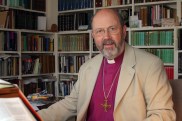 N.T. Wright is one of the leading voices within New Testament scholarship today. Wright taught New Testament studies for twenty years at Cambridge, McGill, and Oxford Universities.
 And this gospel of the kingdom will be preached in the whole world as a testimony to all nations, and then the end will come. Matthew 24:14 (NIV)

 The Centrality and Supremacy of Jesus Christ