Those Who Inspire Us

I’ve been inspired by many people in my lifetime. There are times when the Lord reveals himself to us in someone else’s struggles and victories. The Lord takes an ordinary person and does something extra-ordinary in them. Their gifts and talents are used to inspire us to rise above the opposition and challenges we’re facing. We are emboldened by them.

It may be to overcome temptation, an addiction, or some other dehumanizing practice that keeps us in bondage. Those who inspire us can also help us to dream, take risks for the Kingdom, and to pursue what we otherwise would have believed was beyond ourselves. The Lord uses these people to enrich our hearts, expand our minds, and empower the body.

Those who inspire you are flesh and blood examples of the Lord alive today wanting to bless you.

Sometimes there are those who continue to inspire us throughout our entire lives. Time and again these people are a deep source of encouragement and hope for us. Anytime we feel that we’ve reached a dead end, or there is a mountain too high for us, the mere thought of these individuals speak words of life to our soul:

“Keep going. Believe. Don’t give up. There is more. Take it.”

While I have been supported and encouraged by a great many people throughout my life, there are only a few (3 or 4) that I can say continually inspire me—in ways that go beyond their mere abilities.

I see in them the Lord himself, and his ability to be faithful and true to the promises he has made. These people remind me that Jesus is alive, that he loves me, and that he wants to use me for his glory. And do so in the same breathtaking way that he has used them.

The Lord says, “I did this for them. And I can do it for you.”

Those who have inspired us are true inspirations because they don’t live for themselves. They have emptied themselves. Their cup has been filled with the Lord’s wine. And they give off a sweet aroma of God’s goodness in Christ. We’re attracted to the Christ in them, and that same Christ calls us to believe—believe that new creation is possible in you and through you.

So, who inspires you like this? In what ways are their example breeding faith, hope, and love? What is the Lord calling you to do as a result of this inspiration? Are you letting him have his way in it?

Those who inspire us are gifts from God. Evidence of the incarnate Christ.

Think about it.

D.D. Flowers, 2012.


Vision for 21st Century Evangelicalism, Book Five

Christian Smith (PhD, Harvard University) is the William R. Kenan Jr. Professor of Sociology and director of the Center for the Study of Religion and Society at the University of Notre Dame. He is the award-winning author or coauthor of numerous books, including What is a Person? Rethinking Humanity, Social Life, and the Moral Good From the Person Up and Souls in Transition: The Religious and Spiritual Lives of Emerging Adults.

While Smith is no biblical scholar or theologian, he is a gifted writer whose insights into the church are helping to reveal one of the greatest challenges facing 21st century evangelicalism.

That’s why I believe there is no better book to recommend as we complete this series of five books than Smith’s most recent work, The Bible Made Impossible: Why Biblicism is Not a Truly Evangelical Reading of Scripture (2011).

Smith believes that American evangelicals are suffering from what he calls “biblicism.” This commitment to biblicism has led to what he calls, “pervasive interpretive pluralism.” Evangelicals are often guilty of misusing the Bible, even idolizing the Bible and their interpretations, and judging other Christians against their “plain” and “self-evident” readings of an ancient text. Therefore, leaving little to no room for unity among the Body of Christ.

By “biblicism” I mean a theory about the Bible that emphasizes together its exclusive authority, infallibility, perspicuity, self-sufficiency, internal consistency, self-evident meaning, and universal application. Different communities within American evangelicalism emphasize various combinations of these points differently. But all together they form a constellation of assumptions and beliefs that define a particular theory and practice (p.4).

Smith doesn’t question the inspiration of Scripture, though he does call for a redefining and understanding of what “God-breathed” really means. Instead, Smith claims that the current theory and practice of biblicism is “misguided and impossible” to maintain. Smith says, “It does not and cannot live up to its own claims.”

Smith believes evangelicals have made all sorts of dangerous assumptions about the Bible’s nature, purpose, and function. He unpacks these assumptions and gives ample evidence of how evangelicals prove, by their endless divisions and factions, there is no consensus on what the Bible teaches about many issues.

Regardless of the actual Bible that God has given his church, Biblicists want a Bible that is different. They want a Bible that answers all their questions, that tells them how to have marital intimacy, that gives principles for economics and medicine and science and cooking—and does so inerrantly. They essentially demand—in God’s name, yet actually based on a faulty modern philosophy of language and knowledge—a sacred text that will make them certain and secure, even though that is not actually the kind of text that God gave (p.128).

He says, “Christians remain deeply divided on most issues, often with intense fervor and sometimes hostility toward one another.” If biblicists were correct in their assumptions about the Bible, then there ought to be a solid consensus on what it teaches, especially on the most important matters. But there isn’t, and there never will be.

What then is a truly evangelical reading of Scripture?

It means living with Scriptural ambiguities. It means dropping the compulsion to harmonize everything. It means being able to distinguish the difference between dogma, doctrine, and opinion. It means extending the right hand of fellowship toward all believers. It looks like a more inclusive study of Christian traditions and historical interpretations.

And it means moving beyond the biblical text onto Christ himself—the Word made flesh.

Smith says this would help to create an atmosphere where Christians could address disagreements in love and grace, “perhaps toward overcoming pervasive interpretive pluralism.”

If the early church lived without “the Bible” for nearly four hundred years, surely 21st century evangelicals can stop to consider “the role of the church, the Holy Spirit, and the “rule of faith” in the function of scriptural authority for Christians.”

Finally, Smith calls for a “Christocentric” hermeneutic. There is no way to hold to biblicism when the function of Scripture is soley to exalt the living Christ who can be known in the church today.

Perhaps, if and once people have really grasped the good news of Jesus Christ—what really matters, in light of which anything else must make sense—God is happy to let his people work their lives out in different forms of church government and using different modes of baptism, for example. Perhaps some diversity in such matters is okay. And perhaps God has not interest in providing to us all of the specific information people so often desire about the “end times,” divine foreknowledge, and the destiny of the unevangelized. Further, perhaps God wants us to figure out how Christians should think well about things like war, wealth, and sanctification, by thinking christologically about them, more than by simply piecing together this and that verse of scripture into an allegedly coherent puzzle picture (p.112).

The Bible Made Impossible will challenge you on many levels. I encourage you to consider what Smith has written about the problem of pervasive interpretive pluralism and the biblicists abuse and misuse of Scripture. And hear his evangelical alternative to a biblicist reading of the Bible.

If evangelicalism is going to take a step closer to the heart of God in Christ, we must deal with the division over the Bible that is ripping the church apart, and confusing a lost world. There is a better way.

Thanks for reading!

D.D. Flowers, 2012.

Attention: If you have followed this series, please remember to leave a comment letting me know that you have shared each post via social networking or your blog over this past summer. I will enter your name in a drawing for one of the five books, and I will announce the winner on Monday in the comment section below. Thanks!


I Was in Theater 9

I had gone to a midnight premiere before, but never one that was so crowded. A close friend was in town, and my wife and I were looking forward to the release of The Dark Knight Rises. We were excited about seeing the biggest Box Office release of the summer, even if it meant waiting in a long hot line.

Arriving an hour and a half early was not early enough. The only available seats were on the first and second rows of theater 9. We sat on the second row fairly close to the exit door. I initially thought we had terrible seats, but it was really best being that my wife is almost 8 months pregnant.

I do remember feeling uneasy with the large crowd. It was a combination of the Batman costumes, rowdy young people, the dark theater, a heightened sensitivity to terrorism, feeling protective of a pregnant wife, and the fact that there were no theater ushers or security guards.

I thought to myself, “Did we make a mistake? Maybe we should have stayed home.” I trusted that the crowd would settle down when the movie started. And it did settle down, until the roar of applause that came at the end of the movie. The movie was a fitting finish to the triology. We enjoyed a late night at the Cinemark Tinseltown 17 in The Woodlands, TX.

It was the next morning that we learned about what happened in Aurora, Colorado. Our hearts have been heavy since learning of this horrific event. We have been praying for all of those directly involved in the mass shooting that took place in theater 9 at Cinemark Century 16.

Many of the questions that follow events like this one are rather predictable. Why did this happen? How could anyone do this to other human beings? What can be done to insure this doesn’t happen again? And the most pressing question for believers and skeptics alike, Where was God when a young man shot a room full of innocent people?

I don’t believe these questions can be answered sensitively with talks of “total depravity” or threats of hell for the wicked, nor should they be reduced to careless clichés (e.g. “God is in control” or “Everything happens for a reason”), or treated carefully with a reckless rendering of Scripture to support a “God can do whatever he wants” theology.

No, we can only come close to real answers when we recognize Jesus as the full expression of God. Jesus is God in the flesh (Jn 1:1-14). He is God’s desire for humanity. God has acted once and for all in Jesus.

Since Christ is the “exact representation” of God (Heb 1:3), it is theologically and biblically accurate to say that God was not responsible for the shooting in Aurora. Jesus doesn’t shoot up movie theaters, fly planes into buildings, or cause miscarriages.

God doesn’t do these things nor does he desire these things, regardless of how much good may come of these tragic events. We can rejoice that God is able to bring good out of evil without attributing the evil actions of others to a divine plan and making God out to be a moral monster.

Let’s be crystal clear about this. Whatever the Lord did in the OT, or however you may interpret the conquest narratives of ancient Israel, in the NT God has been made fully known in Christ… period.

Instead of perpetuating violence, Jesus (the full and final revelation of God) confronted evil in the cross and resurrection. He defeated evil by overcoming it with good. The cross of Christ is God’s response to evil. Evil doesn’t belong. It’s not a part of his Gospel program.

Therefore, he still confronts this evil today with the truth of the cross and the hope of the resurrection. In every act of Christian love, the Lord is speaking truth to the darkness. We are his vessels.

Christian theology offers the only reasonable and satisfactory explanation for evil. God is love fully expressed in Christ. Evil is a result of human and angelic beings (demons) misusing their God-given freedom—the freedom that makes love possible.

Evil is only presently “allowed” in so far that it testifies to the nature of God’s free universe—a universe that will be judged and transformed in the return of Christ for the consummation of heaven and earth. It will not be the end of this world as we know it, but a new age upon the earth where evil is finally struck down and cast out with power from on high (Rev 21).

To be sure, the war is a real one that continues to be waged, but the Lord has determined that there is victory for those who believe in this good news and choose to confront evil with cruciformed living.

Resurrection and renewal is promised to us who persevere in this way and usher in God’s new way of being human on the earth. In the meantime, we must continue believing that God is right here in our pain and suffering.

While God is capable of acting on his own, the social Trinitarian God mostly chooses to act through humans and angels. We may never know the many decisions that were made which led to the evil acts in theater 9, but we can rest assured that God does not sit idly by, nor does he arbitrarily answer our prayers. As we learn from Dan 10, there is a real battle of the wills.

This should prompt us to be proactive against the evil that is alive in our communities. Pray without ceasing against the spiritual evils around you. Love the lost, the brokenhearted, the confused, the depressed, and the forgotten… even enemies. Heal the sick and cast out demons.

Don’t stay home. Take the light of Christ into a dark theater. And make no mistake… the Lord is there with you.

Where was God at approximately 12:39 am on Friday July 20, 2012? I believe the Lord has answered in Christ, “I was in theater 9.”

D.D. Flowers, 2012.


Vision for 21st Century Evangelicalism, Book Four

Gregory Boyd is the founder and senior pastor of Woodland Hills Church in St. Paul, Minnesota. He is also the founder and president of Christus Victor Ministries, currently undergoing a transformation.

ReKnew.org will be launched on June 30th.

For sixteen years Boyd taught theology at Bethel College in St. Paul. He is a graduate of the University of Minnesota, Yale Divinity School, and Princeton Theological Seminary. He has authored or coauthored over twenty books.
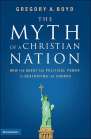
In 2010, Boyd was listed as one of the twenty most influential Christian scholars alive today.

In April 2004—an election year—Boyd preached a sermon series entitled The Cross and the Sword, which addressed the Christian’s call to love one’s enemies and to give exclusive allegiance to Christ and his kingdom.

As a consequence of challenging the highly politicized American evangelicalism, refusing to promote certain political agendas from the pulpit, and for preaching a radical non-violent commitment to Christ, Boyd lost about 20% of his congregation. Those who left Woodland Hills were later replaced with others who agreed with his vision.

From Boyd’s controversial sermon series came the book, The Myth of a Christian Nation: How the Quest for Political Power is Destroying the Church (Zondervan 2006). This book got Boyd a front-page New York Times profile in July 2006. He was also featured in CNN’s 2007 religious special, “God’s Warriors.” And an interview with Charlie Rose about the book.

I read the book when it was first published. It has not only been one of the most influential books in my life, a milestone in my personal thought, I believe it offers the clarity of vision evangelicalism needs right now—especially this election year.

Here are the contents of the book:

  1. The Kingdom of the Sword
  2. The Kingdom of the Cross
  3. Keeping the Kingdom Holy
  4. From Resident Aliens to Conquering Warlords
  5. Taking America Back for God
  6. The Myth of a Christian Nation
  7. When Chief Sinners Become Moral Guardians
  8. One Nation Under God?
  9. Christians and Violence: Confronting the Tough Questions

Boyd says, “My Thesis, which caused such an uproar, is this: I believe a significant segment of American evangelicalism is guilty of nationalistic and political idolatry.” Boyd believes evangelicals have fused their faith with certain political ideologies. Something Jesus never did.

“For some evangelicals, the kingdom of God is largely about, if not centered on, “taking America back for God,” voting for the Christian candidate, outlawing abortion, outlawing gay marriage, winning the culture war, defending political freedom at home and abroad, keeping the phrase “under God” in the Pledge of Allegiance, fighting for prayer in the public schools and at public events, and fighting to display the Ten Commandments in government buildings” (p.11).

Boyd dismantles the myth that America is a Christian nation, claiming that the myth “blinds us to the way in which our most basic and most cherished cultural assumptions are diametrically opposed to the kingdom way of life taught by Jesus and his disciples.”

He says that this myth “clouds our vision of God’s distinctly beautiful kingdom” and “harms the church’s primary mission” in the world. He believes that the American flag has “smothered the glory of the cross.”

Boyd contrasts the different versions of the “power over” kingdom of the world with that of the “power under” kingdom of God. “Allegiance to the kingdom of God,” Boyd says, “ is confused with allegiance to America, and lives that are called to be spent serving others are spent trying to gain power over others.”

What is the role of the government until Christ comes? How ought the Christian relate to politics and still carry out Christ’s commission? Boyd persuasively addresses these questions and much more—expositing the words of Christ and the teachings of the apostles in fresh relevant ways.

He even deals with common objections: “What about self-defense?” and “What about Christians in the military?” or “Don’t your views lead to passivity?”

Boyd writes, “Jesus’ teachings aren’t a set of pacifistic laws people are to merely obey, however unnatural and immoral they seem. Rather, his teachings are descriptions of what life in God’s domain looks like and prescriptions for how we are to cultivate this alternative form of life.”

While Jesus acknowledged political realities, he refused to invest his hopes and energies in politics as a solution to the world’s problems. In an examination of moments drawn from history and our own day, Boyd shows that whenever the church is co-opted by politics, we are seen as self-righteous jerks rather than God’s loving servants.

This needlessly turns people away from Christ.

Boyd is tirelessly working to cast a new vision, which is really an old vision, for evangelical Christians who have lost sight of the gospel. It’s time to abandon the quest for political power and begin living out the beautiful kingdom that Christ began with his life and ministry.

D.D. Flowers, 2012.

* Read the final post: Vision for 21st Century Evangelicalism, Book Five