Category Archives: Church

Anabaptist Core Convictions

In my last post (Finding the Naked Anabaptist) I confessed that Anabaptism resonates with me more than any other historical tradition of church history. The 16th century Anabaptists were seeking a restoration of NT church life and practice. And for the most part, they did just that—paying for it with their lives.

The Anabaptists sought to recover a radical discipleship that would bring about a Kingdom revolution, not by power-over others, but instead through humble service and loving obedience to the teachings of Jesus.

The first Anabaptists believed their ideas to be rooted in NT orthodoxy and orthoproxy. They re-envisioned the Christian faith as it was before the church’s acceptance of political power and the wielding of the sword.

It was the Kingdom vision of Anabaptist leaders like Balthasar Hubmaier, Hans Denck, Conrad Grebel, and Michael Sattler that began a movement, lived on in several traditions (e.g. Mennonites, Amish, Brethren in Christ, etc.), and is alive today among “Neo-Anabaptists”—folks who ascribe to Anabaptism, but have no historic or cultural links to them.

In fact, it appears that an increasing number of evangelicals are leaving what’s left of Christendom and embracing Anabaptist convictions.

Authentic Christians Follow Their Christ

Stuart Murray, author of The Naked Anabaptist (2010), says that Anabaptists accepted the basic ecumenical creeds of the early church, but they wanted to go beyond theological statements to a description of Christian behavior.

The following is a list of seven core convictions set forth by The Anabaptist Network, expounded upon in Murray’s book. These core convictions are aspirations of an Anabaptism creatively at work in the world today:

  1. Jesus is our example, teacher, friend, redeemer, and Lord. He is the source of our life, the central reference point for our faith and lifestyle, for our understanding of church, and our engagement with society. We are committed to following Jesus as well as worshipping him.

  2. Jesus is the focal point of God’s revelation. We are committed to a Jesus-centered approach to the Bible, and to the community of faith as the primary context in which we read the Bible and discern and apply its implications for discipleship.

  3. Western culture is slowly emerging from the Christendom era, when church and state jointly presided over a society in which almost all were assumed to be Christian. Whatever its positive contributions on values and institutions, Christendom seriously distorted the gospel, marginalized Jesus, and has left the churches ill equipped for mission to a post-Christendom culture. As we reflect on this, we are committed to learning from the experience and perspectives of movements such as Anabaptism that rejected standard Christendom assumptions and pursued alternative ways of thinking and behaving.

  4. The frequent association of the church with status, wealth, and force is inappropriate for followers of Jesus and damages our witness. We are committed to exploring ways of being good news to the poor, powerless, and persecuted, aware that such discipleship may attract opposition, resulting in suffering and sometimes ultimately martyrdom.

  5. Churches are called to be committed communities of discipleship and mission, places of friendship, mutual accountability, and multivoiced worship. As we eat together, sharing bread and wine, we sustain hope as we seek God’s kingdom together. We are committed to nurturing and developing such churches, in which young and old are valued, leadership is consultative, roles are related to gifts rather than gender, and baptism is for believers.

  6. Spirituality and economics are interconnected. In an individualist and consumerist culture and in a world where economic injustice is rife, we are committed to finding ways of living simply, sharing generously, caring for creation, and working for justice.

  7. Peace is at the heart of the gospel. As followers of Jesus in a divided and violent world, we are committed to finding nonviolent alternatives and to learning how to make a peace between individuals, within and among churches, in society, and between nations.

How do you feel about these seven core convictions set forth by The Anabaptist Network? Which conviction(s) do you agree or disagree with? Is there a conviction that resonates with you more than the others?

D.D. Flowers, 2013.

Finding the Naked Anabaptist

Most of my readers know that I grew up a Southern Baptist. I went to a Baptist university for my undergrad, and served in two SBC churches. Seven years later, I can say that I no longer think of myself as a Southern Baptist, for several reasons.

Primarily, it’s because I have found that I’m more closely aligned with another historical tradition in theology and church practice—Anabaptism.

I first encountered Anabaptism in college. I learned that the Baptists actually have historical roots going back to the 16th century Anabaptist movement.

John Smyth was an English separatist who planted the first Baptist church in Amsterdam. Before his death he had moved to receive believer’s baptism by the Mennonites, an Anabaptist group named after Menno Simons.

Smyth’s friends, Thomas Helwys and John Murton would return to their homes to form the first Baptist church in England. For my Baptist friends, the Baptist church was a mix of Protestant and Anabaptist ideas. It was Luther, Calvin, Zwingli, and Menno Simons all under one roof.

Roger Williams was responsible for planting the first Baptist church on American soil. He rejected the theocratic view of the Calvinistic pilgrims, detested the idea of a Christian nation, and argued for religious liberty and separation of church and state––an idea that the Anabaptists had been ruthlessly persecuted for a century earlier.

So who were the Anabaptists? And what is Anabaptism? 

The Anabaptists were a scattered and diverse group of 16th century separatists who first originated in Switzerland. The self-identified “Swiss Brethren” called for a “radical reformation” of the church that went far beyond the reform movements known as Protestantism.

The early Anabaptists rejected infant baptism as a civil rite, which denied the church’s relationship to the state, and called for strict adherence to the teachings of Jesus following a believer’s baptism.

Since it appeared they were being baptized a second time, their opponents called them Ana-baptists (re-baptizers).

These radicals claimed that Protestants only wanted a “half-way” reform because they refused to put down the sword and follow Christ in non-violence. They posited that the Reformers only rested in grace, but did not walk in resurrection life. Obeying Christ is the evidence of a changed life.

The Anabaptists denounced the emperor Constantine as “the great dragon” for fusing the cross and the sword in the 4th century. They called for a restoration of NT church life. This undermined the very foundations of Christendom (church militant and triumphant), and made them enemies of both Protestants and Catholics who held to the power of the sword.

Many Anabaptists were martyred during the 16th century. Their ideas would live on in the Mennonites, the Amish, and the Brethren in Christ.

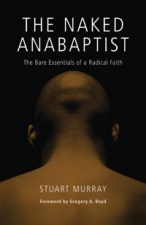
The Naked Anabaptist

Enter Stuart Murray, chair of the Anabaptist Network and PhD in Anabaptist hermeneutics. Stuart is the founder of Urban Expression, a pioneering urban church-planting agency, and has spent the last fourteen years as an urban church planter in East London.

His recent publications include: Post-Christendom: Church and Mission in a Strange New World (2004), Church after Christendom (2005), Changing Mission (2006), and The Naked Anabaptist (2010).

In his book, The Naked Anabaptist: The Bare Essentials of a Radical Faith, Stuart sets forth a fresh vision of the core convictions held by Anabaptists today.

Greg Boyd, pastor of Woodland Hills in St. Paul, has written the forward to The Naked Anabaptist. [It’s worth mentioning that his church is presently considering aligning themselves with an Anabaptist denomination.]

Stuart says that Anabaptism is being (re)discovered by folks from many different traditions. In fact, you might be an Anabaptist and just not know it.

“We believe that the Christendom era has bequeathed a form of Christianity that has marginalized, spiritualized, domesticated, and emasculated Jesus. The teaching of Jesus is watered down, privatized, and explained away. Jesus is worshipped as a remote kingly figure or a romanticized personal savior. In many churches (especially those emerging from the Reformation), Paul’s writings are prioritized over the Gospel accounts of the life of Jesus. And in many Christian traditions, ethical guidelines derived from the Old Testament or pagan philosophy trump Jesus’ call to discipleship.” The Naked Anabaptist p. 55-56

What does Anabaptism look like stripped down to to the bare essentials? Listen to Stuart discuss the core convictions of the Anabaptist Network.

Stay tuned for a Q&A with Stuart Murray next month on Anabaptism.

Suggested Anabaptist Reading:

D.D. Flowers, 2013.


Loving God With Your Mind

In setting forth the purpose of my blog, I have written that I want to be about loving Jesus with all of my heart, soul, strength, and mind.

This blog is dedicated to all those who desire to do that—making Jesus Christ central and supreme in every way.

Here is what I have made clear about myself and the blog:

As a young academic and an aspiring Christian mystic, this blog is unashamedly a reflection of my pursuit of Christ in spirit, soul, and body—the realm of the intellect as well as spiritual imagination. It is my desire that this blog would contribute to biblical academic dialogue, encourage humble Christ-followers, and challenge honest skeptics.

Those who follow my blog regularly know that I’m not afraid to press our collective evangelical buttons. I don’t do this because it’s in vogue, or because it’s the new hip (even “progressive”) thing to do these days.

No, I write about where I’ve been and where I am currently in my walk. I seek to remain teachable for the future. But I’m not afraid to be passionate about those things I’ve been convinced of in the present.

I wanted to share that with you. I suspect there are others that can relate to my own journey. I pray that you find this blog a place to think out-loud with me, even come to some much-needed conclusions.

I want to be flexible as I grow up into Christ. I truly want to be “semper reformanda” (always reforming). I hope you will commit to this principle of Christian growth with me.

I do recognize that it’s no easy thing to question long-held beliefs, or to challenge deeply rooted traditions. It’s a hard and often uncomfortable road. Many folks are just not willing to wrestle with new thoughts and ideas that seem to threaten their basic theological framework.

But I’m convinced it’s part of discipleship.

“Disciple” means we are learners on a journey. Learners change and grow.

While we may not be willing to embrace a new teaching today (or an old one that’s new to us), we might be in a better position later on to see the wisdom of it and experience its life-giving freedom. We must be careful. Overreacting to new ideas can actually make it harder to accept them later on when/if we begin to sense a change in the wind of conviction.

Of course, it may be a teaching we never accept because we feel it’s not compatible with our interpretation(s) of Scripture. Regardless, we must remain humble and teachable, allowing others to follow the Lord as best they know how, even if we decide we just flat out disagree.

This requires an attitude of humility and a willing spirit of forbearance with others. If we’re going to love the Lord with all or our mind, as we seek to hold together faith and reason, we must be intentional about these things.

In humility we must all recognize that there is inspired Scripture, and then there are our interpretation(s) of Scripture. We must remember this when we’re in dialogue with others. And we should always think the best of those who disagree with our interpretations.

Finally, we need not be fearful of intellectual challenges to our faith when we are getting all of our life from Christ, and entrusting others to him also.

When we’re doing this, we can allow each other freedom and space to grow.

The following video is a Greg Boyd sermon excerpt from a 2009 message on eternal punishment. He is prefacing his message by talking about the need for intellectual inquiry in our pursuit of Christ.

Are you encouraged to think and question in your church? What rewards have you experienced from loving God with all of your mind? What can the church do to be a safe place for intellectual inquiry?

D.D. Flowers, 2013.


On Church Doctrinal Statements

Last week I posted on Creeds & the Local Church. I’ve been giving some thought to the importance, even necessity, of a church doctrinal statement.

I’ve also been thinking about the difference(s) between dogma, doctrine, and opinion. In the pursuit of planting a church, it must be examined and discussed with others who are joining together in community.

I concluded that…

“a healthy church will continue to wrestle with dogma, doctrine, and opinion in every age and culture.”

I wanted to share a few more thoughts I’ve had in light of a couple responses to my last post on the topic.

Why We Need Doctrinal Statements

I admit that a lengthy doctrinal statement can present obstacles for folks. I know that when I see a long doctrinal statement, I honestly anticipate something that’s gonna rub me the wrong way.

I even do this when looking at schools. I almost expect that the longer the statement, the more likely we’re going to clash.

I quickly move off church websites when I see that they believe in a “rapture” pre-millenial/pre-trib theology. That’s of course because I so strongly disagree with it, and I often don’t see why it needs to be stated.

I think… “Can’t we just agree that Christ is returning?”

I think it’s different when there is a statement included that allows for differing views on the matter. It should be clear that people are welcome (and treated that way) even if they disagree with the “official” doctrine of the church. There ought to be an atmosphere of freedom.

But I want to be clear that I don’t see anything wrong with a church saying, “Here’s where we are as a local fellowship.” I would rather they be upfront about it, because it’s there whether visible in a confession or not. This is good and can please the Lord, when it’s done in grace and love.

Contrary to those that think creeds and doctrinal statements are always and only divisive, I think they are helpful for a fellowship and for those who would visit them. We mustn’t jump to such extremes just because we’ve seen examples of churches who did not hold their doctrine with grace, humility, and love. It’s reckless to respond in such a way.

A doctrinal statement captures the heart of the people, and serves as a guide for further growth into Christ.

I think it’s beneficial for visiting Christians to know where a church is in its journey. A doctrinal statement can reveal that to a certain extent. I would like to know where most of the fellowship is at in their walk. Wouldn’t you?

In reality I think it’s unhealthy not to at least hold some distinctives as a local church seeking to express the Christ they know. Where are we theologically as a fellowship? How are we seeking to manifest Christ among our culture and context? How do we feel about issues that often divide the church and the world? These are important questions that should be answered, leaving room for exploration and growth moving forward.

I believe it’s possible to plant your church’s creed, mission, and vision in certain doctrinal ideas while at the same time welcoming everyone who agrees upon the foundation—the mysterious incarnation of Christ.

I don’t think it’s a good idea to enter into any fellowship where doctrine isn’t apart of the church’s life together. That fellowship may have good intentions, but they open themselves up to problems born in the opposite extreme of dogmatism. They imagine that doctrine is inevitably against knowing Christ. They’re wrong. And they’ll be proven wrong.

So, I would say folks will (and should) find union with saints based on their basic confession of something like the Apostles Creed. But I also believe it’s healthy—even necessary—for a church to be upfront and clear about their doctrinal positions, holding them in love, grace, and humility.

It can be done, even if we’re skeptical because of our bad experiences.

What do you think? How have you seen doctrine and church distinctives serve as a healthy guide to growing in Christ? How are you and your church handling doctrinal matters?

D.D. Flowers, 2013.