
 This past Tuesday, November 6th was Election Day here in the United States. I challenged my readers to put their ability to vote into perspective, and declare that Jesus is King. You can read that post here.
In the aftermath of Tuesday’s political circus, and in light of the reactions that I have read and heard from evangelicals across the country, I felt compelled to share what I believe to be a biblical perspective of recent events and the days to come.
If you’re a follower of Christ and you are in any way troubled or overjoyed by the outcome of the recent presidential auction, then you really need to spend some time reflecting on King Jesus and what the Kingdom of God looks like on the earth, and how it’s to be lived out through the church.
In helping us to rethink the Kingdom together, I think we need to be reminded of a biblical theology of the devil and the truth about demonic involvement in the kingdoms of the world. And then (re)consider the way in which God is sovereign in the world today.
Holy Spirit, please open our eyes and ears to your truth.
Prince of the Power of the Air
I have recently mentioned in my post What Would Jesus Not Do? that Satan has power and authority to manipulate the kingdoms of the world. We can see this in Matthew 4:8-9. Jesus doesn’t dispute Satan’s claim.
While we don’t know how the Devil originally came to have this power, the Scripture is clear on the matter.
John says that “the whole world lies under the power of the evil one” (1 John 5:19). Paul refers to Satan as “the god of this age” and as “the ruler of the power of the air” (2 Cor 4:4; Eph 2:2). Jesus referred to Satan as the “ruler of this world” (John 12:21; 14:30; 16:11), indicating that he is the highest demonic ruler behind the kingdoms of the world.
Greg Boyd writes, “Functionally, Satan is the acting CEO of all earthly governments” (The Myth of a Christian Nation: How the Quest for Political Power is Destroying the Church, p.22).
This ought to be very sobering to those believers who think that politics is the avenue by which God reigns on the earth. If we will accept this biblical idea, we will see more clearly why it is that Jesus rejected politics as a method of advancing his upside-down Kingdom.
In Daniel 10 we learn that the reason Daniel’s prayers were not seemingly being answered was due to the demonic “princes” that were at work behind the powers that be in the world. The angel that appears to Daniel tells him of the demonic powers that were working behind the scenes to bring chaos and destruction through empires. And that this would impact God’s people.
In the book of Revelation, the Devil is revealed as the ruler of all kingdoms of the world as if it were one kingdom of darkness that Jesus would claim in his return (Rev 11:15). John’s apocalyptic vision portrays Jesus and the church as the target of Satan, who is the great dragon behind the evil deeds of governments (Rev 12:1-17).
Jacques Ellul has written: “He (Satan) brings all his efforts to bear against those who carry grace and love in the world… to prevent God’s love from being present in the world” (The Subversion of Christianity, p.177).
While there is presently a great demonic influence at work in the kingdoms of the world, the Lord intends to bring about the end of all nation-states to make way for the establishment of one Kingdom with Christ as ruler of a new heavens and earth. God will soon crush Satan (Rom 16:20).
In the meantime, there is a covert spiritual evil at work in governments.
“What the vanquished powers can always do is dramatize the situation on earth, make human life intolerable, destroy faith and mutual trust, make people suffer, kill off love, and prevent the birth of hope. In other words, what seems to me to be biblically certain is that the evil powers make earth a hell…” (Ellul, p. 177).
How then can we possibly think that our direct involvement in politics is a Christian “duty” as a citizen of heaven (Phil 3:20)? We are aliens and strangers (1 Pet 2:11). A soldier in a foreign land does not get involved with civilian affairs. They obey their commanding officer (2 Tim 2:4).
Messiah Jesus has shown us the way to overcoming evil. Will we follow him?
“Finally, be strong in the Lord and in his mighty power. Put on the full armor of God so that you can take your stand against the devil’s schemes. For our struggle is not against flesh and blood, but against the rulers, against the authorities, against the powers of this dark world and against the spiritual forces of evil in the heavenly realms.” Ephesians 6:10-12
Is God in Control?
I find it interesting that those believers who say, “God is in control” after their candidate loses, don’t often live like it in the days leading up to elections. Their attitudes, their language, and their fear-mongering say something much different about God.
Saying that “God is in control” seems to be the evangelical response to tragedy, real and perceived evils, and personal disappointment. And then there is confusion as to what and how God is “controlling” the world around us. I think it’s important that we think about this a bit.
Calvinists are the most inconsistent here. They say, “God is in control” to mean that every single thing that happens on the planet is because God made it happen, but reserve the right to be disappointed when their candidate loses and evil prevails in the world. Huh?
For many reasons, I can’t help but find this view so terribly illogical, even downright disturbing. I don’t know why anyone would be outraged by any evil activity if everything happens because God wills that it happen.
I must admit that I’m appalled by this idea. It’s ridiculous and should be rejected as a proper understanding of God’s sovereignty.
Any idea of “God is in control” that doesn’t allow for a great level of human free will and the existence of spiritual evil fighting against the will of God is a bankrupt and empty theodicy.
It’s not even worthy to be considered as a legitimate explanation for evil in the world. I prefer a Trinitarian Warfare Worldview.
Many folks use the cliché that “God is in control” simply because things didn’t go their way, and they can’t make sense of the world around them.
It also sounds like some believers are implying that God must have wanted this or that particular person in office, while refusing to acknowledge that sometimes God’s will is not always done.
Of course, it could be that God’s will is being done and they just don’t like it. But since they are supposed to be OK with whatever God does (including evil), they say, “God is in control.”
Which is it? I’m not real sure what is meant by this phrase anymore.
I do think that we have been guilty of proclaiming that “God is in control” simply because we are trying to remind ourselves of something we’ve not been entirely convinced of yet. Our fearful words and actions in an election year prove this to be true.
We must come to a biblical consensus on who is responsible for evil, and what God is doing about it. If we call ourselves Christians, then Christ must be viewed as God’s response. Therefore, our response to evil must look like the God revealed in Jesus. Nothing else will do.
Many evangelicals have yet to come fully into the peace and rest of Christ, and the assurance that the true King and his Kingdom will not be overcome—not even by hell itself (Matt 16:18). Jesus said it. We can believe it.
America will collapse in time, but the gospel of the Kingdom will live on. And possibly in more powerful ways than the church in America has ever known in her worldly comforts and freedoms.
God does not give a spirit of fear, but a spirit of power in the knowledge of our living hope. It’s fear that garners a trust in politics and the power of the sword, not the living hope of Christ in us.
Is God in control? I have no doubt. But how is he in control?
As one theologian has put it, “God’s sovereignty doesn’t look like a huge bicep coming out of heaven. It looks like the cross of the crucified Jesus.”
The control of God looks like a bloody cross, not a bloody sword.
This power looks foolish to those who have not known it.
God was in control when the forces of darkness crucified the King of the universe for claiming that his Kingdom is the real deal, and Caesar’s kingdom is just the parody.
That’s what God’s sovereignty looks like.
Fallen angels and wicked men war against the Lamb, but the Lamb triumphs in surrender. He wins by dying, not by killing. We’re called to follow him in this way of overcoming evil with good (Rom 12:17-21). We overcome by the blood of the Lamb and the word of our testimony (Rev 12:11).
All other methods of confronting evil, no matter how noble and good, compromise the distinctive nature of the Kingdom of God that the church is called to manifest. Do you believe this?
Jesus prayed for God’s will to be done on earth as it is in heaven because clearly the Father’s will is not always done (Matt 6:10). Yet God is in control even as spiritual evil uses its freedom to oppose his reign.
Now that’s sovereignty!
So, if you believe that “God is in control” then you should live like it before and after presidential elections. And understand what it means to say such a thing. We must have “cross” control in mind.
What if the Church…
What if the church in America didn’t just say, “Jesus is King” in moments of great safety and security on the earth, but actually lived like he is the reigning King of the whole universe right in the middle of this political mess—in the midst of this present evil age?
Imagine what the church could do in the earth through the Spirit’s power if she moved forward with the courage of the early church that had no political power to advance the Jesus movement.
What if we lived like that?
I submit to you that our national, ethnic, and socio-economic boundaries and identities would fade away. We would discover a new identity with one allegiance. Healing would flow from Christ, through the church, to all the nations of the world.
If we would pledge to Jesus and his methods of doing justice, God’s desire to bring heaven to earth would be known in the earth. We would move closer to the reality of which Christ promises to complete in his return.
That’s Christianity, folks. That’s what God wants in the earth.
And he waits for a church that wants his will to be done—a people that welcome his Kingdom, not look for an escape.
Where Do We Go From Here?
Let these times of ours be a reminder to you that the hope of the world is not found in the kingdoms of the world and their politics of corruption.
This is one more opportunity for us to rethink the church’s quest for politics and the ugliness that results from confusing the way of Caesar with the way of Christ. I want to encourage you to give some serious thought to this.
Brothers and sisters, I feel strongly that the future of the church in America depends upon whether or not she is able to successfully embrace the beauty of the Kingdom of God over and against a pervasive nationalism that presently holds her captive to the use of worldly kingdom politics as a means to God’s good ends. This is my prophetic word. You be the judge.
It’s time to turn the tides and begin trusting in the way of the crucified Messiah. Lord, help us to be creatively engaged in acting out the good news of the Kingdom in the way of Christ.
Will you join me in reimagining the Kingdom manifested on the earth?
D.D. Flowers, 2012.
 I remember reading a story where a student sitting next to Albert Einstein turned to him and asked, “What do you do?” Einstein replied, “I am a student of physics. What do you do?” The student replied, “Oh, I finished studying physics last year.”
 Filters are meant to screen things out that don’t belong. But the more threads or restrictions to the settings on those filters, they can actually work against you.
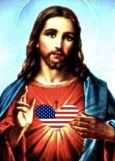 What is the norm here in America? Well, some killing and violence is acceptable as it promotes security, democracy, freedom, etc. Therefore, your filters force you to privatize and dilute the teachings of Jesus. As a result, the Bill of Rights often ends up trumping the real Jesus and the rest of the New Testament.
 Josh Garrels is a singer-songwriter living in Portland, Oregon. He is the founder of independent label Small Voice Records. Garrels has released six albums, including the critically acclaimed, fan-financed 2011 release
  I was interviewed on Gottalife Radio by the spirited Scotsman

 The Centrality and Supremacy of Jesus Christ