Tag Archives: organic church

The Problem with Modern-Day Preaching

“Preach the Word (i.e. Christ; John 1:1-2, 14); be prepared in season and out of season; correct, rebuke and encourage– with great patience and careful instruction. For the time will come when men will not put up with sound doctrine. Instead, to suit their own desires, they will gather around them a great number of teachers to say what their itching ears want to hear.” Paul, Second Letter to Timothy, 4:2-3

I write to you out of an observation of the great majority of today’s preaching from the pulpit and the pen. The pulpit may be bulky and made of solid oak, or a glass podium, or even a simple music stand… it doesn’t matter. From whatever pulpit… by whatever popular teacher or author… in whatever form… something is most definitely wrong with today’s “Christian” preaching.

In addition to bad hermeneutics and those who preach for monetary gain, there is a compromising of our faith being displayed in the sermons of many respected preachers and a capitulation to the surrounding culture.

I am writing to you from what I believe is coming out of the last few years of my life–out of an immense shift in my understanding of the centrality and supremacy of Christ. I believe this observation is born out of what I have dubbed my “renewed” Christology.

For me, it was a revolution of the heart. And this revolution has set into motion a great undoing for an even greater relearning. It has caused many curtains of culture to be lifted from my eyes. This light, I believe, is available to all that desire it. To those who knock, the door will be opened. To those that seek, they shall find (Matt. 7:7).

Let the heart of this examination be known to you who read. And together, let us seek the centrality and supremacy of Christ… especially in our preaching.

The Christian Life is Principles?

“See to it that no one takes you captive through hollow and deceptive philosophy, which depends on human tradition and the basic principles of this world rather than on Christ.” Paul, Letter to the Colossians, 2:8

According to most preaching today, a person could easily make the judgment that Jesus did not come to give us his life, but to give us principles to live by. Yes, it is fair to say that Christ is not the end of popular preaching today. It could easily be deduced from your nearest pulpit that Christ was a mighty philosopher who has given us morals, values, and principles to follow that we might find happiness on earth. It is often presented that if we will learn the right formula all will be well with the soul.

Let us at least be clear about this one thing, this is not the message of Christ or the first apostles.

During the last hours of Christ’s life, he prayed, “My prayer is not for them (i.e. 11 disciples) alone. I pray also for those (i.e. you and I) who will believe in me through their message, that all of them may be one, Father, just as you are in me and I am in you… I have given them the glory that you gave me, that they may be one as we are one: I in them and you in me.” Jesus, The Gospel of John, 17:20-23

The apostle Paul wrote, “God has chosen to make known among the Gentiles the glorious riches of this mystery, which is Christ in you, the hope of glory. We proclaim him, admonishing and teaching everyone with all wisdom, so that we may present everyone perfect in Christ. To this end I labor, struggling with all his energy, which so powerfully works in me.” Paul, Letter to the Colossians, 1:27-29

When the Gospel of Jesus is reduced down to forgiveness of sin and going to heaven when you die… we miss the true message of the whole Gospel of Christ. When we talk about knowing Christ today and all we think of is Jesus dying for our sins, we fall short of the complete good news of God. We must move on and grow up into the fullness of Christ in us! We must commit to rereading Scripture with this as the primary concern of all of the apostles of Jesus. They understood that the message in all of Scripture was that God has given us his life through Christ Jesus his Son.

Therefore, the Gospel message is to preach that God has paid our sin debt in order that his life can reign in us. The only concern of the first Christians was to preach that the person of Jesus was the gift, not heaven. The Christian life is not a destination, it is a journey. It is not about principles, it is about a Person.

I am fully aware that today we have philosophers and motivational speakers sitting in the prophet’s chair. Clearly, these men preach human wisdom and use the Bible to polish their self-centered messages in order that they might label them “biblical.” It is very disturbing to see the multitudes that are being deceived by these men.

However, I would like to particularly focus my attention on those who preach principles while at the same time mixing Christian language in the message. They preach Christ, but through learning steps and principles… instead of learning of his Person. They do not present the message I have stated above. They speak of living Jesus’ life without first knowing his being. They see only the benefits of following Christ. They do not embrace his Person as the life force within them that will carry out his commands.

If we are honest with ourselves, much of the so-called “Christ-centered” preaching that we hear today is presented in expounding on principles taken from Christ’s life… instead of it simply being Christ’s life in us. It is an attempt to use Christ to achieve our ends, instead of knowing Christ to reach his own.

Yes, if we are honest… most Christians believe that Christianity is about following some guidelines (which translates into a particular way to eat, dress, live, love, vote, etc.)… and we never embrace the full Person of Jesus. Therefore, we attempt to sustain life by principles, fail to receive life from the Person, and we never see Christ come to full expression in our earthly lives.

Is this not evident by the bestselling books today? If you will look closely at a few of the most recent popular books you will notice that Christ is not central and supreme. In some cases, Christ is completely absent from the message. These books present Christianity as principle-filled instead of Person-filled (i.e. Christ-centered). The authors, as well-intentioned as they may be, are trading the Person of Christ for principles to live by. (Some have even denied Christ’s supremacy.) On top of that, these principles are presented in a very self-centered and hedonistic theology.

Life comes out of Christ, never out of principles.

This is what we must understand. If we desire to work out our salvation as we have been commanded… we must come to this: Christ is our salvation from beginning to end. Preaching worldly principles will clearly lead us to destruction. And preaching biblical principles that do not first come from knowing Jesus will stunt our spiritual growth.

This is why so many Christians are banging their heads up against the wall today. They are running from one pulpit to another, one book to another, and one emotion to another. They have not been taught how to grow up into Christ. It reminds me of a Credence Clearwater Revival song called, “Commotion.” There is a bunch of it going on, and seldom do we ever truly live. Let’s stop and rethink our Christology.

Trading Principles for a Person

A couple of years ago I was captivated by seeing Christ’s principles and teachings on the Sermon on the Mount in a new way. It was like I had never read them before or been taught its true meaning in all of my Christian upbringing. The Lord had opened my eyes to verses that we had ignored or watered-down for years.

I began to teach these things without fully understanding “Christ in you.” I believe that I had a brief understanding, but it was not yet articulated in my thought or life. It must have seemed impossible to my students, “How can we live this way?” I imagine this is exactly what Jesus’ audience was thinking when they heard it for the first time, “What is this man saying, ‘love my enemies’?… he is out of his mind!” No doubt, many thought he was crazy, even his own family (Mk. 3:20-21).

It didn’t take long for me to develop a renewed Christology. The Lord had been preparing the ground of my heart to receive a new revelation of his Son. It finally came upon reading Watchman Nee’s exposition of the book of Romans in his book, “The Normal Christian Life.” Nothing has been the same since. And I mean nothing.

I will not mince with words on such a critical issue. Living by principles will fail you. Your life is not found in following rules and guidelines and then waving to Jesus off to the side, saying, “Thanks for these wonderful principles my Lord! Now I can live a happy life and expect preferential treatment from the world.” Many of my readers may be thinking, “I would never say that.” Yet, we fail to see that we don’t have to say it. Our focus today and our faithfulness to these principle preachers have already condemned many of us tomorrow. We need to trade in principle-centered teachings for those that are first Christ-in-you-centered.

“But now that you know God– or rather are known by God– how is it that you are turning back to those weak and miserable principles? Do you wish to be enslaved by them all over again?” Paul, Letter to the Galatians, 4:9

Can we truly live the abundant life Christ gives by simply being mindful that we might die in 30 days? Will inspiration last by holding on to some cliché or our trust in 12 steps? Will legalism and ascetics save the day? Seriously, how long does that work for you?

This may help the world make it through the day, but our hope is not in worldly wisdom and things of men… our hope is in the Person of Jesus Christ. Has not Christ given us himself to be everything that we need to motivate and inspire, to fill us with purpose and a mission? Hasn’t he made a way to fulfill the law by embracing his Person? From what I am hearing today, apparently not. And I sincerely believe this great distraction of God’s people is fueled by the devil.

“How far Satan will go even in bringing about a kind of devotion to Christ, and promote a mystical, physical “Christianity” with elements of moral elevation, and yet hide within that very thing something which is of himself and, being of himself, savors of that which was in him from that time when he himself was hurled out of heaven, that thing which would take from the Lord Jesus the absoluteness of His place in the Godhead.”T. Austin Sparks, The Centrality and Supremacy of the Lord Jesus Christ, p.38

If you listen closely, much of modern-day preaching is an attempt to fill the void in people’s soul by taking the back door approach to living victoriously. In the end, it undermines the absolute centrality and supremacy of Christ. Instead of preaching the depths and riches of Christ, his principles are taught in its place (not entirely of course, just those principles that fit our accepted cultural and theological ideas). To add to that… mix some new age self-help heresy in there and you completely lose anything that comes close to resembling Christ.

Christ has made a way for us to come to him directly. We should not concern ourselves with the effect (his living), until we begin with the cause (his life). Beginning with Christ will in the end give us those things that we see in his principles. We must concern ourselves with the being, instead of the doing. The doing will come naturally after we have locked on to his Person and understand that knowing Christ in spirit and in truth is our only concern.

Principles Out of the Person

About a year ago, I met a man and discussed with him that there are churches that believe there comes a time to kill enemies, despite what Jesus has said. Being Christ-centered and understanding “Christ in you”… he was befuddled and could not comprehend that there were professing believers that actually believed this.

He was so consumed with “Christ in you” he did not see an unattainable principle, he understood that the Person of Christ in him would never even entertain the thought of violating a teaching of Jesus. The same Christ that loved his enemies in the first-century was the same Christ living in him today. Although his reaction proved him to be a bit cut off from the outside world, I will never forget his reaction of complete shock.

When the Person of Christ has not been embraced and when we have missed the full message of the Gospel which is “Christ in you”… then of course, many of Christ’s principles and teachings seem absolutely ridiculous and impossible to expect adherence. This is why teaching principles without the Person can never lead us to Christ in the way he has prepared.

Ultimately, we fail to apply principles because the nature of the matter is to accomplish these things by doing in our own strength, instead of knowing and being the Lord in his strength.

When we falsely believe that forgiveness of sin is all there is to Christ, we will inevitably fail to see the world rightly through the eyes of Christ, for we have not fully realized that life within us. We must enter into his life before he can use us to manage his affairs in the church and preach the pure Gospel of salvation to the world.

We have to decide which it will be. Will we attempt to live out his principles apart from first knowing his life? Can a popular book on principles give me the life in Christ I desire? Can a sermon that says, “Principles in you, the hope of glory” save? Can this save you?

Should we not seek to understand Paul’s words, “Christ in you, the hope of glory.” The later will deliver the life that is promised. The first will only sell books and gather around men a great following of religious people. Outwardly, the hype might appear as success and fulfillment, but the people who go home empty in heart know better. We simply must be willing to be honest with ourselves and the Lord.

At the end of the day… pop culture Christianity is a mirage in a desert wasteland. We must cross over Jordan to Christ in this life… if we ever wish to enjoy the fruit of the land in the next.

emerging_church1It is evident in whatever form of church you find yourself in. Something is missing in it all. Where there ought to be spiritual life, there is death. Over the last decade or so I have noticed the church drama has been building. Have you? Everyone is offering up their “new” and “innovative” ideas to blow life into the church.

Yet, it would seem that many have not noticed that Christ is absent. He stands outside knocking… he is softly saying, “I would like my church back.” He calls to us in the wilderness, “I am the river flowing from the throne of God.” We must dance in the river if we want to see his life flow from ours.

A Renewed Christology

It was all about Jesus when you were born again. If it had not been… you never would have been saved and regenerated by his Holy Spirit. It would appear that the great problem in the church today is this: Coming to Christ in salvation and then moving off of Christ to fulfill passions, purposes, ministries, and movements by substituting the person of Christ with principles.

The problem with our lives and our churches is not solved in discovering our inner potential through motivational books and sermons. In fact, these messages actually take us further away from dependence on Christ’s life in us. Apart from the Person of Christ, you have no potential.

Likewise, the church’s problems are not solvable by new emerging methods for our narcissistic ecclesiology. It is not answered in bigger buildings, louder music, and marketing degrees. It is not found in being “seeker friendly” or adopting a new program of discipleship. The answer to all of our problems is found in Christ alone. Nothing else will do.

“I myself am the way and the truth and the life.”
Jesus, The Gospel of John, 14:6

It is time for us to return back to our “first love” (Rev. 2:4) We came to Christ in the beginning and we realized the love of the Father, that our sins had been forgiven. Now, we must continue to pursue him in all things and grow up into our salvation (Phil. 2:12). We must move on past the elementary teachings of our faith (Heb. 6:1). We must commit ourselves to rediscovering the Christ of the Gospels. We must move toward revolution instead of vainly attempting to bring life through reformation.

A Challenge

Here it is straight: We cannot fully know Christ’s true principles until we have been captured by Christ’s true Person. Just as you cannot fly a plane while sitting in the terminal… you cannot know Christ by living out principles born from your own will and determination. True Christ principles come flowing from the life that is consumed with: “the mystery of God, namely, Christ, in whom are hidden all the treasures of wisdom and knowledge.” (Col. 2:2-3)

I challenge you to listen to the words being taught by men today. Is Christ’s life the Gospel being preached? With all of the preaching and teaching today, you have to wonder… wonder why there is not a clear distinction between the natural faith of Christ vs. religion. If Christ was all that was being preached, I have to believe we would see a different church.

I am convinced that the Lord is setting a new stage for the churches in America. The stage is filled with suffering and heavy persecution. The right response in preparation is to put our hope and complete trust in the centrality and supremacy of Jesus Christ. Let it be known that Christ is the main actor in this production. It is not the church. We are but mere stage hands. We must understand the implications of this if we are to persevere through what is to come.

Let us go to the Scriptures in search of the indwelling Person of Christ, not principles that we might mold into our corrupted theology of Jesus and the church. Let us pray like Jesus in the garden. “Lord, make us one in you. Prepare us for that Day that is coming. Come Lord Jesus, come!”

“I am the resurrection and the life. He who believes in me will live, even though he dies; and whoever lives and believes in me will never die. Do you believe this?” Jesus, The Gospel of John, 11:25

Church Drama or Christ Dogma?

There seems to be a great deal of drama surrounding the church today. It would appear that many Christians believe that more talk about church practice will lead to a fruitful end. Apparently, arguing over church forms and methods are going to lead us to unity in the Body of Christ, and that through pragmatism we will be able to obtain a church utopia on earth.

Many believers have been fooled into thinking that more emerging conversations will give birth to a glorious epiphany in our ecclesiology. I don’t have to defend my statements with statistics. Anyone paying attention to the church climate in this generation can see the ridiculous mess we have created for ourselves.

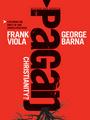
Pagan Christianity: Exploring the Roots of Our Church Practices by Frank Viola and George Barna is causing the much expected firestorm of debate. We are even seeing Christians persecuting Christians. It is proof that history does indeed repeat itself. In the middle of the conversations I am hearing the way in which the bruised up and world-intoxicated church should conduct herself when she gathers together.

Primarily, I hear conversations centered around “forms” and “models.” When bloggers and the occasional “anonymous” writers are not trying to make judgments against a book they have not read, they pull out old arguments to ease their conscience and defend their uncontested and undigested presuppositions concerning the church. I would laugh at some of the things I am hearing if I wasn’t so deeply disturbed in my spirit.

The church is torn and caught in a whirlwind of drama, and the one thing we should be talking about is being replaced with narcissistic ecclesiastical conversations perpetuating the feeling of utter despair.

In my review of PC and in all of my comments elsewhere, I have stated over and over that this book is not about “doing” church or about “forms.” This book is about returning to the person and work of Christ–it is about spiritual revolution, not religious reformation.

When we examine the New Testament without bringing the last 1700 years of church practice with it, we will see a church that gathered around Christ in simplicity.  We see a church consumed with all things Christ, not self-absorbed in a crazy array of emerging church practices.

When it comes to the historical research and work presented in PC, we must be willing to accept that the pagan origins documented in this book sound an alarm that should result in great concern from us. We must be open to a paradigm shift and be willing to lay aside many things before we will hear the clear exaltation of Christ in his Body the church. And this is the purpose of the book: “to make room” for Christ!

A person should not hear the authors as trading one church form for another. All readers should take a mature view of the message undoubtedly being presented in this book. There is a clear cry of spiritual revolution back to the centrality, supremacy, and headship of Christ in the church.

The way by which we are able to remove our preconceived notions concerning the church, is by a complete emersion and commitment into rediscovering the Christ of the Gospels.

Out of Christ is born the church. Out of Christ is born this house church “form” many readers see Viola describing. It is natural to first see this as strictly being forms, I know. I was distracted by the “doing” in the beginning. Nevertheless, if a person will continue to seek the Lord in spirit and in truth, in time, you should see things differently. In time, the Lord will bring more light that illuminates himself, not the church.

Many readers may not agree with the premise of the book because they ultimately have not taken the time to rethink Jesus’ words. Church history and its 1700 years of accumulating paganism speaks for itself. The reason for documenting these facts of history is to clear the stage for a narrative ecclesiology built upon Christ. In order to have a correct ecclesiology, we first need a renewed christology.

Readers must not confuse the thesis of this book with “doing” a different “model.” The book’s claim is that the “organic” church is born out of the natural faith of Christ (i.e. life and teachings) and the institutional church is born out of man’s wisdom in applying pagan models of leadership and acquiring all sorts of religious practices. 

I would rather people become even more upset by this, then they hear something else and be upset for the wrong reasons. Again, the purpose of PC is to spur us on to removing all church models and forms in order that our reactions to Christ would produce a church life that reflects his person and work.

This is the church that gathers in the “New Testament fashion”–the church gathered around the centality, supremacy, and headship of Christ.

I am now very cautious when recommending this book to people who have not already come to a place of total dissatisfaction with the Christ and the Christianity that is taught and practiced in America. The book could build up walls that prevent any real search for the authentic Christ from ever happening. And then again, it may be the shot in the pants that many professing believers need. Time will tell.

It was because of my own experience with church drama and the discontentment I felt with the Christ presented in the traditional church… that I was even open to a renewed Christology.  It is by the mercy and grace of God that I found Christ instead of latching on to forms, methods, and movements, and being distracted by them.

It is quite a thing, I know, to claim that the reason people react harshly to the message presented in this book is because they are not “hungry for more of Jesus.” However, I have given this a great deal of thought. I am certain that this is the case.

If a person can quickly pass off the Christ-centered message presented in PC, or any Christ-centered book for that matter, then it is apparent that there are things coming before Christ. These things, whatever they may be, are keeping people from their heart’s desire. These people may find that Christ is not the sum of all spiritual things wherever they are at in life.

The truth of the matter will only be found in discerning with the Spirit of Christ that indwells the spirit of man. When all is still and quite within a man’s soul, a person can know if Christ is truly first in the matter.  The Holy Spirit longs to exalt the Lord above all other pursuits and things that stand in the way of his absolute centrality and supremacy.

The purpose of this article is not to defend PC or the authors who are but mere men. The purpose is to sound a call for all believers to be consumed with Christ dogma instead of church drama.  It is a plea for the church to see the need for spiritual revolution (i.e. return to Christ), instead of religious reformation.

Before anything else is said or written, we must be aware of the fact that we are so easily misled into hype and drama with talks of methods and movements.  It is time to trade in our methods and movements dialogue for a renewed understanding of Jesus.

I’m afraid that much of the talk today about the church has little to nothing to do with Christ’s headship.  It would appear that many believers are taking the devil’s bait.  The evil one has the church talking about everything but Christ. He can’t keep us from noticing the problems, but he can keep us busy trying to solve those problems with some “new” way of “doing” church.

There is a revolution rising. The men and women who make up this revolution want to give the church back to Christ. However, if we do not concern ourselves with the centrality and supremacy of Christ, we will no doubt continue the drama that has lasted for over 1700 years.

The drama is evidence that there are many who have not concerned themselves with the centrality, supremacy, and headship of Christ in the church.  If Christ was central and supreme, we would be patiently discussing his person and works with each other instead of debating forms and methods.

Where will the church go from here? What voices will she listen to in this generation? Will she settle for reform and be persuaded by man and his movements or will she press on to her Lord and aid in the tearing down of the kingdom of hell?

There is only one road that leads to Christ, that is the way of the cross. If the church is willing to press on to Christ, she must ready herself for a major shift in the culture. For when the church is founded on the rock of Christ, the mighty winds of persecution will blow. And in the storm we will find peace.

May the Lord give us a continual hunger for his centrality and supremacy in all things. May Christ be our primary pursuit, the centerpiece of our conversations, and the subject of our personal meditation and reflection. Let us set our hearts to learning Christ, and we will be led to a normal “organic” church life that is born out of knowing the person and work of Christ Jesus our Lord.

“He is the image of the invisible God, the firstborn over all creation. For by him all things were created: things in heaven and on earth, visible and invisible, whether thrones or powers or rulers or authorities; all things were created by him and for him. He is before all things, and in him all things hold together. And he is the head of the body, the church; he is the beginning and the firstborn from among the dead, so that in everything he might have the supremacy.”

Paul, Letter to the Colossians 1:15-18

D.D. Flowers, 2008.


Religion’s Chains

Man creates the “order of service” within religion.  Christ is the order of service within true Christian community.  Christ is the head of the church and we are the many members with different functions.  Not so in religion.

In religion, man is in charge and he uses the Scripture to support the false dichotomy of “clergy/laity.” In religion, there exists a hierarchal leadership reflected in “offices.”

In Christ’s church, there is equality among all believers and everyone brings something to the table of fellowship. In the true church… the Holy Spirit is free to direct the affairs of the Body. In religion, man uses the wisdom of the world to do as he sees fit.

In protestant denominations religion can be seen in man’s predetermining of who God is and how and when God will work among his people.  God is worshipped at certain times and in certain ways;  ways in keeping with man’s tradition. Jesus is presented only from that particluar sectarian viewpoint and it is only in that viewpoint that the congregation may express its Christianity.

At this point, people are no longer seeking Christ free from man’s agendas and cultural bend… they no longer seek the Christ of the New Testament.  They seek a Christ that is Baptist, Methodist, Pentecostal, etc. Even when they read the New Testament they read through the lenses of their denomination and cultural upbringing. 

You may only view Christ and his church a certain preordained way that has been decided by man in these religious institutions. You may only see the Lord and his Word in the way that had been predetermined for you.  On top of that… we are all influenced by momma, America, and Santa Claus!

We not only perceive Christianity through these cultural influences, but we perpetuate the influences and continue to cause harm to the Gospel that is presented to the world.  Of course, many can’t see this is what they are doing, but nevertheless, it is in fact what they are doing and have done for centuries.

Has anything really changed since the 16th century “Reformation”?  I submit to you there was only a reformation of pagan catholic doctrine and practice, not a revolution back to the heart of God. Luther’s “Protestant Reformation” was only a half-way reform.  He even admitted that he never intended to break off from the catholic church, only reform it.  He only wanted to tweak it a bit and keep the religion!

I strongly encourage you to look at the facts of history. Do we not understand that this is the model most Christians practice today?  They are hand-me-down models from the catholic church.  Almost every “new” version of church today is only that same religious system tweaked for the pleasing of man. 

Many Christians today are not seeing authentic Christian faith and practice, but only a revised version of a pagan religion!  With Luther, Calvin, and Zwingli… we only saw a return to Sola Scriptura (i.e. Scripture alone). Now it is time for a return to Sola Christus (i.e. Christ alone).

This is the purpose of denominations and divisions, is it not?  It prides itself in what it believes and doesn’t believe; in what it sees and doesn’t see; in how it appreciates things others do not. It does not seek Christ alone and unity among all believers. How can it when it wishes only to enrich its traditional heritage all the more and maintain its ‘distinctives’ from other Christian groups.

How can Christ be pleased in this? Can a Kingdom stand when it is divided?

This religious denominationalism (i.e. divisions, factions, sects) is rooted in the prideful hearts of men. It is proud of those who follow Apollos, Cephas, and Paul. It is determined to continue this way of life by attempting to hold on to this thinking and at the same time pretend to get along with others who are priding themselves in their own denomination.  If you doubt this… attend an annual denominational convention.

Does God work within religious institutional Christianity? Yes. However, his Spirit is only able to work in pockets of ministry. The Lord will never be free to move as he desires in the vehicle of religion that man has adpoted. This is why man will forever be hoping, praying, and waiting for a “revival” that will never come in institutional Christianity. 

Why? Because the Lord Jesus Christ is not truly welcome. Man demands that the Lord meet him on his terms within his religious rituals. The Lord says, “Behold I stand at the door and knock… you have pushed me out of my church and turned my house (i.e. my people, my Body, my Bride) into a house of desolation!”

I believe this is at the heart of the religious Christian institutions: celebrating man’s way and widening the gap between Christ and his people. Man has gotten so carried away in his “tweaking” of the Christian religion… he has given the religious person many different versions of Jesus.  They may choose from a long buffet of divisions. 

For example… the “conservative, liberal, charismatic, liturgical, King James only, independent, non-denominational, free will, Holy Ghost, post-modern, emerging, mystics!”  just to name a few.

Sure, there are deep problems with the anti-Christ models of leadership within the church. Yes, the institutional church does not match up to the church in the book of Acts. Church history testifies to the 1700 years of pagan accumulation and that the institutional churches reflect Constantinian paganism more than it does New Testament Christianity.

Anyone who cares about historical facts can observe this.

However, I believe the greatest problem of all–the starting point to leaving behind the religious and breaking free of its chains–is returning to the Person and the work of Christ. The church must learn the way of Christ all over again. The church must embrace the centrality and supremacy of Jesus before she can experience genuine community and the power of the Holy Spirit on the earth. 

Let’s not concern ourselves with trying to unravel the mess that has been made these last 1700 years.  Let’s scrap it all!  Push these religious models aside and start again with Christ. We do not need these chains!

We were set free from these chains by the cross. Do not become a slave again to the ways of the flesh. I believe you and I both can see that the religious games of pop-culture Christianity are getting us no where fast! We have been purposefully driven in the wrong direction long enough. May we be willing to start over again like the religious leader Nicodemus.

It is time to gather around at Jesus’ feet and listen to the words of our Lord.

D.D. Flowers, 2008.


Pagan Christianity? Exploring the Roots of Our Church Practices (Book Review)

Pagan Christianity? Exploring the Roots of Our Church Practices

Spiritual Revolution Instead of Religious Reformation

A Book Review of: “Pagan Christianity? Exploring the Roots of Our Church Practices” by Frank Viola and George Barna


“Pagan Christianity? Exploring the Roots of Our Church Practices,” may very well be the most important book written on the Christian church in the last two millennia.  Frank Viola and George Barna team up to give their readers a critical examination of the last 1700 years of church history.


Does the institutional church have any biblical and historical right to exist?  “Are the practices of the institutional church (the clergy/laity system, salaried pastors, sacred buildings, the order of worship, etc.) God-approved developments to the church that the New Testament envisions? Or are they an unhealthy departure from it?”

The first edition of this book entitled, “Pagan Christianity: The Origins of Our Modern Church Practices” by Frank Viola… is the third book written in a set of five books on church restoration and organic church life.  Viola and George Barna, Christian pollster and author of the book “Revolution,” have co-authored the newly revised and updated “Pagan Christianity?: Exploring the Roots of Our Church Practices.”

Barna brings to the book a fresh look and a polished language that improves on the delivery of Viola’s original work.  Barna, who has caused no small stink upon his recent confessions regarding the church, makes his decision to leave the institutional church complete with the publication of this book.  If it wasn’t clear in his book “Revolution”… it is certainly clear now.

I enjoyed the new format of this book.  At the end of each chapter, the authors give the reader a “Delving Deeper” section which lists common questions with answers in return.  I felt that this helped to clarify what the authors were truly saying in order that fact might be separated from fiction.  I also enjoyed the updated references and the plethora of footnotes listed at the bottom of each page.  These references may be in a smaller font, but they are the entire foundation of historicity which resulted in the penning of this book.

Therefore, the serious reader will not want to overlook the footnotes.  The reader will also find the “Summary of Origins” and “Key Figures in Church History” in the back of the book a great help as well.  The book may look like a long read… yet, you will find that your interest is peaked beyond that of any other historical book you have ever read.  You will read until you are done… or until you have thrown it out the window.

The serious questions raised in this book will give the Christian reader more than enough to wrestle over.  Viola traces the pagan origins of almost every church practice that institutional Christianity holds dear and holds it to the light of the New Testament.  I remember first reading the original “Pagan Christianity” over a year ago.  I had spent 6 years of my life in “vocational ministry” within the institutional (Southern Baptist) church and I had a degree in Religion/Biblical Studies from a Baptist University.  I had just resigned from my position as Minister to Students/Education because the church’s leaders were opposed to fundamental teachings of Jesus.  My wife and I saw that we could no longer serve among them.

It was during this time that I began to read and study like never before.  I was seeking to be a senior pastor in a church somewhere in the United States.  I studied church history, ecclesiology, Christology, etc. I was seeking the Lord’s will for his church. I compiled a list of what the New Testament described the church looked like in fellowship and among the world. With the help of Viola’s book, I quickly realized that my list did not reflect the church I knew and that that church could not be seen in the model of the traditional church. I had to rethink my understanding of it all.

I know how hard this read will be for many people, especially clergy members. “Pagan Christianity?” will, no doubt, be a most uncomfortable read for all those who believe the Body of Christ is an institution.  For the clergy member, the read will almost be impossible.  At every turn of the page… the flesh will flare up in a horrible display of arrogance and pride.  Many will scoff at its claims and discourage others from reading it before an honest examination can be made.  If the reader is not prepared to reexamine his faith and practice for a paradigm shift… he or she might as well leave this book well alone.

If the reader is not yet at the end of their rope in frustration against the church practices and shallow conception of Christ that is believed and taught within the institutional church… this book will only breed anger and confusion.  But, if you were like me a year ago… you are tired and want answers… and, most importantly, you want more of Christ… then please read this book and allow yourself to be moved by it.  I encourage you to have an honest conversation with the Lord as you read.  And listen to his still small voice.

To the rabid opponents of this book, I strongly recommend you speak to no one before you have done truthful research concerning these matters AND have had an honest conversation with Jesus first.  Many will argue that this book only proposes another “form” or method of church.  This book is not about forms, but about principles.  To argue forms… is to miss the point of this book.

Many will make preposterous claims that this book seeks to tear down the church of Jesus Christ, when in all reality… this book exalts Jesus Christ of Nazareth and submits that we return to simple community gathered around his headship free from the human inventions of man and religion that hinders the Body from every-member functioning.

This book does not propose we mimic the model of first-century Christianity, but that we mimic our Lord.  Out of our Lord’s commands and the principles of his person and work (i.e. life and teachings) will come normal Christian church life!

Why has this book been written?  The authors write, “we have written this book for one reason: to make room for the absolute centrality, supremacy, and headship of Christ in His church.” (p.250)  This statement alone should be enough for any true follower of Christ to pick up and read.  But unfortunately, many people, for whatever reason, will choose to accept slander about the authors (even from trusted pastors) as enough reason to discredit and discount them as credible voices of truth in mainline Christianity.

This is an incredible action considering that many institutional churches in the last decade have built their entire plan of attack off the statistical findings of pollster George Barna.  On top of that… both of these men boldly proclaim Christ in a way that is undeniably and unmistakably from a spirit of love and edification.  The premature responses of the majority prove how mankind is driven by mere human emotions and tradition… instead of biblical truth discovered through a consistent and verifiable method of biblical interpretation that seeks to exalt Christ above all things.

This reviewer and ex-clergy member challenges you to consider the message of these men.  Compare the claims of this book with the Christ and the church of the New Testament before you decide who and what are truly following and being a reflection of pagan Christianity.

All of us must choose between spiritual revolution (i.e. return to Christ) or religious reformation (i.e. tweaking the old pagan systems).  One of these will release the church from her chains and free her from the bondage of man’s religion to experience the natural faith of Christ.  The other will only prolong God’s people from beholding Christ in majesty and splendor to the world.  There is only one life to live.  Choose wisely.