Tag Archives: house church

Church Drama or Christ Dogma?

There seems to be a great deal of drama surrounding the church today. It would appear that many Christians believe that more talk about church practice will lead to a fruitful end. Apparently, arguing over church forms and methods are going to lead us to unity in the Body of Christ, and that through pragmatism we will be able to obtain a church utopia on earth.

Many believers have been fooled into thinking that more emerging conversations will give birth to a glorious epiphany in our ecclesiology. I don’t have to defend my statements with statistics. Anyone paying attention to the church climate in this generation can see the ridiculous mess we have created for ourselves.

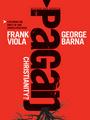
Pagan Christianity: Exploring the Roots of Our Church Practices by Frank Viola and George Barna is causing the much expected firestorm of debate. We are even seeing Christians persecuting Christians. It is proof that history does indeed repeat itself. In the middle of the conversations I am hearing the way in which the bruised up and world-intoxicated church should conduct herself when she gathers together.

Primarily, I hear conversations centered around “forms” and “models.” When bloggers and the occasional “anonymous” writers are not trying to make judgments against a book they have not read, they pull out old arguments to ease their conscience and defend their uncontested and undigested presuppositions concerning the church. I would laugh at some of the things I am hearing if I wasn’t so deeply disturbed in my spirit.

The church is torn and caught in a whirlwind of drama, and the one thing we should be talking about is being replaced with narcissistic ecclesiastical conversations perpetuating the feeling of utter despair.

In my review of PC and in all of my comments elsewhere, I have stated over and over that this book is not about “doing” church or about “forms.” This book is about returning to the person and work of Christ–it is about spiritual revolution, not religious reformation.

When we examine the New Testament without bringing the last 1700 years of church practice with it, we will see a church that gathered around Christ in simplicity.  We see a church consumed with all things Christ, not self-absorbed in a crazy array of emerging church practices.

When it comes to the historical research and work presented in PC, we must be willing to accept that the pagan origins documented in this book sound an alarm that should result in great concern from us. We must be open to a paradigm shift and be willing to lay aside many things before we will hear the clear exaltation of Christ in his Body the church. And this is the purpose of the book: “to make room” for Christ!

A person should not hear the authors as trading one church form for another. All readers should take a mature view of the message undoubtedly being presented in this book. There is a clear cry of spiritual revolution back to the centrality, supremacy, and headship of Christ in the church.

The way by which we are able to remove our preconceived notions concerning the church, is by a complete emersion and commitment into rediscovering the Christ of the Gospels.

Out of Christ is born the church. Out of Christ is born this house church “form” many readers see Viola describing. It is natural to first see this as strictly being forms, I know. I was distracted by the “doing” in the beginning. Nevertheless, if a person will continue to seek the Lord in spirit and in truth, in time, you should see things differently. In time, the Lord will bring more light that illuminates himself, not the church.

Many readers may not agree with the premise of the book because they ultimately have not taken the time to rethink Jesus’ words. Church history and its 1700 years of accumulating paganism speaks for itself. The reason for documenting these facts of history is to clear the stage for a narrative ecclesiology built upon Christ. In order to have a correct ecclesiology, we first need a renewed christology.

Readers must not confuse the thesis of this book with “doing” a different “model.” The book’s claim is that the “organic” church is born out of the natural faith of Christ (i.e. life and teachings) and the institutional church is born out of man’s wisdom in applying pagan models of leadership and acquiring all sorts of religious practices. 

I would rather people become even more upset by this, then they hear something else and be upset for the wrong reasons. Again, the purpose of PC is to spur us on to removing all church models and forms in order that our reactions to Christ would produce a church life that reflects his person and work.

This is the church that gathers in the “New Testament fashion”–the church gathered around the centality, supremacy, and headship of Christ.

I am now very cautious when recommending this book to people who have not already come to a place of total dissatisfaction with the Christ and the Christianity that is taught and practiced in America. The book could build up walls that prevent any real search for the authentic Christ from ever happening. And then again, it may be the shot in the pants that many professing believers need. Time will tell.

It was because of my own experience with church drama and the discontentment I felt with the Christ presented in the traditional church… that I was even open to a renewed Christology.  It is by the mercy and grace of God that I found Christ instead of latching on to forms, methods, and movements, and being distracted by them.

It is quite a thing, I know, to claim that the reason people react harshly to the message presented in this book is because they are not “hungry for more of Jesus.” However, I have given this a great deal of thought. I am certain that this is the case.

If a person can quickly pass off the Christ-centered message presented in PC, or any Christ-centered book for that matter, then it is apparent that there are things coming before Christ. These things, whatever they may be, are keeping people from their heart’s desire. These people may find that Christ is not the sum of all spiritual things wherever they are at in life.

The truth of the matter will only be found in discerning with the Spirit of Christ that indwells the spirit of man. When all is still and quite within a man’s soul, a person can know if Christ is truly first in the matter.  The Holy Spirit longs to exalt the Lord above all other pursuits and things that stand in the way of his absolute centrality and supremacy.

The purpose of this article is not to defend PC or the authors who are but mere men. The purpose is to sound a call for all believers to be consumed with Christ dogma instead of church drama.  It is a plea for the church to see the need for spiritual revolution (i.e. return to Christ), instead of religious reformation.

Before anything else is said or written, we must be aware of the fact that we are so easily misled into hype and drama with talks of methods and movements.  It is time to trade in our methods and movements dialogue for a renewed understanding of Jesus.

I’m afraid that much of the talk today about the church has little to nothing to do with Christ’s headship.  It would appear that many believers are taking the devil’s bait.  The evil one has the church talking about everything but Christ. He can’t keep us from noticing the problems, but he can keep us busy trying to solve those problems with some “new” way of “doing” church.

There is a revolution rising. The men and women who make up this revolution want to give the church back to Christ. However, if we do not concern ourselves with the centrality and supremacy of Christ, we will no doubt continue the drama that has lasted for over 1700 years.

The drama is evidence that there are many who have not concerned themselves with the centrality, supremacy, and headship of Christ in the church.  If Christ was central and supreme, we would be patiently discussing his person and works with each other instead of debating forms and methods.

Where will the church go from here? What voices will she listen to in this generation? Will she settle for reform and be persuaded by man and his movements or will she press on to her Lord and aid in the tearing down of the kingdom of hell?

There is only one road that leads to Christ, that is the way of the cross. If the church is willing to press on to Christ, she must ready herself for a major shift in the culture. For when the church is founded on the rock of Christ, the mighty winds of persecution will blow. And in the storm we will find peace.

May the Lord give us a continual hunger for his centrality and supremacy in all things. May Christ be our primary pursuit, the centerpiece of our conversations, and the subject of our personal meditation and reflection. Let us set our hearts to learning Christ, and we will be led to a normal “organic” church life that is born out of knowing the person and work of Christ Jesus our Lord.

“He is the image of the invisible God, the firstborn over all creation. For by him all things were created: things in heaven and on earth, visible and invisible, whether thrones or powers or rulers or authorities; all things were created by him and for him. He is before all things, and in him all things hold together. And he is the head of the body, the church; he is the beginning and the firstborn from among the dead, so that in everything he might have the supremacy.”

Paul, Letter to the Colossians 1:15-18

D.D. Flowers, 2008.

Religion’s Chains

Man creates the “order of service” within religion.  Christ is the order of service within true Christian community.  Christ is the head of the church and we are the many members with different functions.  Not so in religion.

In religion, man is in charge and he uses the Scripture to support the false dichotomy of “clergy/laity.” In religion, there exists a hierarchal leadership reflected in “offices.”

In Christ’s church, there is equality among all believers and everyone brings something to the table of fellowship. In the true church… the Holy Spirit is free to direct the affairs of the Body. In religion, man uses the wisdom of the world to do as he sees fit.

In protestant denominations religion can be seen in man’s predetermining of who God is and how and when God will work among his people.  God is worshipped at certain times and in certain ways;  ways in keeping with man’s tradition. Jesus is presented only from that particluar sectarian viewpoint and it is only in that viewpoint that the congregation may express its Christianity.

At this point, people are no longer seeking Christ free from man’s agendas and cultural bend… they no longer seek the Christ of the New Testament.  They seek a Christ that is Baptist, Methodist, Pentecostal, etc. Even when they read the New Testament they read through the lenses of their denomination and cultural upbringing. 

You may only view Christ and his church a certain preordained way that has been decided by man in these religious institutions. You may only see the Lord and his Word in the way that had been predetermined for you.  On top of that… we are all influenced by momma, America, and Santa Claus!

We not only perceive Christianity through these cultural influences, but we perpetuate the influences and continue to cause harm to the Gospel that is presented to the world.  Of course, many can’t see this is what they are doing, but nevertheless, it is in fact what they are doing and have done for centuries.

Has anything really changed since the 16th century “Reformation”?  I submit to you there was only a reformation of pagan catholic doctrine and practice, not a revolution back to the heart of God. Luther’s “Protestant Reformation” was only a half-way reform.  He even admitted that he never intended to break off from the catholic church, only reform it.  He only wanted to tweak it a bit and keep the religion!

I strongly encourage you to look at the facts of history. Do we not understand that this is the model most Christians practice today?  They are hand-me-down models from the catholic church.  Almost every “new” version of church today is only that same religious system tweaked for the pleasing of man. 

Many Christians today are not seeing authentic Christian faith and practice, but only a revised version of a pagan religion!  With Luther, Calvin, and Zwingli… we only saw a return to Sola Scriptura (i.e. Scripture alone). Now it is time for a return to Sola Christus (i.e. Christ alone).

This is the purpose of denominations and divisions, is it not?  It prides itself in what it believes and doesn’t believe; in what it sees and doesn’t see; in how it appreciates things others do not. It does not seek Christ alone and unity among all believers. How can it when it wishes only to enrich its traditional heritage all the more and maintain its ‘distinctives’ from other Christian groups.

How can Christ be pleased in this? Can a Kingdom stand when it is divided?

This religious denominationalism (i.e. divisions, factions, sects) is rooted in the prideful hearts of men. It is proud of those who follow Apollos, Cephas, and Paul. It is determined to continue this way of life by attempting to hold on to this thinking and at the same time pretend to get along with others who are priding themselves in their own denomination.  If you doubt this… attend an annual denominational convention.

Does God work within religious institutional Christianity? Yes. However, his Spirit is only able to work in pockets of ministry. The Lord will never be free to move as he desires in the vehicle of religion that man has adpoted. This is why man will forever be hoping, praying, and waiting for a “revival” that will never come in institutional Christianity. 

Why? Because the Lord Jesus Christ is not truly welcome. Man demands that the Lord meet him on his terms within his religious rituals. The Lord says, “Behold I stand at the door and knock… you have pushed me out of my church and turned my house (i.e. my people, my Body, my Bride) into a house of desolation!”

I believe this is at the heart of the religious Christian institutions: celebrating man’s way and widening the gap between Christ and his people. Man has gotten so carried away in his “tweaking” of the Christian religion… he has given the religious person many different versions of Jesus.  They may choose from a long buffet of divisions. 

For example… the “conservative, liberal, charismatic, liturgical, King James only, independent, non-denominational, free will, Holy Ghost, post-modern, emerging, mystics!”  just to name a few.

Sure, there are deep problems with the anti-Christ models of leadership within the church. Yes, the institutional church does not match up to the church in the book of Acts. Church history testifies to the 1700 years of pagan accumulation and that the institutional churches reflect Constantinian paganism more than it does New Testament Christianity.

Anyone who cares about historical facts can observe this.

However, I believe the greatest problem of all–the starting point to leaving behind the religious and breaking free of its chains–is returning to the Person and the work of Christ. The church must learn the way of Christ all over again. The church must embrace the centrality and supremacy of Jesus before she can experience genuine community and the power of the Holy Spirit on the earth. 

Let’s not concern ourselves with trying to unravel the mess that has been made these last 1700 years.  Let’s scrap it all!  Push these religious models aside and start again with Christ. We do not need these chains!

We were set free from these chains by the cross. Do not become a slave again to the ways of the flesh. I believe you and I both can see that the religious games of pop-culture Christianity are getting us no where fast! We have been purposefully driven in the wrong direction long enough. May we be willing to start over again like the religious leader Nicodemus.

It is time to gather around at Jesus’ feet and listen to the words of our Lord.

D.D. Flowers, 2008.


The Unnatural Nature of Religion

religion1What is normal Christian Body (i.e. church) life like apart from religion? I submit to you that it is not found simply by moving the church from one venue (e.g. the religious building) to another (e.g. the home). Yet, I would say that the religious building sets the stage for religious thinking and practice.

We must know that religion can be seen lurking around in any meeting of God’s people. So, the issue is not so much with where the church meets as much as it is with whether or not the destructive practice of religion is found there. Obviously, the home is the most natural place to gather in familial community.

The best way I have been able to describe the difference in the religious and the non-religious… and the difference between what God is doing in a biblical ‘house church’ versus the institutional ‘religious church’ and her buildings… would be by pointing to the natural vs. the unnatural.

Religious activities are unnatural. Religion can be seen in man’s devising of an unnatural means to approach God in worship and to do the work of God in practice. Religion can only function by the unnatural ritualistic order invented by man. This order is accompanied by the religious hierarchal order of leadership (i.e. clergy, priesthood).

Outwardly, things appear to be running smoothly in religious activity. The tithes and offerings are plentiful, the religious building projects are in full bloom, thousands have repeated the ‘sinner’s prayer’ at the crusade, and one more staff member was added this month. Surely this is beneficial to the Kingdom of God… the church has a new billboard, my preacher was on Larry King Live, and our attendance has now reached into the thousands!

In religion… a person can measure their work and make a human decision about whether or not they have been successful. After accomplishing a ‘ministerial’ task of some kind or attending a religious gathering of outward expressions of the flesh… they can step back with a feeling of worth and accomplishment.

Man’s religion can be measured. The undercover work of the Kingdom is not visible with man’s eyes. It is something Christ measures. He has not given man the ability to measure it. Man has the promises of God on which to rely, not a measuring stick by which to judge his work. The promise ought to be enough. Specifically, “I (Jesus) will build my church… and the gates of hell will not prevail against it.” (Matt. 16:18 )

Christ’s work was primarily done in the dark corners of the Empire. If Jesus were to walk the earth today… I’m sure the religious leaders of the day would have plenty to suggest in order for him to have a successful ministry. I can hear them now. They might say, “For starters… you have to write a book, Jesus. The title should contain the words ‘purpose’ or ‘better life.’ Also… you need a large building.

We can put your face on books, magazines, and the Internet. We are emerging, Jesus. Question everything, but offer little answers. And of course, the larger your audience… the greater your influence, Jesus. You must travel all over the world and sell your books and preach crusades. Don’t concern yourself with investing in twelve men. Go to the masses! What do you think, Jesus?”

I believe Christ’s response would be similar to the words he spoke to Peter and his disciples for suggesting that he choose a different path other than Jerusalem. Jesus rebuked them saying, “Don’t you understand… not only must I walk this road, but you too must take up your cross and follow me. You too. Not just me… you too.” (Matt. 16:24 paraphrased)

Religion is not satisfied with the simple foolish message of the cross. (1 Cor. 1:18 ) It reaches for worldly power and influence. Dying on a cross is fine for Jesus, but participators of religion seek other means to win the hearts of the people. And they will use any excuse not to follow the primitive ways of Jesus.

These religious people have forgotten that the means by which we attain the end (i.e. Thy Kingdom come!) is important to the Lord. He purposely chose his method in order to communicate the divine message. When the method is tampered with… the message is lost.

I must say that the crowd did eventually gather round… but it didn’t take long and the Lord turned to his closest followers to say, “Will you now leave me too?” Only those who have surrendered to the upside-down ways of the King shall see his Kingdom. Only they will want to see it… the rest will leave.

Religion is rooted in the pride of man finding worth in himself. The purpose of this religious Christianity then becomes about doing things for Christ instead of being Christ to all we come in contact with. The pursuit is no longer Christ alone… it is about what I can do for Christ. Religious Christianity is about doing the work of Christ instead of knowing the person and work of Christ.

Today, the most virtuous things are those things which are measurable (e.g. religious activities, services, programs, etc). Yet, Christ’s work largely went unnoticed and misunderstood. He never wanted to draw attention to his work alone, but his person… who he was (and is). The signs and wonders did not bring salvation… he did. His work was only to serve as evidence that he was the Messiah promised by the prophets. Should our work not be done in the same manner: working only that we might introduce others to the person of Jesus Christ?

The religious men of Jesus’ day did not approve of his methods or of his ministry. In the same way, many will disapprove of the upside-down ways of the ‘house church.’ To the worldly minded person, it would appear that it does not do much for the Kingdom. Where is the outward visible evidence of its influence?

Religion is not satisfied with undercover ways of the Kingdom of God. It must have results. It must maintain the unnatural. It must keep the machine oiled. Therefore, when times get rough, a religious person can rest in a false peace of knowing that everything has been done that can be done. How does the religious person know this? They have their religious work by which to measure the depth of their faith and commitment.

For example, it is simply unnatural to set a time aside to have a “quiet time.” Do you tell your family and loved ones you will only give them certain times in your day to meet with them? Of course not! They would be offended and be left to feel like your love is given out of obligation instead of free loving will.

Is it not the same with God? Yet, a religious “quiet time” can be measured. I am right with God today because I had a quiet time. Is this not how man thinks? What really proves that this kind of “quiet time” is simply religion… is when a person asks you to keep them accountable to doing it regularly. Are you kidding? Now we need someone to ask us if we are loving the one who saved us? Do we really need someone to encourage us to set time aside to talk with the Lord? Religion is unnatural to say the least… and it shows.

Would it not be natural to have the freedom to meet with the Lord at anytime of the day instead of chaining yourself to the bed until you have met with the Lord? Please understand that I am not discouraging quiet moments with the Lord. But I am accusing the religious habits as being contrary to the freedom we’ve been given in Christ.

This unnatural religious activity is only giving us a false confidence before God. It causes us to view the privileges of meeting with the Lord and his people as being a burdensome thing. When we have to be coaxed into spending time with the Lord and his people… there is evidence that we are living unnatural religion instead of the natural faith of Christ. It is not just this way with the little things. All things religious will follow this same pattern.

Is it any wonder why you constantly hear the institutional pastors pleading with their people to get involved and do something… just do something for the Lord, please! Reason: religious people need to be coaxed into loving the Lord and doing the right things.

The worse part of this religious Christianity… most of its leaders wouldn’t even care about the motives and reasoning behind why the congregation is having their “quiet times” or why they signed up for VBS. The important thing to the religious leader is that they do it… regardless of the reasons why. The machine must continue to run. The success of the ministry depends on it. See anything wrong with this picture?

Christianity should be a natural expression of personal relationships intertwined into community. As family gathers for a reunion or a weekly meal… the church gathers around Jesus Christ to share him with everyone in the fellowship. Everyone brings something to the table of fellowship (1 Cor. 14:26 ). A bulletin would be unnatural, therefore, religious. Who hands out an order of service and activities at their earthly family gatherings? When you are with people you love… there is no particular order. Yet, there is order.

There is order… still there is freedom. Freedom to naturally express yourself… be yourself… and enjoy the company of the family. How much more ought the church to be expressing herself naturally? Religion chains the bride up. It bounds her by needless rules and destructive rituals that cage up the free moving Spirit of Christ. Religion is unnatural. Wherever religion is found… you will find bondage therein.

I am reminded of what the Chinese missionary said to his people upon returning from the United States. They asked him, “What impressed you most about the church in America?” His reply… “What the church in America can do without the power of the Holy Spirit.” The machine has been oiled and it runs fine… even without the assistance of the Holy Spirit.

This is the way it is in religion. You can observe the religious by human wisdom and logic. You can organize and publicize and deputize others into doing your religious bidding. It would appear that a great deal is happening in institutional church work… yet the statistics reveal something very different. The great machine is running… but the product is counterfeit!

Religion stinks. Christ is everything!

D.D. Flowers, 2008.


Pagan Christianity? Exploring the Roots of Our Church Practices (Book Review)

Pagan Christianity? Exploring the Roots of Our Church Practices

Spiritual Revolution Instead of Religious Reformation

A Book Review of: “Pagan Christianity? Exploring the Roots of Our Church Practices” by Frank Viola and George Barna


“Pagan Christianity? Exploring the Roots of Our Church Practices,” may very well be the most important book written on the Christian church in the last two millennia.  Frank Viola and George Barna team up to give their readers a critical examination of the last 1700 years of church history.


Does the institutional church have any biblical and historical right to exist?  “Are the practices of the institutional church (the clergy/laity system, salaried pastors, sacred buildings, the order of worship, etc.) God-approved developments to the church that the New Testament envisions? Or are they an unhealthy departure from it?”

The first edition of this book entitled, “Pagan Christianity: The Origins of Our Modern Church Practices” by Frank Viola… is the third book written in a set of five books on church restoration and organic church life.  Viola and George Barna, Christian pollster and author of the book “Revolution,” have co-authored the newly revised and updated “Pagan Christianity?: Exploring the Roots of Our Church Practices.”

Barna brings to the book a fresh look and a polished language that improves on the delivery of Viola’s original work.  Barna, who has caused no small stink upon his recent confessions regarding the church, makes his decision to leave the institutional church complete with the publication of this book.  If it wasn’t clear in his book “Revolution”… it is certainly clear now.

I enjoyed the new format of this book.  At the end of each chapter, the authors give the reader a “Delving Deeper” section which lists common questions with answers in return.  I felt that this helped to clarify what the authors were truly saying in order that fact might be separated from fiction.  I also enjoyed the updated references and the plethora of footnotes listed at the bottom of each page.  These references may be in a smaller font, but they are the entire foundation of historicity which resulted in the penning of this book.

Therefore, the serious reader will not want to overlook the footnotes.  The reader will also find the “Summary of Origins” and “Key Figures in Church History” in the back of the book a great help as well.  The book may look like a long read… yet, you will find that your interest is peaked beyond that of any other historical book you have ever read.  You will read until you are done… or until you have thrown it out the window.

The serious questions raised in this book will give the Christian reader more than enough to wrestle over.  Viola traces the pagan origins of almost every church practice that institutional Christianity holds dear and holds it to the light of the New Testament.  I remember first reading the original “Pagan Christianity” over a year ago.  I had spent 6 years of my life in “vocational ministry” within the institutional (Southern Baptist) church and I had a degree in Religion/Biblical Studies from a Baptist University.  I had just resigned from my position as Minister to Students/Education because the church’s leaders were opposed to fundamental teachings of Jesus.  My wife and I saw that we could no longer serve among them.

It was during this time that I began to read and study like never before.  I was seeking to be a senior pastor in a church somewhere in the United States.  I studied church history, ecclesiology, Christology, etc. I was seeking the Lord’s will for his church. I compiled a list of what the New Testament described the church looked like in fellowship and among the world. With the help of Viola’s book, I quickly realized that my list did not reflect the church I knew and that that church could not be seen in the model of the traditional church. I had to rethink my understanding of it all.

I know how hard this read will be for many people, especially clergy members. “Pagan Christianity?” will, no doubt, be a most uncomfortable read for all those who believe the Body of Christ is an institution.  For the clergy member, the read will almost be impossible.  At every turn of the page… the flesh will flare up in a horrible display of arrogance and pride.  Many will scoff at its claims and discourage others from reading it before an honest examination can be made.  If the reader is not prepared to reexamine his faith and practice for a paradigm shift… he or she might as well leave this book well alone.

If the reader is not yet at the end of their rope in frustration against the church practices and shallow conception of Christ that is believed and taught within the institutional church… this book will only breed anger and confusion.  But, if you were like me a year ago… you are tired and want answers… and, most importantly, you want more of Christ… then please read this book and allow yourself to be moved by it.  I encourage you to have an honest conversation with the Lord as you read.  And listen to his still small voice.

To the rabid opponents of this book, I strongly recommend you speak to no one before you have done truthful research concerning these matters AND have had an honest conversation with Jesus first.  Many will argue that this book only proposes another “form” or method of church.  This book is not about forms, but about principles.  To argue forms… is to miss the point of this book.

Many will make preposterous claims that this book seeks to tear down the church of Jesus Christ, when in all reality… this book exalts Jesus Christ of Nazareth and submits that we return to simple community gathered around his headship free from the human inventions of man and religion that hinders the Body from every-member functioning.

This book does not propose we mimic the model of first-century Christianity, but that we mimic our Lord.  Out of our Lord’s commands and the principles of his person and work (i.e. life and teachings) will come normal Christian church life!

Why has this book been written?  The authors write, “we have written this book for one reason: to make room for the absolute centrality, supremacy, and headship of Christ in His church.” (p.250)  This statement alone should be enough for any true follower of Christ to pick up and read.  But unfortunately, many people, for whatever reason, will choose to accept slander about the authors (even from trusted pastors) as enough reason to discredit and discount them as credible voices of truth in mainline Christianity.

This is an incredible action considering that many institutional churches in the last decade have built their entire plan of attack off the statistical findings of pollster George Barna.  On top of that… both of these men boldly proclaim Christ in a way that is undeniably and unmistakably from a spirit of love and edification.  The premature responses of the majority prove how mankind is driven by mere human emotions and tradition… instead of biblical truth discovered through a consistent and verifiable method of biblical interpretation that seeks to exalt Christ above all things.

This reviewer and ex-clergy member challenges you to consider the message of these men.  Compare the claims of this book with the Christ and the church of the New Testament before you decide who and what are truly following and being a reflection of pagan Christianity.

All of us must choose between spiritual revolution (i.e. return to Christ) or religious reformation (i.e. tweaking the old pagan systems).  One of these will release the church from her chains and free her from the bondage of man’s religion to experience the natural faith of Christ.  The other will only prolong God’s people from beholding Christ in majesty and splendor to the world.  There is only one life to live.  Choose wisely.