Tag Archives: house church

Organic Church Life: Sunday Gathering

Organic church life is expressed in many different ways, in different seasons, at different times of the week. It  is life born out Christ, moves forward in freedom, and is mutually dependent upon each other in Trinitarian love.

Hence the term “organic.”

From our experience, the Sunday gathering is a unique time of worship that is unlike any other communal event we practice (except for the Lord’s Meal of course). This time is set aside for the most divine expression of Christ among the saints.

As folks are coming into Christ and joining the organic expression of the church, we find that the saints must learn what it truly means to “gather around Christ.” It takes time, lots of time, to let go of many things (e.g. ill-feelings toward the organized church, old ideas of worship, an awareness of our thoughts about “doing” church, the uncomfortable silence, etc.).

Those of us who have been meeting outside the organized church for a little while now are by the Lord’s grace  beginning to learn how to know the Lord with the saints free of having to fight through the junk.

Even after a person begins to let these things go and throw off that dead weight into the deep chasm of death, there arise other challenges that face the saints as they seek the Lord’s heart in the gathering.

Whether it is a concern about the children in the church meetings, giving into the temptation to speak whatever is on your mind in worship, forcing something spiritual to happen when you meet, or following the occasional bunny trails leading to a lot of talk about the organized church, I believe the Lord has helped to discern these challenges with a question:

What is the purpose of the Sunday gathering?

The kind of gathering we seek to have around the Lord on Sunday is best described by Paul in 1 Cor. 14:26. (Note: This type of gathering could take place on any other day of the week, e.g. Saturday evening.) What is the purpose of “each one” sharing and giving their portion of Christ?

Generally, it is for the building up of the Body, of course. But to be more specific, it is a time where we are corporately, in spiritual unison and in open participation, seeking the Lord’s heart for his church.

We are reaching out to touch the Lord together. He is reclining with us and we want to hear from him.

This kind of meeting requires a sensitivity to the Spirit that has never been taught to us in the past and comes through purposely setting our hearts upon Christ. Sure, we have heard a lot of talk about it, but we have seldom experienced it in a context of real community.

We may have known him in private, but the Lord is longing for us to be a spiritual dwelling and experience him in community (1 Pet. 2:5).  For this reflects the Triune God.

Here is a brief description of the spiritual life and that Life we share as believers in this type of meeting:

  • Worship in spirit (Jn 4:24)
  • Waiting “be still and know” (Ps. 46:10)
  • Listening (Ps. 85:8; 1 Cor. 14:30)
  • Psalms, hymns, and spiritual songs (Eph. 5:19)
  • Teach and admonish (Col. 3:16)
  • Prayer (Lk. 19:46; Phil. 4:6)

As we enter into a time of worship on Sunday, we are meeting like the believers in the village of Bethany (Mk. 14:3). As friends of God, we are reclining at the feet of Jesus to hear what he might speak to us.

The Lord is spirit. To touch (worship, lit. “to kiss”) the Lord we must worship him in spirit. This does not come natural for us. Therefore, as we seek the Lord together and reach out to touch him through the things mentioned above, we can easily be distracted.

Any distraction, whatever that might be, can make it very difficult for us to know the Lord’s heart together. It will be a challenge to bind our spirits together in love when we are not sensitive to what Christ wants to speak to us, and in moments of stillness there are noise and chatter.

There are those table times of fellowship where we are very much sharing like any natural family event (e.g. kids running around, noise, multiple conversations, etc.). But, what I am referring to, what I believe the Lord is calling us to in this meeting, is a supernatural experience that can only be entered in through deep spirit-filled prayer and concentration.

There is order within this sort of meeting (1 Cor. 12).

The Sunday gathering is the only time where we meet this way around Christ as an entire church fellowship. Anything we can do to accommodate for this unique once-a-week meeting is well worth the effort.

I personally have conversed with Frank Viola for three years now. Frank is a wonderful gift to the church. As an outside worker, his calling is to stir up Christ in us and help us press on in the Lord.

I have read quite a bit on the organic expression of the church and have experienced a couple of years of church life centered on Christ. I have visited several other organic expressions on this journey.

In that short time, we have learned a great deal. We are so very blessed to have gleaned from Frank and others who have helped us along the way. I believe this equipping has helped us to see the uniqueness of the Sunday gathering that may elude many who seek to gather around Christ in the New Testament fashion.

“It’s all too common for Christians to know Christ’s lordship and yet know nothing of His headship.”  Frank Viola, Reimagining Church, p.67

Lord, keep us close to you.  As we seek your headship, remind us that we are all learners.
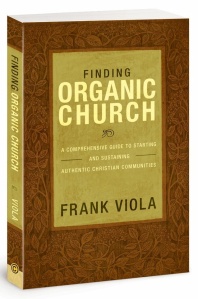
FOCGet Frank’s new book Finding Organic Church: A Comprehensive Guide to Starting and Sustaining Authentic Christian Communities today!  In this final book on radical church restoration, Viola addresses all the practical questions a person might have about organic church life.  Of course, if you really want to understand an organic church… join one!


The Torch of the Testimony (Book Review)

thetorchofthetestimonyThe Struggle for the Centrality of Christ—Book Review of “The Torch of the Testimony” by John W. Kennedy—Reviewed by David D. Flowers

John W. Kennedy has given us a great gift that has gone largely unnoticed in the western world. “The Torch of the Testimony” uncovers the 2,000-year history of those believing Christians and churches that stood outside the Protestant and Catholic traditions.

“The history of the working of the Spirit of God is not the history of any organization, and what usually goes by the name ‘Church History’ is only too often a sorry tale of bigoted quarrels and selfish intrigue. Yet the history of the two, the spiritual movement, and the earthly institution, are sometimes so closely intermingled that it is impossible to give an account of one without referring to the other.” p. 56

Kennedy gives us a concise narrative of church history while distinguishing between the “spiritual church” and the organized church of man.

He is gracious and honest to point out the good that was achieved within the organized church, but is consistent in his critique of both movements of the church.

He very powerfully exposes the shortcomings of the institutional church and how past saints concluded that it can never be reformed. What is needed is a return to New Testament church practice.

“The life of Christ and the Lordship of Christ through His Word are, therefore, two things which mark out the church of the New Testament. When these are supplanted by anything else, the result is a departure from the principle of Scripture and ultimate confusion.” p. 177

He wonderfully weaves together the disjointed stories of the church to paint a clear picture of the challenges that still face us today. The reader can’t help but be awakened to the reality that we are a part of the unfolding story of Christ’s church.

In this book, you will learn about how the the church began to drift from apostolic teachings through Greco-Roman influence and opened the door for the Constantinian State in the fourth century.

You will discover the enduring testimony of the remnant that existed apart from the organized church up to the Protestant Reformation and onward. You will learn how a break from the State Church into independent movements produced denominations built upon doctrines instead of the rock of Christ.

How did we get to where we are today? Where are we in the story of God’s people? Will we learn from the mistakes of the past? What will be written about us?

Will our relationship to Christ be the unifying bond that births our church practice or will we be distracted by power and cling to weapons of the world in an attempt to advance the Gospel?

I can’t stress enough how important this book is to the study of the development of Christianity. This book is a “must read” for every serious student of church history.

If you are involved in organic church life and gatherings outside of the institutional church, this book should be required reading before you can say, “I am part of a house church.”

If this account of church history doesn’t move you… I would recommend you check your spiritual pulse.

Suggested Reading:
The Untold Story of the New Testament Church: An Extraordinary Guide to Understanding the New Testament
Paul’s Idea of Community: The Early House Churches in Their Cultural Setting, Revised Edition
Pagan Christianity?: Exploring the Roots of Our Church Practices
The Reformers and Their Stepchildren (Dissent and Nonconformity)


From Eternity to Here (Book Review)

from eternity picGod’s Love Story

A Book Review of “From Eternity to Here: Rediscovering the Ageless Purpose of God” by Frank Viola Reviewed by David D. Flowers

Growing up I remember hearing folks call the church the “Bride of Christ.” I only believed it to be one more way to speak of “heavenly” things.

Like many things within institutional Christianity, it was nothing more than a metaphor in a line of many metaphors that were used to talk of God’s love for his children. Viola explains in his book that it is more than a fanciful, nice way to speak of the church… it is “God’s central purpose.” Paul called it “the eternal purpose” (Eph. 3:11).

From Eternity to Here is the fourth book in a five-book series on radical church restoration. (Fifth book is set to be released Sept. 09)  Out of all the books Viola has written, this volume reveals the driving passion behind his life and all of his work. He writes, “in beholding God’s central purpose, I found my own purpose. In touching His passion, I found my own passion” (p.13).

Viola effectively communicates this passion in three parts. The first part is entitled “A Forgotten Woman: The Bride of Christ.” Viola begins by pointing his readers to the “hidden romance” between the great lover (God) and his beloved (the church).

This story begins with Adam and Eve and continues throughout all of Scripture as the true lover is seen through foreshadowing. Viola beautifully describes in detail this great love story between the lover and the beloved that will one day be the wife of God. The story of Adam and Eve is a picture of a greater story. Eve came out of Adam after creation… she was a “new creation.”

Viola says, “There was a woman inside of God before time” (p.41).

Viola is a master storyteller. He has been captivated by God’s love story and is able to wonderfully reveal “the mystery” of Christ to a new generation. “The Holy Spirit must open the eyes of His people in every generation for them to grasp it” (p.25).

“Now Adam is a symbol, a representation of Christ, who was yet to come” (Rom. 5:14).

Out of Christ comes his Bride! Finally, a woman for the Lord to love. Viola writes, “All love stories, whether intentional or unintentional, are patterned after this heavenly romance” (p.91).

It is not that God was lonely or that the Trinitarian community was inadequate. It is because “God is love” that he is not content to keep this love to himself. Viola states that the “superabundance of God’s love required a receptacle that was not within the Trinity” (p.40).

God always intended to share his community with his creation. The nature of God’s love is that is given, received, and returned to him. Without God’s creation, he is a “frustrated lover” (p.58). God is sovereign and in control of the future, but indeed frustrated.

Part II is entitled “An Eternal Quest: The House of God.” The chapters within this section look at the divine passion from another perspective. God is homeless and he desires a house that he and his Bride may have a family.

Viola traces God’s quest for a house throughout the Scriptures. As he traces God’s search from Adam to Jesus, he says, “The house of God is not a thing… it is the Lord Jesus Christ” (p.155).

The last half of this section gets personal and compares our own journey to being like that of Israel’s history. Like Israel, as members of the Body of Christ, we must make a choice as to which house we will dwell in. Put another way… what kind of house are we going to be for God?

Egypt: the world system that is driven by pleasures and places earthly pursuits above pursuits of our heavenly home and King.

Babylon: organized religion that is a mixture of fallen humanity and the divine; characterized best by hypocrisy and described best as the “counterfeit of the New Jerusalem.” Babylon can be compared to the institutional church of today. Many of God’s people live there and they will only find themselves building a community centered on man and not Christ and his purposes.

The Wilderness: this is the place where those who leave the world and organized religion will find themselves. It is a place of transition. “To sift us, to reduce us, and to strip us down to Christ alone” (p.191). This is a time of detox. Yet… it is not our home!

The old wineskin must be done away with so that the new can come. The home for which we were made is a land of freedom and one that flows with “milk and honey.”

Part III is entitled “A New Species: The Body of Christ & The Family of God.” This section speaks of Christians being resident aliens. The Bride of Christ is to remain pure and holy as she awaits her bridegroom.

The church is a “new species.” Viola traces this language through the New Testament. A language that many Christians have failed to recognize and apply to their lives.

Viola simplifies Body life as an act of gathering around Jesus Christ. This is our purpose. Likewise, it should be our passion. Yet, the Body of Christ has been forced into an institution and she has forgotten God’s eternal purpose. She has lost sight of the bigger picture and the great landscape of God’s love story. She has been preoccupied and polluted by a theology that leaves out the ageless purpose of God.

How does the church live out the ageless purpose of God? Viola writes, “Very simply: by loving the Lord Jesus as His bride and learning to live by His indwelling life” (p.288).

The book closes with a brief glimpse into Viola’s journey and a call to return to the Headship of Christ in the church that is reflective of the divine image and God’s eternal purpose.

frank-violaViola writes, “Recognizing that Jesus Christ is the incarnation of all spiritual things will change your prayer life. It will change your vocabulary and the way you think and talk about spiritual things. And it will ultimately change your practice of the church” (p.303).

If we seek the centrality and supremacy of Christ and know that our riches are in a Person and not in things meant to further our individual pursuits… we shall be fashioned into that beautiful Bride and usher in the Kingdom. At last… God will dwell with his people when heaven comes to earth at the marriage of the Great Lover and his Beloved.

I recommend this book, especially for those who have been lost in our narcissistic evangelical ecclesiology.

For the brave… I suggest:  Pagan Christianity?: Exploring the Roots of Our Church Practices

For those who know there must be more to Body Life than you are experiencing… I encourage you to read:  Reimagining Church: Pursuing the Dream of Organic Christianity

I also recommend reading:

Going to the Root: Nine Proposals for Radical Church Renewal
Paul’s Idea of Community: The Early House Churches in Their Cultural Setting, Revised Edition

OTHER BLOGS PARTICIPATING IN THE “FROM ETERNITY TO HERE” BLOG CIRCUIT

Today (June 9th), the following blogs are discussing Frank Viola’s new bestselling book “From Eternity to Here” (David C. Cook, 2009). The book just hit the May CBA Bestseller List. Some are posting Q & A with Frank; others are posting full reviews of the book. To read more reviews and order a copy at a 33% discount, go to Amazon.com: From Eternity to Here: Rediscovering the Ageless Purpose of God

For more resources, such as downloadable audios, the free Discussion Guide, the Facebook Group page, etc. go to the official website: http://www.FromEternitytoHere.org

Enjoy the reviews and the Q and A:

Out of Ur
Shapevine (June newsletter)
Brian Eberly
DashHouse.com
Greg Boyd
Vision 2 Advance
David D. Flowers
kingdom grace
Captain’s Blog
Christine Sine
Darin Hufford – The Free Believers Network
zoecarnate
Church Planting Novice
Staying Focused
Take Your Vitamin Z
Jeff Goins
Bunny Trails
Matt Cleaver
Jason T. Berggren
Simple Church
Emerging from Montana
Parable Life
Oikos Australia
West Coast Witness
Keith Giles
Consuming Worship
Tasha Via
Andrew Courtright
ShowMeTheMooneys!
Leaving Salem, Blog of Ronnie McBrayer
Jason Coker
From Knowledge to Wisdom
Home Brewed Christianity
Dispossessed
Dandelion Seeds
David Brodsky’s Blog- “Flip the tape Deck”
Chaordic Journey
Renee Martin
Bob Kuhn
Living with Freaks
Real Worship
Fervent Worship
Julie Ferwerda
What’s With Christina?!
On Now to the Third Level
Irreligious Canuck
This day on the journey
Live and Move: Thoughts on Authentic Christianity
Spiritual Journey With God
echurch
The Jesus Feed
Book Disciple
My Journey – With Others
On Now to the Third Level
Christine Moers
Breaking Point
Hand to the Plough
Jon Reid
Weblight
D.L. Webster
Searching for the Whole-Hearted Life


Corinthian Elders (Book Review)

New Testament Elders
A Book Review of: “Corinthian Elders” by Jack Fortenberry

In his book”Corinthian Elders,” Jack Fortenberry delivers one more strong defense for the functioning of elders in the New Testament fashion. This book is a “biblical examination” of specific Pauline rhetoric on the teaching and practice of church leadership.

Fortenberry skillfully expounds on the various events that caused divisions throughout the local churches of the New Testament. In particular, he draws our attention to the unhealthy desire and practice of leaders that was wreaking havoc on first-century churches and still plagues us today.

The author crafts a vivid account of the issues facing these churches and presents the reader with solid evidence as to how authority “over” the saints severs the branches from the Vine that is Christ.

Are there leaders in the New Testament church? Absolutely. However, this leadership looks like Christ and allows others to know Christ as head of the church. It makes room for all the gifts to be equally shared among the saints.

Fortenberry suggests that this is one of the greatest threats to the unity in the church at Corinth: division caused by an infatuation with eloquent preachers and teachers.

“by submitting to leaders as a substitute for our fellowship with one another, we will loosen our hold on Christ.” (p.43)

I have read many books on church restoration and organic church life. I recommend this little book to those who are convinced that something is definitely wrong with the top-down model of leadership within the church today and rightfully need to be persuaded by the very words of Scripture that there is another way.

If you are the least bit concerned about the centrality and supremacy of Christ being known in the local church, then give this book a read with your New Testament in hand.

I also recommend reading:
The Untold Story of the New Testament Church: An Extraordinary Guide to Understanding the New Testament
Pagan Christianity?: Exploring the Roots of Our Church Practices
Reimagining Church: Pursuing the Dream of Organic Christianity
The Normal Christian Church Life
Going to the Root: Nine Proposals for Radical Church Renewal
Paul’s Idea of Community: The Early House Churches in Their Cultural Setting, Revised Edition