Tag Archives: Christianity

Kingdom Conversations (Faith & Politics)

“Christendom (Christian government, coalitions, institutions, etc.) tries to control morality through civil means because they have failed to uphold the truth in their own assemblies. They have diluted the Gospel and rendered themselves savorless salt. Now they turn to human government to do what the church should have done through Christian influence. The Remnant who takes God at his Word will flourish.” Cup & Cross: An Introduction to Anabaptist History by Michael Martin, 305.

The following blog post is comprised of three responses I recently posted in a conversation that was birthed from the quote above. I have omitted those involved in the conversation and their responses. I am confident that my response will read as a fluid defense of the beliefs behind the quote above. I have pasted this straight from the original posts. If you are interested in reading more on the subject below, please read my blog “Rethinking the Two Kingdoms” and check out the suggested reading.

RESPONSE ONE:

Thanks for taking the time to join in. I understand where you are coming from. I have given great thought to the perspective that says Christians should use their influence in every aspect of the world, especially in political policies and the shaping of human law. Although I believe at times the line doesn’t seem very clear, I do believe there is a line. And I believe Christ has drawn it for us.

The greatest challenge is asking the Lord to remove the scales of culture and human wisdom from our eyes that we might see his truth. Because I know, Lord, we want to see your truth.

There is something we should make very plain. The Body of Christ is not an institution in any sense of the word. So, I would not say that any blanket statements about the true corporate Body of Christ expressed in local assemblies has been made.

The judgment has been made against those individual misguided believers who involve themselves with worldly institutions that by their very nature call for a denial of the way of the cross and the acceptance of methods that run contrary to the nature of the Gospel (e.g. power-over people instead of power-under, killing enemies, slandering politicians in partisan politics, being a religious zealot, etc.). All of this falls under the name “Christendom.”

Here is where I see the problem, brother. We have compartmentalized our faith by dividing the Gospel message into “salvation for the souls of men” and everything else we subconsciously label “OTHER.”

Therefore, we have embraced a humanistic false gospel that largely proclaims heaven and forgiveness of sin but neglects discipleship and any serious concern for a faith that reflects the very Person of Jesus Christ in all matters of faith. Compared to those believers in my Voice of the Martyrs Magazines, we have tasted little of the Gospel’s power in a New Testament context.

The reason it seems like a good idea for believers to involve themselves in a process that actually runs contrary to the methods of Jesus is because we have chopped up our faith to the point of blindness. We find the Sermon on the Mount unrealistic when it comes to overcoming evil.

Since we have accepted a Gospel that first and foremost is concerned for the “salvation of souls,” we reject any serious considerations of Jesus’ teachings. We read the Gospels and writings such as Romans 12-13 through democratic American glasses.

“We are saved!” we proclaim with enthusiasm. Everything else is fair game it seems. Besides, “we are free” the good ole pastor says, “free by the blood of Christ and soldiers–free to vote–a luxury Jesus didn’t have.” I am heartsick by these things. I am still in shock from the first time I heard them with new ears. It was one among many alarms that went off in my spirit as I made my way out of institutional Christianity.

One quick sweep of the church landscape today will prove that we have given in to the temptation that Jesus resisted with the devil–that is the adoption of the power of the kingdoms of the world and working within its system instead of from without.

It would seem that many Christians would rather bow down and pledge to operate within a corrupted system that asks us to reject the subversive nature of the Kingdom than trust in the foolish ways of Jesus that loves enemies and understands that it is men’s hearts that must change.

It is my belief that we are so far from belief in Jesus’ way that we think it preposterous to be content with it alone. We quickly move from these clear teachings to human wisdom and we do not see how our actions oppose those of Christ.

Finally, I too believe that Christianity ought to influence government. But from outside this wicked fallen system and the methods it uses in its fulfilling God’s will to be agents of wrath. We would do well to read the Gospels in today’s context. We would find that there is little to no difference. We must see Jesus living today.

How does Christ relate to the worldly kingdoms? What does Paul say to these issues in Rom. 12-13 and in the books of Philippians, Colossians, and Ephesians? His language is very political. Yet, if we have embraced a compartmentalized faith and are looking through the lenses of cultural Christianity, we will only see what we have been trained to see and nothing more.

Christ, give us eyes to see and ears to hear. This is my prayer. May we be bold enough to question and brave enough to follow through to where ever Christ leads us. Even if it leads us to a Roman cross.

Do you know how Christians responded to abortion in the first two centuries of our faith? They took the babies that were discarded and cared for them until they died or were grown. They believed in a faith that acted, not a ballot in a polling booth from a person who believes that sin can and should be legislated by the great Beast called Rome.

And as for war, the Lord has always used worldly kingdoms to punish other agents of wrath that get out of hand and pervert justice. He does a fine job without the bombastic ugly Christian getting his hands dirty with worldly agendas and the violation of Christ’s precepts.

RESPONSE TWO:

Bonhoeffer was right in preaching against the state run church, condemning the actions of the Nazis, helping Jews to escape Nazi persecution, and suffering with Christ in the events leading up to his death in April of 1945. He crossed the line when he took on the methods of fighting evil with evil in his involvement with Hitlers assassination attempt.

This is where I want to share with everyone how I allow Christ’s commands to illuminate the line that runs between the two kingdoms. The line can seem unclear at times. It would appear that many can’t tell the difference between service in the Kingdom of God and the meddling in worldly affairs. So, how do we know what we should and should not be a part of when it comes to civil involvement?

First, I would like to point out that the Scripture seems to indicate that Jesus was not concerned with involving himself directly with civil injustices. He worked the system from outside what Rome was doing. And Jesus lived in a politically hot time! The apostles appear to follow the same order.

In the end, Roman power put Jesus on the cross for his indirect attack on Caesar and the empire by his message. Christ claimed to be a King with a kingdom “not of this world.”

Therefore, it is plain to see from this one episode, Jesus engaged the political powers, but he did so indirectly and from without side the accepted religious and political system. This should come as no surprise. Jesus had decided several years before in the wilderness with the devil that he would not be the sort of Messiah that wins by operating within the worldly kingdoms and their power-over systems.

How do I determine whether or not I will participate and how I will participate in civil affairs? For me… I will not vote or rally the troops to any sort of civic action. Although I am aware of the political climate and I make myself aware of the current events via the media, I keep my distance and pray, “They Kingdom come thy will be done on earth as it is in heaven.” I pray for the agents of wrath as the Scripture teaches and leave the rest to God. I am to be about the business of letting Christ change men’s hearts as I follow him.

The Word is my sword and his love is my life. Any involvement with the kingdoms of the world by use of their methods of justice… only thwarts the whole Gospel message and confuses Christ’s agenda with a worldly one. Jesus is then lost and put alongside other admirable but non-Christian figures like Ghandi.

I want to say that, for now, I believe there is freedom to follow Christ to a place that may allow SOME to participate on a miniscule level. Still, the commands of Jesus apply to us in every situation. We may only participate in as far as we do not violate Christ’s teachings and the way of the cross. If our participation means a violation of the principles of the Kingdom of God… then clearly we may not participate in an action that contradicts Christ.

Finally, we must not confuse pacifism with what Christ modeled. Pacifism is simply a non-violent direct engagement with the powers that be. Its concern is still political change through direct confrontations and working the system. Ghandi is an example of this kind of direct engagement with the government. Although difficult, a person can still hate his enemies but not believe in violence. Therefore, we must see that Jesus’ teachings do not reflect this sort of “pacifism.”

Jesus loved his enemies and prayed for those that persecuted him so that their hearts would be open to the Kingdom of God. His motivation was not political change, even if it occurred indirectly. His concern was the Kingdom of God–that heaven would begin its slow descent to earth that men might be redeemed and given a new sort of existence.

This kind of life ought to start from the moment of salvation. This is the point where we step out of the kingdoms of the world and into a new way of living that reflects the Kingdom that is already, but not yet.

RESPONSE THREE:

I have stated my position thoroughly at my blog and in book reviews of “The Myth of a Christian Nation” and Walter Wink’s “Jesus and Non-Violence”—as well as John Piper’s “What Jesus Demands From the World.” Check them out at amazon.

I would like to conclude that I do believe I take it all a step or two further than simply saying there are two kingdoms and we should remember to which one we belong. And I am OK with that. We are both attempting to live within the principles of the Kingdom of God while continuing to question this “healthy suspicion” of the worldly kingdoms. Maybe my ‘suspicion’ has moved to more of an indictment.

I am not prepared to say that across the board a person should withdraw himself from every civic function. However, I would like all to understand my personal perspective. The Christian must be ever-mindful of the luring power the worldly kingdoms have to corrupt the true Gospel message and living.

Most Christians, I believe, will lose their witness to Christ and blur the line of distinction between the kingdoms when they meddle in worldly kingdom affairs of a political nature. It is not enough to simply recognize that there are two kingdoms and that our “primary” concern is the Kingdom of God. I strongly believe that it is our ONLY concern. This is why we can’t afford to stop rethinking the two kingdoms.

Finally, I want to say I believe that the “power-over” nature of man is evident in almost every area of life as we presently know it. I don’t believe that this means we should cease to work for our boss and withdraw to a monastery in the hills. There is no way to fully escape this system on this side of eternity. And I don’t believe the Lord has called us to remove ourselves entirely from this present evil age.

However, I do want to point out this pertinent fact. Christ isn’t casting our jobs, our mortgage, or our insurance into the lake of fire. He casts the devil, the false prophet, and the beast (i.e. Rome).

It is this human government that stands in complete contrast to that Kingdom which is coming. It is in this system that the anti-christ perverts God’s rule and reign. It is in this system that we must never trust, place our hope, boast in pride, or think of fondly. She is not our friend. For in her “was found the blood of the prophets and of saints and of all who have been slain on earth” (Rev. 18:24; see Rev. 18-22).
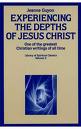
Experiencing the Depths of Jesus Christ (Book Review)


Jeanne Guyon has given the church a spiritual gem with her book Experiencing the Depths of Jesus Christ. And this gem has been mostly hidden by years of religious junk that is void of life-changing power!

She writes of what many call “the deeper Christian life” when it is truthfully the normal Christian life. Unfortunately, most believers never mature and grow up into Christ.

Guyon calls out to us believers to learn a new way of prayer and a new way to read Scripture. This new way will ultimately lead us to experience the depths of Jesus Christ.

Guyon recognizes that man is tripartite or trichotomous in nature. Meaning that man is composed of spirit, soul (psyche), and body. It is in the spirit of man that we meet Christ. It is through the denial of our soul-life (i.e. will, emotions, intellect) that we learn to meet with God in the spirit. The spirit then governs the soul and body as Christ intended in divine order.

It is through abandonment and pressing through the “spiritual dryness” that we shall take hold of a deeper experience with Christ. Discerning the activity of your spirit vs. your soul will allow you to come to Christ in the way he has placed before us.

It is by turning inward to Christ that we discover his life in us.

“When your soul is once turned toward God—the God who dwells within your spirit—you will find it easy to keep turning within. The longer you continue to turn within, the closer you will come to God and the more firmly you will cling to him” (p.54).

Many believers are led astray by external activities of the soul for years before they ever take seriously the spiritual things spoken of in this book. This is a common occurrence, but it is not normal and it never should be accepted as an inevitable delay of Christian maturity.

Guyon writes, “If a new convert were introduced to real prayer and to a true inward experience of Christ as soon as he became converted, you would see countless numbers of converts go on to become true disciples.”

She goes on to say, “the present way of dealing only with external matters in the life of the new convert brings little fruit. Burdening the new Christian with countless rules and all sorts of standards does not help him grow in Christ.

Here is what should be done: The new Christian should be led to God. How? By learning to turn within to Jesus Christ and by giving the Lord his whole heart” (p.117).

This book is about how this happens. I have not read a more practical book about Christian prayer. I highly recommend this book to those who have exhausted themselves by attempting to live like Christ in the soul-life.

For more of a thorough teaching on the tripartite nature of man, read: The Release of the Spirit and The Spiritual Man, vol.1 by Watchman Nee.

Suggested Reading:

  • The Centrality of Jesus Christ (Works of T. Austin-Sparks) Vol. 1
  • The Pursuit of God: The Human Thirst for the Divine by A.W. Tozer
  • Seeing is Believing: Experience Jesus Through Imaginative Prayer by Gregory Boyd

Check out all of my reviews at Amazon!

D.D. Flowers, 2008.


Church Drama or Christ Dogma?

There seems to be a great deal of drama surrounding the church today. It would appear that many Christians believe that more talk about church practice will lead to a fruitful end. Apparently, arguing over church forms and methods are going to lead us to unity in the Body of Christ, and that through pragmatism we will be able to obtain a church utopia on earth.

Many believers have been fooled into thinking that more emerging conversations will give birth to a glorious epiphany in our ecclesiology. I don’t have to defend my statements with statistics. Anyone paying attention to the church climate in this generation can see the ridiculous mess we have created for ourselves.

Pagan Christianity: Exploring the Roots of Our Church Practices by Frank Viola and George Barna is causing the much expected firestorm of debate. We are even seeing Christians persecuting Christians. It is proof that history does indeed repeat itself. In the middle of the conversations I am hearing the way in which the bruised up and world-intoxicated church should conduct herself when she gathers together.

Primarily, I hear conversations centered around “forms” and “models.” When bloggers and the occasional “anonymous” writers are not trying to make judgments against a book they have not read, they pull out old arguments to ease their conscience and defend their uncontested and undigested presuppositions concerning the church. I would laugh at some of the things I am hearing if I wasn’t so deeply disturbed in my spirit.

The church is torn and caught in a whirlwind of drama, and the one thing we should be talking about is being replaced with narcissistic ecclesiastical conversations perpetuating the feeling of utter despair.

In my review of PC and in all of my comments elsewhere, I have stated over and over that this book is not about “doing” church or about “forms.” This book is about returning to the person and work of Christ–it is about spiritual revolution, not religious reformation.

When we examine the New Testament without bringing the last 1700 years of church practice with it, we will see a church that gathered around Christ in simplicity.  We see a church consumed with all things Christ, not self-absorbed in a crazy array of emerging church practices.

When it comes to the historical research and work presented in PC, we must be willing to accept that the pagan origins documented in this book sound an alarm that should result in great concern from us. We must be open to a paradigm shift and be willing to lay aside many things before we will hear the clear exaltation of Christ in his Body the church. And this is the purpose of the book: “to make room” for Christ!

A person should not hear the authors as trading one church form for another. All readers should take a mature view of the message undoubtedly being presented in this book. There is a clear cry of spiritual revolution back to the centrality, supremacy, and headship of Christ in the church.

The way by which we are able to remove our preconceived notions concerning the church, is by a complete emersion and commitment into rediscovering the Christ of the Gospels.

Out of Christ is born the church. Out of Christ is born this house church “form” many readers see Viola describing. It is natural to first see this as strictly being forms, I know. I was distracted by the “doing” in the beginning. Nevertheless, if a person will continue to seek the Lord in spirit and in truth, in time, you should see things differently. In time, the Lord will bring more light that illuminates himself, not the church.

Many readers may not agree with the premise of the book because they ultimately have not taken the time to rethink Jesus’ words. Church history and its 1700 years of accumulating paganism speaks for itself. The reason for documenting these facts of history is to clear the stage for a narrative ecclesiology built upon Christ. In order to have a correct ecclesiology, we first need a renewed christology.

Readers must not confuse the thesis of this book with “doing” a different “model.” The book’s claim is that the “organic” church is born out of the natural faith of Christ (i.e. life and teachings) and the institutional church is born out of man’s wisdom in applying pagan models of leadership and acquiring all sorts of religious practices. 

I would rather people become even more upset by this, then they hear something else and be upset for the wrong reasons. Again, the purpose of PC is to spur us on to removing all church models and forms in order that our reactions to Christ would produce a church life that reflects his person and work.

This is the church that gathers in the “New Testament fashion”–the church gathered around the centality, supremacy, and headship of Christ.

I am now very cautious when recommending this book to people who have not already come to a place of total dissatisfaction with the Christ and the Christianity that is taught and practiced in America. The book could build up walls that prevent any real search for the authentic Christ from ever happening. And then again, it may be the shot in the pants that many professing believers need. Time will tell.

It was because of my own experience with church drama and the discontentment I felt with the Christ presented in the traditional church… that I was even open to a renewed Christology.  It is by the mercy and grace of God that I found Christ instead of latching on to forms, methods, and movements, and being distracted by them.

It is quite a thing, I know, to claim that the reason people react harshly to the message presented in this book is because they are not “hungry for more of Jesus.” However, I have given this a great deal of thought. I am certain that this is the case.

If a person can quickly pass off the Christ-centered message presented in PC, or any Christ-centered book for that matter, then it is apparent that there are things coming before Christ. These things, whatever they may be, are keeping people from their heart’s desire. These people may find that Christ is not the sum of all spiritual things wherever they are at in life.

The truth of the matter will only be found in discerning with the Spirit of Christ that indwells the spirit of man. When all is still and quite within a man’s soul, a person can know if Christ is truly first in the matter.  The Holy Spirit longs to exalt the Lord above all other pursuits and things that stand in the way of his absolute centrality and supremacy.

The purpose of this article is not to defend PC or the authors who are but mere men. The purpose is to sound a call for all believers to be consumed with Christ dogma instead of church drama.  It is a plea for the church to see the need for spiritual revolution (i.e. return to Christ), instead of religious reformation.

Before anything else is said or written, we must be aware of the fact that we are so easily misled into hype and drama with talks of methods and movements.  It is time to trade in our methods and movements dialogue for a renewed understanding of Jesus.

I’m afraid that much of the talk today about the church has little to nothing to do with Christ’s headship.  It would appear that many believers are taking the devil’s bait.  The evil one has the church talking about everything but Christ. He can’t keep us from noticing the problems, but he can keep us busy trying to solve those problems with some “new” way of “doing” church.

There is a revolution rising. The men and women who make up this revolution want to give the church back to Christ. However, if we do not concern ourselves with the centrality and supremacy of Christ, we will no doubt continue the drama that has lasted for over 1700 years.

The drama is evidence that there are many who have not concerned themselves with the centrality, supremacy, and headship of Christ in the church.  If Christ was central and supreme, we would be patiently discussing his person and works with each other instead of debating forms and methods.

Where will the church go from here? What voices will she listen to in this generation? Will she settle for reform and be persuaded by man and his movements or will she press on to her Lord and aid in the tearing down of the kingdom of hell?

There is only one road that leads to Christ, that is the way of the cross. If the church is willing to press on to Christ, she must ready herself for a major shift in the culture. For when the church is founded on the rock of Christ, the mighty winds of persecution will blow. And in the storm we will find peace.

May the Lord give us a continual hunger for his centrality and supremacy in all things. May Christ be our primary pursuit, the centerpiece of our conversations, and the subject of our personal meditation and reflection. Let us set our hearts to learning Christ, and we will be led to a normal “organic” church life that is born out of knowing the person and work of Christ Jesus our Lord.

“He is the image of the invisible God, the firstborn over all creation. For by him all things were created: things in heaven and on earth, visible and invisible, whether thrones or powers or rulers or authorities; all things were created by him and for him. He is before all things, and in him all things hold together. And he is the head of the body, the church; he is the beginning and the firstborn from among the dead, so that in everything he might have the supremacy.”

Paul, Letter to the Colossians 1:15-18

D.D. Flowers, 2008.


Jim Caviezel to the Church

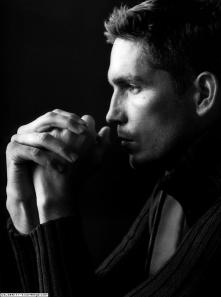
james-caviezelI had the wonderful privilege of hearing Jim Caviezel speak last night. No, he was not greeted with chants of “Hosanna!” and the waving of palm branches while riding in on a donkey. Yet, I must say that that would have been funny.

He walked on stage in a black leather jacket and black jeans sporting a new hairdo. He was given a warm welcome and no one pressed the stage to be healed. Jim began by sharing how he came to play Jesus in the 2004 film, The Passion of the Christ.

He spoke on the making of the movie and the many trials he went through while playing the part of the Suffering Messiah. His words were honest and inspiring as scenes from the film played on the big screens behind him. The entire audience was moved as Jim shifted everyone’s focus off of himself and onto Jesus of Nazareth.

Jim is a very serious and sincere man. If you have watched any of his films, especially behind the scenes, you will know this to be true. He is very serious about his work as an actor—not for acting sake—but in order to portray good versus evil and judgment versus redemption. I was thrilled to be able to hear his heart as he spoke of his own faith in Christ and how that faith is to be lived out in all the dark places in our world.

I believe what stuck out to me the most about what he shared was what I would call a prophetic message to the church. Jim mentioned the increasingly hostile world that we live in and how persecution and suffering was coming to the church. He referred to this as God’s way. If I remember correctly, he said, in reference to suffering, “This too is from God.”

He reminded the audience that all of the saints who have gone on before us were all acquainted with this one thing: suffering. He went on to encourage the audience to be the Lord wherever they are at and to not be concerned about what others think. He said:

“We may never win an Oscar or be known by men, but we are known by God and that’s all that matters.”

I met Jim after the talk to have him sign something. Relax, it was the only way to speak to him. 🙂  Since I’m aware that he is serious and that he seemed to be tense from all the attention, I thought I would break the mood with some humor.

I shook his hand and said, “Jim, I just want to know one thing… how hard was it not to laugh in your interview with Ron Burgundy?”  (If you don’t know what I am talking about, you can watch the interview on You Tube.)  He laughed and replied, “You know… you didn’t see all of the outtakes. It wasn’t easy.”

I laughed with him and shook his hand one last time.  As I shook his hand to leave, I said, “Keep being a light in a dark world.” His serious look returned with an expression that conveyed appreciation and at the same time a hopeful brother in an evil place; a brother who understands what it means to be in the world, but not of it.

Finally, I just want to say that I was moved by the Spirit of Christ in the hearing of Jim’s words. I was moved enough to stay up until three in the AM to tell you about it. I truly believe the Lord spoke through Jim Caviezel in a powerful way. I just hope that the Christians in the room and those reading this blog are receiving the “heads up” on what God is getting his people ready to endure.

Soon we will have a new context in which to live out our Christianity. Soon and very soon, Christians living in the empire will experience the purification of God’s people on earth; to bear the marks of Jesus on our bodies and identify with him through suffering. May those of us who have long enjoyed the security of the world be ready for what is to come.