Loving God With Your Mind

In setting forth the purpose of my blog, I have written that I want to be about loving Jesus with all of my heart, soul, strength, and mind.

This blog is dedicated to all those who desire to do that—making Jesus Christ central and supreme in every way.

Here is what I have made clear about myself and the blog:

As a young academic and an aspiring Christian mystic, this blog is unashamedly a reflection of my pursuit of Christ in spirit, soul, and body—the realm of the intellect as well as spiritual imagination. It is my desire that this blog would contribute to biblical academic dialogue, encourage humble Christ-followers, and challenge honest skeptics.

Those who follow my blog regularly know that I’m not afraid to press our collective evangelical buttons. I don’t do this because it’s in vogue, or because it’s the new hip (even “progressive”) thing to do these days.

No, I write about where I’ve been and where I am currently in my walk. I seek to remain teachable for the future. But I’m not afraid to be passionate about those things I’ve been convinced of in the present.

I wanted to share that with you. I suspect there are others that can relate to my own journey. I pray that you find this blog a place to think out-loud with me, even come to some much-needed conclusions.

I want to be flexible as I grow up into Christ. I truly want to be “semper reformanda” (always reforming). I hope you will commit to this principle of Christian growth with me.

I do recognize that it’s no easy thing to question long-held beliefs, or to challenge deeply rooted traditions. It’s a hard and often uncomfortable road. Many folks are just not willing to wrestle with new thoughts and ideas that seem to threaten their basic theological framework.

But I’m convinced it’s part of discipleship.

“Disciple” means we are learners on a journey. Learners change and grow.

While we may not be willing to embrace a new teaching today (or an old one that’s new to us), we might be in a better position later on to see the wisdom of it and experience its life-giving freedom. We must be careful. Overreacting to new ideas can actually make it harder to accept them later on when/if we begin to sense a change in the wind of conviction.

Of course, it may be a teaching we never accept because we feel it’s not compatible with our interpretation(s) of Scripture. Regardless, we must remain humble and teachable, allowing others to follow the Lord as best they know how, even if we decide we just flat out disagree.

This requires an attitude of humility and a willing spirit of forbearance with others. If we’re going to love the Lord with all or our mind, as we seek to hold together faith and reason, we must be intentional about these things.

In humility we must all recognize that there is inspired Scripture, and then there are our interpretation(s) of Scripture. We must remember this when we’re in dialogue with others. And we should always think the best of those who disagree with our interpretations.

Finally, we need not be fearful of intellectual challenges to our faith when we are getting all of our life from Christ, and entrusting others to him also.

When we’re doing this, we can allow each other freedom and space to grow.

The following video is a Greg Boyd sermon excerpt from a 2009 message on eternal punishment. He is prefacing his message by talking about the need for intellectual inquiry in our pursuit of Christ.

Are you encouraged to think and question in your church? What rewards have you experienced from loving God with all of your mind? What can the church do to be a safe place for intellectual inquiry?

D.D. Flowers, 2013.


Open Theology in MIB3

A few weeks ago my wife and I rented Men in Black 3 (MIB3 – 2012), starring Will Smith, Tommy Lee Jones, and Josh Brolin. I didn’t dislike the first two films, but it’s not really my style. I like sci-fi films, but sci-fi comedy… not so much. However, we heard it was good so we decided to give it a go.

I was pleasantly surprised with how well the plot held my attention. I like Will Smith, and of course Tommy Lee Jones and Josh Brolin are great actors. But as entertaining as it was to watch them, I found that the most fascinating character in the movie was an alien named Griffin (Michael Stuhlbarg). He appeared to be human, but he was unlike anyone you’ve ever met.

Griffin has the ability to see all possible futures. While Griffin is merely a human (or alien), he possesses a “supernatural” ability to see what only an infinite-minded being could foreknow.

I think Griffin works well as a comedic caricature of God, as presented in the open view. In fact, I believe that Griffin offers a teachable moment for those who remain unclear or even skeptical of open theism.

In a nutshell, open theology comes down to this:

God created a free universe where creatures are always given an appropriate degree of freedom to operate within creation and shape the future. Therefore, God is immanent and operates within his creation according to its laws and nature. Since God’s foreknowledge is perfect in his infinite ability to know all possible futures, as if they were all certainties, he is forever ahead of his creatures and fully prepared to interact and respond to us.

In the following scene, Agent J (Smith) and a young Agent K (Brolin) are introduced to Griffin. They quickly discover his unique abilities. They are at first bewildered by Griffin’s great power of foreknowledge, but in time they see his ability as reason to place great confidence in him.

Do you think it is logically and biblically consistent to believe that God sees all of the future as predetermined, while at the same time claiming that human beings have free will? Let’s instead consider how an infinitely intelligent God can grant a great level of freedom to human beings, leaving the future open to a degree, and also reign supreme over creation in the unfolding of God’s good purposes for the cosmos.

D.D. Flowers, 2013.


On Church Doctrinal Statements

Last week I posted on Creeds & the Local Church. I’ve been giving some thought to the importance, even necessity, of a church doctrinal statement.

I’ve also been thinking about the difference(s) between dogma, doctrine, and opinion. In the pursuit of planting a church, it must be examined and discussed with others who are joining together in community.

I concluded that…

“a healthy church will continue to wrestle with dogma, doctrine, and opinion in every age and culture.”

I wanted to share a few more thoughts I’ve had in light of a couple responses to my last post on the topic.

Why We Need Doctrinal Statements

I admit that a lengthy doctrinal statement can present obstacles for folks. I know that when I see a long doctrinal statement, I honestly anticipate something that’s gonna rub me the wrong way.

I even do this when looking at schools. I almost expect that the longer the statement, the more likely we’re going to clash.

I quickly move off church websites when I see that they believe in a “rapture” pre-millenial/pre-trib theology. That’s of course because I so strongly disagree with it, and I often don’t see why it needs to be stated.

I think… “Can’t we just agree that Christ is returning?”

I think it’s different when there is a statement included that allows for differing views on the matter. It should be clear that people are welcome (and treated that way) even if they disagree with the “official” doctrine of the church. There ought to be an atmosphere of freedom.

But I want to be clear that I don’t see anything wrong with a church saying, “Here’s where we are as a local fellowship.” I would rather they be upfront about it, because it’s there whether visible in a confession or not. This is good and can please the Lord, when it’s done in grace and love.

Contrary to those that think creeds and doctrinal statements are always and only divisive, I think they are helpful for a fellowship and for those who would visit them. We mustn’t jump to such extremes just because we’ve seen examples of churches who did not hold their doctrine with grace, humility, and love. It’s reckless to respond in such a way.

A doctrinal statement captures the heart of the people, and serves as a guide for further growth into Christ.

I think it’s beneficial for visiting Christians to know where a church is in its journey. A doctrinal statement can reveal that to a certain extent. I would like to know where most of the fellowship is at in their walk. Wouldn’t you?

In reality I think it’s unhealthy not to at least hold some distinctives as a local church seeking to express the Christ they know. Where are we theologically as a fellowship? How are we seeking to manifest Christ among our culture and context? How do we feel about issues that often divide the church and the world? These are important questions that should be answered, leaving room for exploration and growth moving forward.

I believe it’s possible to plant your church’s creed, mission, and vision in certain doctrinal ideas while at the same time welcoming everyone who agrees upon the foundation—the mysterious incarnation of Christ.

I don’t think it’s a good idea to enter into any fellowship where doctrine isn’t apart of the church’s life together. That fellowship may have good intentions, but they open themselves up to problems born in the opposite extreme of dogmatism. They imagine that doctrine is inevitably against knowing Christ. They’re wrong. And they’ll be proven wrong.

So, I would say folks will (and should) find union with saints based on their basic confession of something like the Apostles Creed. But I also believe it’s healthy—even necessary—for a church to be upfront and clear about their doctrinal positions, holding them in love, grace, and humility.

It can be done, even if we’re skeptical because of our bad experiences.

What do you think? How have you seen doctrine and church distinctives serve as a healthy guide to growing in Christ? How are you and your church handling doctrinal matters?

D.D. Flowers, 2013.


In Awe of the God of Science

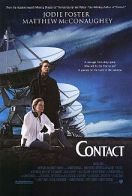
220px-Contact_ver2The movie Contact (Robert Zemeckis, 1997), starring Jodie Foster & Matthew McConaughey, is definitely one of my all-time favorite Sci-Fi films.

The film is adapted from a Carl Sagan novel by the same name. Sagan (1934-1996), an astronomer, cosmologist, and astrophysicist, was a self-professed agnostic. He spent most of his career as a professor and director of planetary studies at Cornell University. And he was a major supporter of SETI (Search for Extra-Terrestrial Intelligence).

Sagan was a brilliant scientist, but like a true naturalist he was doubtful of God’s existence. Which is what makes the movie Contact so interesting.

Jodie Foster plays Dr. Eleanor “Ellie” Arroway, a MIT grad and agnostic scientist working for SETI. She listens for radio transmissions in outerspace until she eventually receives a signal repeating a sequence of prime numbers. The signal is from the star Vega, 25 light years away.

After the initial contact is made, the world undergoes mass hysteria and fear. Some believe it’s the end of the world, others can’t contain their excitement. What does it all mean? What will happen next?

We meet some interesting characters along the way. There is the leader of the “Conservative” Coalition who wants to suppress the new discovery out of fear. There is a Christian fundamentalist who preaches that the devil is at work in science and that God will judge all scientists. He even resorts to violence in an attempt to stop NASA. But nothing can stop Ellie.

In time it becomes clear to Ellie (Foster) and her colleagues that the signal outlines plans to build a machine. What was thought to be some sort of space craft turns out to be a portal into another dimension which transports Ellie to Vega and back again. Ellie was gone for hours, but it was only seconds to everyone else. What she experienced will change her forever.

Throughout the film Ellie had been in conversation with Palmer Joss (McConaughey), a renowned Christian philosopher. Palmer challenged Ellie to consider that faith and science were not mutually exclusive.

While Palmer may not be the most straight-laced believer you’ll ever meet,  he deeply cares for Ellie and her unhealthy skepticism. He believes in her and wants her to accept a very real aspect of knowledge… that of faith.

But Ellie wants proof and evidence for everything. Knowing that Ellie lost her beloved father at an early age, Palmer asks, “Did you love your dad?” Ellie says, “Yes, very much.” Palmer replies, “Then prove it.”

The following video captures one of the final scenes from the film. Ellie (Foster) is being questioned by a congressional committee about what she experienced in the machine. She finds herself saying the same thing Palmer had told her about faith, only she had scoffed at it earlier in the film.

Palmer looks on as Ellie reveals her transformation.

Watch and ponder the relationship between faith and science. I find them both mysteriously intertwined, as I stand in awe of the God of science.

The church has often been guilty of setting the Scriptures (divine revelation) up against science (natural revelation). Let’s consider how we can hold both theology and science together. It’s time to move beyond the culture wars and allow science to reveal the glory of God.

D.D. Flowers, 2013.