
Gregory Boyd on the Problem of Evil
Where is God when a seven-year-old child is kidnapped, viciously raped, and her decapitated body is left in a plastic bag beside a cold riverbed?[1] Gregory Boyd believes that evil “cannot be captured in abstract definitions”[2] but must be known in concrete experiences, like that of seven-year-old Greta, before any serious answers may be given to the problem of evil—lest “abstractions… distract us from that immediate reality [of evil] and reduce evil to a statistic,” as suggested by Jeffery Burton Russell.[3]
Traditionally, classical theism has largely conditioned her adherents to accept that God, who is omnipotent, must allow Greta’s brutal murder for some good purpose and that Christians should accept this as being a part of God’s secret plan—often expressed in the popular cliché: “There is a reason for everything.”
 Gregory Boyd, who previously taught theology at Bethel College in St. Paul Minnesota, where he is now a pastor of Woodland Hills Church, has in the last decade, encroached upon many long-held doctrines and traditions that Christians, particularly in America, hold dear.
His book, Myth of a Christian Nation: How the Quest for Political Power is Destroying the Church (Zondervan 2006) is an example of his willingness to confront issues within cultural Christianity.
Boyd is a strong proponent of “open theism,” perhaps the most controversial of his challenges directed at classical theism. It is within Boyd’s open view of God’s sovereignty that he finds satisfactory solutions for the problem of evil and the way by which he constructs his “Trinitarian Warfare Theodicy.”[4]
The purpose of this article is to give reasonable consideration of the theodicy espoused by Gregory Boyd. The theodicy of Gregory Boyd will be appraised as a sensitive engagement of the issues pertaining to the problem of evil as it relates to the Christian life, showing the strengths of contemporary open theism, and thereby arguing for a respected position within evangelicalism.
This article will begin by briefly examining classical theism and will then direct full attention to the open theism of Gregory Boyd. How then does Boyd’s doctrine of God deal with the problem of evil and suffering in the world? What practical implications might his view have on Christians living in the present, as well as their hope for the future?
Finally, in what ways do Boyd’s theodicy enhance our understanding of God and the Gospel of Jesus Christ?[5]
THE CLASSICAL DOCTRINE OF GOD
A Synopsis of Classical Theism
What does “classical theism” mean? Classical theism generally describes the way the Christian theological tradition handles the doctrine of God.[6] In other words, it describes the traditional or “classic” way in which Christians have answered the question, “Who is God?” or “What is God like?” Classical theists focus on certain attributes of God and build a systematic theology from what they have decided about God’s attributes.
For the sake of this article, it is only necessary that a few of those attributes be briefly addressed.[7]
According to classical theism, God is “immutable” and “impassible.” Immutability says that God is unchanging in nature. However, the tradition has gone as far as God being inert and unmoved. Impassibility, an attribute often closely associated with the former, suggests that God does not experience true sorrow, sadness, or pain. Therefore, any emotions attributed to God are purely metaphorical.
Classical theism also upholds the belief that God is “omnipotent” and “omniscient.” These attributes have been historically central to the Christian doctrine of God. Omnipotence says that God is “all powerful” and capable, within the limits of his attributes, of doing whatever he pleases. Omniscience means that God is “all knowing” and that there is nothing beyond his knowledge; this would include God’s foreknowing all things in the future.
It should be noted that these attributes have been largely expounded upon and articulated in Hellenic philosophical terminology, and more popularly defined by the likes of Augustine, Aquinas, and John Calvin.[8]
Rethinking Classical Theism
There are a growing number of evangelical theologians who are finding themselves dissatisfied with classical theism, and they propose an alternative to the traditional doctrine of God.[9] This controversial movement, and contemporary trend in the doctrine of God, has been dubbed “open theism”—a term coined by Richard Rice in his 1980 book, The Openness of God: The Relationship of Divine Foreknowledge and Human Free Will.[10]
Open theism calls into question the way in which the divine attributes have been traditionally defined. Language about God in the Scripture, according to open theists, is not always intended to be anthropological or metaphorical. If God is “immutable” and never changes, then how, for example, is God sorry that he made humankind (Gen. 6:5)? How does God change his mind (Exod. 32:14)? And what about the incarnation (Jn. 1:14)?
Clark Pinnock, a major proponent of open theism, says, “God is unchanging in nature and essence but not in experience, knowledge and action.”[11] Open theists also call for a redefining of God’s sovereignty and his foreknowledge; if God already knows the future exhaustively, and the future is predetermined, then free will is merely an illusion.
Finally, open theists say that if God is in complete control of the cosmos, as proposed by classical theism, then he must be behind evil. Therefore, God could have done something about seven-year old Greta, but simply chose to “allow” it for his good purposes.
Open theists suggest that maybe it is time for evangelicals to rethink classical theism and realign their views with Scripture.
THE OPEN THEISM OF GREGORY BOYD
Free Will, Foreknowledge, & the Problem of Evil
Gregory Boyd believes that true freedom is incompatible with determinism.[12] The belief that God can foreknow all things, and that man can at the same time operate out of free will, is logically incoherent. This is a major point of contention for open theists. For Boyd, the future is partly open and full of possibilities. Only the past can be known exhaustively—for the past is gone, the present is ongoing, and the future is yet to come.
If the relational Triune God is love, then the very nature of love involves a certain level of risk.[13] Classical theists believe that this undermines God’s sovereignty.[14] Boyd argues, a God “who knows all possibilities, experiences novelty, and is willing to engage in an appropriate level of risk is more exalted than a God who faces an eternally settled future.”[15] And Boyd believes that this is the God presented in the Bible.
According to Boyd, God knows the future as “unsettled possibilities” (e.g. Gen. 23:12; Jer. 3:6-7; 2 Pet. 3:12) and “settled certainties” (e.g. Gen. 15:13-15; Matt. 24:1-32; Eph. 1:3-10) where God invites human beings, made in his image, to join him as agents of new creation.[16] God perfectly anticipates the actions of free creatures and knows all that is knowable about the future. Boyd says, it’s really about the nature of the future.
In this way God is truly immanent and operates within his creation according to its laws and nature. Since God’s knowledge is perfect in knowing possibilities, as if they were all certainties, he will forever be a step ahead of his creatures. However, those creatures are always given an “appropriate degree of freedom” to operate within creation and shape the future.[17]
Boyd believes the cross best speaks to the open view of the future, God’s sovereignty, and how God has judged evil once and for all in the death of Jesus:
The cross refutes the traditional notion that omnipotence means God always gets his way. Rather, the cross reveals God’s omnipotence as a power that empowers others—to the point of giving others the ability, if they so choose, to nail him to the cross. The cross reveals that God’s omnipotence is displayed in self-sacrificial love, not sheer might. God conquers sin and the devil not by a sovereign decree but by a wise and humble submission to crucifixion. In doing this, the cross reveals that God’s omnipotence is not primarily about control but about his compelling love. God conquers evil and wins the heart of people by self-sacrificial love, not by coercive force.[18]
Jesus taught his disciples to pray, “your kingdom come, your will be done, on earth as it is in heaven” (Matt. 6:10 NIV). According to Boyd, this presupposes that God’s will is not always done. Therefore, in Boyd’s view, genuine free will affords mankind the choice to align with God’s good intentions for creation and say, “not my will be done, but thine” or otherwise join the forces of evil that fight against God.
 Boyd is convinced that there is a real war being waged between human and angelic agents of free will. He rejects what he calls the “blueprint worldview” where God ordains everything that comes to pass—which in the end makes God responsible for evil.[19]
Therefore, he says, “The blueprint worldview intensifies the problem of evil, and it is rooted in fundamental philosophical assumptions that are highly questionable.”[20] Instead, Boyd offers the “warfare worldview” as a way of making sense of the problem of evil within the doctrine of God. He calls it his “Trinitarian Warfare Theodicy.”
A Trinitarian Warfare Theodicy
Gregory Boyd says, “This intellectual problem of evil constitutes the single most difficult challenge to classical-philosophical Christian theism.” He continues, “Indeed, it is not overstating the case to claim that no single theological problem has occupied more intellectual energy, time, and ink than this one.”[21]
As Clark Pinnock has pointed out, modern atheism is largely due to philosophical distortions that have entered into the doctrine of God.[22] Boyd is determined to clear up these distortions with his “philosophical theology” set forth in his book, Satan and the Problem of Evil: Constructing a Trinitarian Warfare Theodicy.[23] Boyd says:
I call it a trinitarian warfare theodicy for two reasons. First, I want clearly to distinguish the warfare worldview I espouse and defend from the warfare worldview that most other cultures in history have in some form espoused. The biblical warfare worldview is unique in that it has at its foundation the belief in a triune Creator God who is all-powerful and all-good. This is why the trinitarian warfare worldview is unique: it must reconcile the reality of spiritual war with the belief in an all-powerful and all-good God.[24]
Boyd says he is motivated by his encounter with Scripture, not philosophy.[25] However, because his theodicy is a work in philosophical theology, Boyd says that reason will play a more dominant role than it would in a biblical theology. He states, “Scriptural revelation goes beyond reason, but I do not believe it ever goes against reason.”[26]
Boyd explains his methodology:
The method I employ to arrive at the six theses that constitute the core of the trinitarian warfare worldview is based on Wesley’s methodological quadrangle of Scripture, reason, experience, and tradition as the criteria for theological truth.[27]
These six theses form the core of his position and perspective:
- Love must be freely chosen. This entails that creatures possessing the capacity to love, must also have self-determining freedom.
- Love involves risk. There is no way God could have created beings with self-determining freedom without suffering some losses.
- Love and freedom mean that creatures are to some degree “morally responsible for one another.”
- The ability an agent has to do good is roughly proportionate to the ability that creature has to do evil.
- Freedom must be, within limits, irrevocable. For Boyd, this explains why God cannot always prevent evil or interfere in human affairs.
- The capacity to choose love is not endless. Human beings are finite and their choices only extend so far. This means that self-determined creatures have a limited capacity to accept or reject God’s purposes.[28]
Boyd says that the final theses, “renders intelligible why God must genuinely war against rebellious creatures at the present time, though he is certain to overcome them in the future.”[29] In fact, Boyd believes that the entire narrative of Scripture is the telling of one great spiritual war.
In his book, God At War: The Bible and Spiritual Conflict, Boyd first laid out the framework for his warfare worldview.[30] He examined both the Old and New Testaments in order to prove that behind the scenes of human history there has been an ongoing battle of cosmic forces. Satan and his angels began a war against the God of heaven some time in the primordial past and brought their rebellion to earth.[31]
What began in the Garden of Eden (Gen. 3:1-15), continued through the trials of Job (1:6-12), warred against the prayers of Daniel (10:1-21), and demonized the man along the Sea of Galilee (Mk. 5:1-20), was finally confronted by Jesus with spiritual and physical “acts of war.”
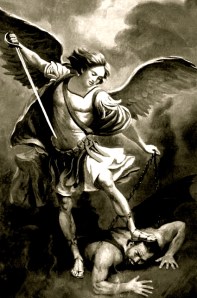 According to Boyd, even “natural evils” (e.g. earthquakes, floods, birth defects, mental illness etc.) are a result of these evil powers and they should be attributed to Satan, “the god of this world” (2 Cor. 4:4; Eph. 2:2) and his fallen angels that have turned against God.[32]
Boyd believes that every evil act or event is a result of free agents choosing to oppose God’s will. Whether that is humans or angels, all evil comes to us because of acts of defiance against God.[33]
Boyd says, “Evil is a mystery, but it is not a mystery concerning Yahweh’s character… the mystery of evil is not located in the heart of God but in the heart of humanity and in the hidden world between humans and God.”[34] God is not to blame for evil in his world.
Boyd contends that the early Christians were well aware of this spiritual war and it constituted “the only ‘problem of evil’ they knew or cared about.” It was a matter of aligning their lives with God’s will in Jesus. Boyd says, “It was a problem solved by spiritual activism, not by intellectual contemplation and pious resignation.”[35] The early believers were urged to join the angelic forces of God, in spiritual battle, with spiritual armor, through prayer (Eph. 6:10-18).
As Paul said, “For our struggle is not against flesh and blood, but against the rulers, against the authorities, against the powers of this dark world and against the spiritual forces of evil in the heavenly realms” (Eph. 6:12 NIV).
There was no need for the early Christians to ponder “why bad things happen to good people,” because they were ever mindful of the war that rages on until Christ comes to establish his kingdom forever on the earth (Rev. 20-21). They were at war with evil—fighting with weapons not of this world (2 Cor. 10:4)! They resonated with the words of Paul: “The God of peace will soon crush Satan under your feet” (Rom. 16:20).
Practical Implications
So what then can be said about seven-year old Greta who was abducted and raped before being brutally murdered? Where was God in this wretched evil?
In this light we must conclude that it is at least as true to say that God could not prevent Greta’s abduction as it is to say that God chose not to prevent it. God chose not to prevent this abduction in the sense that he alone chose to create the kind of risky world where this kind of evil could happen. Moreover, because God made this choice, he now could not guarantee that this evil would be prevented. Where free agents are involved, God’s omnipotent will can at times be thwarted (Lk. 7:30).[36]
Gregory Boyd’s “Trinitarian Warfare Theodicy” does more than somehow let God off the hook for evil. His theodicy implies that both humans and angels are in a real war with God. Therefore, human and angelic actions really do matter in this world. Free agents can choose to join the Lord in works of the kingdom to resist evil and “speed his coming” (2 Peter 3:8-13) in the world, or capitulate to evil through actions that are antithetical to the new heaven and earth.
Boyd says, “If we believe that possibilities are not real, we will be more inclined to accept things that we could, and should, revolt against.”[37] Boyd calls for a proactive stance toward evil.
 How then should Christians revolt? Boyd suggests that followers of Christ ought to understand prayer as “morally responsible behavior” in confronting evil in the world.[38] He believes that many Christians do not pray passionately against evil because somewhere deep down they don’t believe it can make any real difference.
People often pray out of obligation without any sense of urgency.[39] Boyd is convinced that if Christians get their minds right about what’s really going on, they will then see God opposed to all evil and join him in that opposition.
Embracing this “open” warfare worldview may not entirely solve the problem of evil, but Boyd believes that “it offers a more plausible way out of the dilemma of assuming God has a purpose for allowing particular evils.”[40] It is then necessary to reject the blueprint worldview.
Jesus taught his followers to align themselves with the Father’s will in prayer in order that he might have his way in them and the world (Matt. 6:10). Prayer joins heaven and earth. It moves people, angels, and all of creation to action against evil in order that God’s forces advance in the universe.
So when evil momentarily gets the upper hand, Boyd reminds Christians that God’s power is so great that he can use evil for the good of those who are concerned with kingdom alignment (Rom. 8:28). God weeps for Greta and others like her that have suffered at the hands of Satan. God is not sitting idly by doing nothing—and neither should his people.
It is plain that Boyd’s theodicy is a serious treatment of spiritual warfare. It implies that Christian living really does matter for kingdom’s sake. Boyd’s theodicy also reminds believers that God is for his people, always. He comes alongside his people and suffers with them (Heb. 4:15-16).
The cross of Christ reminds God’s people that he has himself experienced the full weight of evil. The resurrection says that God has conquered and that he is recreating the world in Jesus. Sin and death are on the way out. Boyd’s warfare worldview assures believers of God’s certain triumph, but in the meantime, there is a real battle being fought in heaven and earth.
Most importantly, Christians are reminded that Jesus reveals the God of Scripture. Jesus shows us that God is not behind evil, but instead, he stands utterly opposed to it. Boyd suggests that this also means that believers should see Jesus’ own actions as God’s way of rebuking evil.[41]
Where there is hate, let there be love. Where there is darkness, let there be light. Where there is unrest, let there be peace. And where there exists the most horrendous evils in the world, let God’s people overcome that evil with the good of Christ—for he has given us the victory.
CONCLUSION—A PLEA FOR OPEN DIALOGUE WITHIN EVANGELICALISM
 Clark Pinnock has said, “No doctrine can be more important than the doctrine of God.”[42] Pinnock stands as a great testimony to evangelicals of what semper reformanda truly means. As an evangelical, he knew what it was like to be on a theological journey of discovery.
Pinnock (1937-2010) went from being a fundamentalist to ending his days as a respected open theist. He was familiar with the turmoil that comes from having his views challenged and making adjustments when needed.
Pinnock said:
After the initial anxiety of rethinking, one will find God again in a fresh way around the next bend in the reflective road. Rather than worry about our discomfort, perhaps we should be concerned about God’s reputation. Does it not concern us that God’s name is often dishonored because of poor theologies of God? How can we expect Christians to delight in God or outsiders to seek God if we portray God in biblically flawed, rationally suspect and existentially repugnant ways? We cannot expect it.[43]
As long as men let their guiding light be Christ and the Scriptures, how can another brother or sister stifle the growth and discovery of perceived truths? It goes to the heart of what it means to be an evangelical. There is room for open theists at the table of Christian orthodoxy.[44]
The challenge facing classical theism is not one that undermines biblical Christianity. Open theism is no doubt a perceived threat to classical theists, but this is because there are fundamental philosophical nuances between the two positions.[45]
After having examined the theodicy of Gregory Boyd, it should be clear that the conclusions he has drawn are biblically founded and Christ honoring. Who can deny open theists a place in serious evangelical discussion and debate?
May evangelicalism be enriched by the contributions of open theists.
D.D. Flowers, 2010.
Listen to Gregory Boyd give an intro lecture on open theism.
[1] Gregory A. Boyd, Satan and the Problem of Evil: Constructing a Trinitarian Warfare Theodicy (Downers Grove: InterVarsity Press, 2001), 214-215.
[2] Boyd, God at War: The Bible and Spiritual Conflict (Downers Grove: InterVarsity Press, 1997), 34.
[3] Jeffrey Burton Russell, The Prince of Darkness (Ithaca, NY: Cornell University Press, 1988), 257.
[4] Boyd sets forth his “Trinitarian Warfare Theodicy” in his book, Satan and the Problem of Evil. His open theism theodicy will be discussed in detail later in the third section of this article, The Open Theism of Gregory Boyd.
[5] As an open theist, Gregory Boyd is especially concerned with evil and what God is doing about it. Therefore, this article will focus primarily on his “open” perspective to the problem of evil. He has made a great effort to address his concerns with classical theism and present his theodicy as the “warfare worldview” in the following books: God at War: The Bible and Spiritual Conflict (Downers Grove: InterVarsity Press, 1997); Satan and the Problem of Evil: Constructing a Trinitarian Warfare Theodicy (Downers Grove: InterVarsity Press, 2001); Is God to Blame? Beyond Pat Answers to the Problem of Suffering (Downers Grove: InterVarsity Press, 2003).
[6] Veli-Matti Kärkkäinen, The Doctrine of God: A Global Introduction (Grand Rapids: Baker Academic, 2004), 53.
[7] For a full discussion, see Stanley Grenz, Theology for the Community of God (Grand Rapids: Eerdmans, 1994), 78-97; and Wayne Grudem, Systematic Theology (Grand Rapids: Zondervan, 1994), 156-184.
[8] Robert M. Grant, The Early Christian Doctrine of God (Charlottesville, VA: Univ. of Virginia, 1966), 12; also Charles Hartshorne and W. Reese, Philosophers Speak of God, 2nd ed. (Amherst, NY: Humanity Books, 2000).
[9] Richard Rice, God’s Foreknowledge and Man’s Free Will (Minneapolis: Bethany, 1985); John Sanders, The God Who Risks: A Theology of Providence (Downers Grove: InterVarsity Press, 1998); William Hasker, God, Time, and Knowledge (Ithaca, NY: Cornell University Press, 1989); David Basinger, The Case for Freewill Theism: A Philosophical Assessment (Downers Grove: InterVarsity, 1986); and Gregory Boyd, God of the Possible: A Biblical Introduction to the Open View of God (Grand Rapids: Baker Books, 2000); also R. Nash’s, The Concept of God: An Exploration of Contemporary Difficulties with the Attributes of God (Grand Rapids: Zondervan, 1983).
[10] The book was so controversial that publication was halted. Due to the efforts of Clark Pinnock, the book was later republished as, God’s Foreknowledge and Man’s Free Will (Minneapolis: Bethany, 1985).
[11] Clark Pinnock, The Openness of God: A Biblical Challenge to the Traditional Understanding of God (Downers Grove: InterVarsity Press, 1994), 118.
[12] Boyd, Satan and the Problem of Evil, 419. Boyd says, “compatibilism and the problem of evil are inextricably connected” (p.61).
[13] Sanders, The God Who Risks: A Theology of Providence (Downers Grove: InterVarsity Press, 1998).
[14] As John Piper argues in his book: Beyond the Bounds: Open Theism and the Undermining of Biblical Christianity (Wheaton: Crossway Books, 2003); also in Millard Erickson’s, What Does God Know and When Does He Know It? (Grand Rapids: Zondervan, 2003).
[15] Boyd, God of the Possible, 15.
[16] Ibid., 16. Boyd says, “I see no way to know for certain what is and is not open” (p. 146).
[17] Ibid., 68.
[18] Ibid., 49.
[19] Boyd, Is God to Blame?, 41.
[20] Ibid., 55.
[21] Boyd, God At War, 43.
[22] Pinnock, The Openness of God, 102.
[23] Boyd, Satan and the Problem of Evil, 18.
[24] Ibid.
[25] Boyd, God of the Possible, 12-13.
[26] Boyd, Satan and the Problem of Evil, 21.
[27] Ibid., 20
[28] Ibid., 24.
[29] Ibid.
[30] Boyd, God At War.
[31] Ibid., 93-113. Boyd entertains the “gap theory” or what he calls the “restoration theory.” This theory proposes that there was a cosmic battle between Genesis 1:1-2; see Jon Levenson, Creation and the Persistence of Evil: The Jewish Drama of Divine Omnipotence (San Francisco: Harper & Row, 1988), 121-122.
[32] Ibid., 206. Boyd says that we can’t possibly know the exact cause of every evil act or event, but it is safe to assume that the activity belongs to Satan and his forces of evil that continue to rebel against their Creator.
[33] Boyd, Satan and the Problem of Evil, 49.
[34] Boyd, God At War, 149.
[35] Ibid., 283.
[36] Boyd, Satan and the Problem of Evil, 215.
[37] Boyd, God of the Possible, 93.
[38] Boyd, Satan and the Problem of Evil, 229.
[39] Boyd, God of the Possible, 95. Boyd believes the blueprint worldview propagates this idea.
[40] Ibid., 99.
[41] Boyd, Is God to Blame?, 72.
[42] Pinnock, The Openness of God, 102.
[43] Ibid., 104.
[44] Clark Pinnock, “There is room for us: a reply to Bruce Ware.” Journal of the Evangelical Theological Society 45, no. 2 (June 1, 2002): 213-219. * Other notable open theists include: Adrio Konig, Jürgen Moltmann, Thomas Finger, Terence Fretheim, Keith Ward, John Goldingay, Kenneth Archer, Winkie Pratney, and H. Berkhof.
[45] See, Gregory Boyd, “Christian love and academic dialogue: a reply to Bruce Ware.” Journal of the Evangelical Theological Society 45, no. 2 (June 1, 2002): 233-243.
 Is it OK for followers of Christ to celebrate Halloween? Should Christians participate in festivities that seem to do nothing more than glorify evil? Most importantly, can the Gospel win out on this day? How should we respond to this time of year? That’s what I want to address.
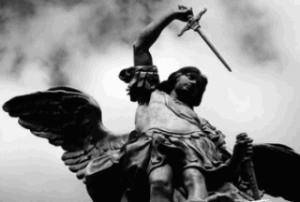 There are many lessons we can teach our children and be soberly reminded of ourselves. Primarily, there is a cosmic battle of good and evil going on every day we live in this present age. That which is unseen is made visible on Halloween. It’s a perfect time to be reminded that we battle not against flesh and blood (Eph. 6:12).

 The Centrality and Supremacy of Jesus Christ