 God’s Love Story
A Book Review of “From Eternity to Here: Rediscovering the Ageless Purpose of God” by Frank Viola Reviewed by David D. Flowers
Growing up I remember hearing folks call the church the “Bride of Christ.” I only believed it to be one more way to speak of “heavenly” things.
Like many things within institutional Christianity, it was nothing more than a metaphor in a line of many metaphors that were used to talk of God’s love for his children. Viola explains in his book that it is more than a fanciful, nice way to speak of the church… it is “God’s central purpose.” Paul called it “the eternal purpose” (Eph. 3:11).
From Eternity to Here is the fourth book in a five-book series on radical church restoration. (Fifth book is set to be released Sept. 09) Out of all the books Viola has written, this volume reveals the driving passion behind his life and all of his work. He writes, “in beholding God’s central purpose, I found my own purpose. In touching His passion, I found my own passion” (p.13).
Viola effectively communicates this passion in three parts. The first part is entitled “A Forgotten Woman: The Bride of Christ.” Viola begins by pointing his readers to the “hidden romance” between the great lover (God) and his beloved (the church).
This story begins with Adam and Eve and continues throughout all of Scripture as the true lover is seen through foreshadowing. Viola beautifully describes in detail this great love story between the lover and the beloved that will one day be the wife of God. The story of Adam and Eve is a picture of a greater story. Eve came out of Adam after creation… she was a “new creation.”
Viola says, “There was a woman inside of God before time” (p.41).
Viola is a master storyteller. He has been captivated by God’s love story and is able to wonderfully reveal “the mystery” of Christ to a new generation. “The Holy Spirit must open the eyes of His people in every generation for them to grasp it” (p.25).
“Now Adam is a symbol, a representation of Christ, who was yet to come” (Rom. 5:14).
Out of Christ comes his Bride! Finally, a woman for the Lord to love. Viola writes, “All love stories, whether intentional or unintentional, are patterned after this heavenly romance” (p.91).
It is not that God was lonely or that the Trinitarian community was inadequate. It is because “God is love” that he is not content to keep this love to himself. Viola states that the “superabundance of God’s love required a receptacle that was not within the Trinity” (p.40).
God always intended to share his community with his creation. The nature of God’s love is that is given, received, and returned to him. Without God’s creation, he is a “frustrated lover” (p.58). God is sovereign and in control of the future, but indeed frustrated.
Part II is entitled “An Eternal Quest: The House of God.” The chapters within this section look at the divine passion from another perspective. God is homeless and he desires a house that he and his Bride may have a family.
Viola traces God’s quest for a house throughout the Scriptures. As he traces God’s search from Adam to Jesus, he says, “The house of God is not a thing… it is the Lord Jesus Christ” (p.155).
The last half of this section gets personal and compares our own journey to being like that of Israel’s history. Like Israel, as members of the Body of Christ, we must make a choice as to which house we will dwell in. Put another way… what kind of house are we going to be for God?
Egypt: the world system that is driven by pleasures and places earthly pursuits above pursuits of our heavenly home and King.
Babylon: organized religion that is a mixture of fallen humanity and the divine; characterized best by hypocrisy and described best as the “counterfeit of the New Jerusalem.” Babylon can be compared to the institutional church of today. Many of God’s people live there and they will only find themselves building a community centered on man and not Christ and his purposes.
The Wilderness: this is the place where those who leave the world and organized religion will find themselves. It is a place of transition. “To sift us, to reduce us, and to strip us down to Christ alone” (p.191). This is a time of detox. Yet… it is not our home!
The old wineskin must be done away with so that the new can come. The home for which we were made is a land of freedom and one that flows with “milk and honey.”
Part III is entitled “A New Species: The Body of Christ & The Family of God.” This section speaks of Christians being resident aliens. The Bride of Christ is to remain pure and holy as she awaits her bridegroom.
The church is a “new species.” Viola traces this language through the New Testament. A language that many Christians have failed to recognize and apply to their lives.
Viola simplifies Body life as an act of gathering around Jesus Christ. This is our purpose. Likewise, it should be our passion. Yet, the Body of Christ has been forced into an institution and she has forgotten God’s eternal purpose. She has lost sight of the bigger picture and the great landscape of God’s love story. She has been preoccupied and polluted by a theology that leaves out the ageless purpose of God.
How does the church live out the ageless purpose of God? Viola writes, “Very simply: by loving the Lord Jesus as His bride and learning to live by His indwelling life” (p.288).
The book closes with a brief glimpse into Viola’s journey and a call to return to the Headship of Christ in the church that is reflective of the divine image and God’s eternal purpose.
 Viola writes, “Recognizing that Jesus Christ is the incarnation of all spiritual things will change your prayer life. It will change your vocabulary and the way you think and talk about spiritual things. And it will ultimately change your practice of the church” (p.303).
If we seek the centrality and supremacy of Christ and know that our riches are in a Person and not in things meant to further our individual pursuits… we shall be fashioned into that beautiful Bride and usher in the Kingdom. At last… God will dwell with his people when heaven comes to earth at the marriage of the Great Lover and his Beloved.
I recommend this book, especially for those who have been lost in our narcissistic evangelical ecclesiology.
For the brave… I suggest: Pagan Christianity?: Exploring the Roots of Our Church Practices
For those who know there must be more to Body Life than you are experiencing… I encourage you to read: Reimagining Church: Pursuing the Dream of Organic Christianity
I also recommend reading:
Going to the Root: Nine Proposals for Radical Church Renewal
Paul’s Idea of Community: The Early House Churches in Their Cultural Setting, Revised Edition
OTHER BLOGS PARTICIPATING IN THE “FROM ETERNITY TO HERE” BLOG CIRCUIT
Today (June 9th), the following blogs are discussing Frank Viola’s new bestselling book “From Eternity to Here” (David C. Cook, 2009). The book just hit the May CBA Bestseller List. Some are posting Q & A with Frank; others are posting full reviews of the book. To read more reviews and order a copy at a 33% discount, go to Amazon.com: From Eternity to Here: Rediscovering the Ageless Purpose of God
For more resources, such as downloadable audios, the free Discussion Guide, the Facebook Group page, etc. go to the official website: http://www.FromEternitytoHere.org
Enjoy the reviews and the Q and A:
Out of Ur
Shapevine (June newsletter)
Brian Eberly
DashHouse.com
Greg Boyd
Vision 2 Advance
David D. Flowers
kingdom grace
Captain’s Blog
Christine Sine
Darin Hufford – The Free Believers Network
zoecarnate
Church Planting Novice
Staying Focused
Take Your Vitamin Z
Jeff Goins
Bunny Trails
Matt Cleaver
Jason T. Berggren
Simple Church
Emerging from Montana
Parable Life
Oikos Australia
West Coast Witness
Keith Giles
Consuming Worship
Tasha Via
Andrew Courtright
ShowMeTheMooneys!
Leaving Salem, Blog of Ronnie McBrayer
Jason Coker
From Knowledge to Wisdom
Home Brewed Christianity
Dispossessed
Dandelion Seeds
David Brodsky’s Blog- “Flip the tape Deck”
Chaordic Journey
Renee Martin
Bob Kuhn
Living with Freaks
Real Worship
Fervent Worship
Julie Ferwerda
What’s With Christina?!
On Now to the Third Level
Irreligious Canuck
This day on the journey
Live and Move: Thoughts on Authentic Christianity
Spiritual Journey With God
echurch
The Jesus Feed
Book Disciple
My Journey – With Others
On Now to the Third Level
Christine Moers
Breaking Point
Hand to the Plough
Jon Reid
Weblight
D.L. Webster
Searching for the Whole-Hearted Life

 1 Timothy 2:11-12 has been used as a “clear” mandate to silence women in the church for over 1500 years. And enough is enough!
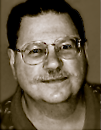 Jon earned his B.A. from Covenant College (1968), an M.Div. from Westminster Theological Seminary (1972), and a D.Min. from the California Graduate School of Theology (1983). He became the editor of Searching Together in 1978. Since 1979, he and his wife, Dotty, have traveled world-wide sharing with assemblies their insights about living under grace and extending grace to others.

 The Centrality and Supremacy of Jesus Christ