Category Archives: Faith & Politics

Vision for 21st Century Evangelicalism, Book Four

Gregory Boyd is the founder and senior pastor of Woodland Hills Church in St. Paul, Minnesota. He is also the founder and president of Christus Victor Ministries, currently undergoing a transformation.

ReKnew.org will be launched on June 30th.

For sixteen years Boyd taught theology at Bethel College in St. Paul. He is a graduate of the University of Minnesota, Yale Divinity School, and Princeton Theological Seminary. He has authored or coauthored over twenty books.

In 2010, Boyd was listed as one of the twenty most influential Christian scholars alive today.

In April 2004—an election year—Boyd preached a sermon series entitled The Cross and the Sword, which addressed the Christian’s call to love one’s enemies and to give exclusive allegiance to Christ and his kingdom.

As a consequence of challenging the highly politicized American evangelicalism, refusing to promote certain political agendas from the pulpit, and for preaching a radical non-violent commitment to Christ, Boyd lost about 20% of his congregation. Those who left Woodland Hills were later replaced with others who agreed with his vision.

From Boyd’s controversial sermon series came the book, The Myth of a Christian Nation: How the Quest for Political Power is Destroying the Church (Zondervan 2006). This book got Boyd a front-page New York Times profile in July 2006. He was also featured in CNN’s 2007 religious special, “God’s Warriors.” And an interview with Charlie Rose about the book.

I read the book when it was first published. It has not only been one of the most influential books in my life, a milestone in my personal thought, I believe it offers the clarity of vision evangelicalism needs right now—especially this election year.

Here are the contents of the book:

  1. The Kingdom of the Sword
  2. The Kingdom of the Cross
  3. Keeping the Kingdom Holy
  4. From Resident Aliens to Conquering Warlords
  5. Taking America Back for God
  6. The Myth of a Christian Nation
  7. When Chief Sinners Become Moral Guardians
  8. One Nation Under God?
  9. Christians and Violence: Confronting the Tough Questions

Boyd says, “My Thesis, which caused such an uproar, is this: I believe a significant segment of American evangelicalism is guilty of nationalistic and political idolatry.” Boyd believes evangelicals have fused their faith with certain political ideologies. Something Jesus never did.

“For some evangelicals, the kingdom of God is largely about, if not centered on, “taking America back for God,” voting for the Christian candidate, outlawing abortion, outlawing gay marriage, winning the culture war, defending political freedom at home and abroad, keeping the phrase “under God” in the Pledge of Allegiance, fighting for prayer in the public schools and at public events, and fighting to display the Ten Commandments in government buildings” (p.11).

Boyd dismantles the myth that America is a Christian nation, claiming that the myth “blinds us to the way in which our most basic and most cherished cultural assumptions are diametrically opposed to the kingdom way of life taught by Jesus and his disciples.”

He says that this myth “clouds our vision of God’s distinctly beautiful kingdom” and “harms the church’s primary mission” in the world. He believes that the American flag has “smothered the glory of the cross.”

Boyd contrasts the different versions of the “power over” kingdom of the world with that of the “power under” kingdom of God. “Allegiance to the kingdom of God,” Boyd says, “ is confused with allegiance to America, and lives that are called to be spent serving others are spent trying to gain power over others.”

What is the role of the government until Christ comes? How ought the Christian relate to politics and still carry out Christ’s commission? Boyd persuasively addresses these questions and much more—expositing the words of Christ and the teachings of the apostles in fresh relevant ways.

He even deals with common objections: “What about self-defense?” and “What about Christians in the military?” or “Don’t your views lead to passivity?”

Boyd writes, “Jesus’ teachings aren’t a set of pacifistic laws people are to merely obey, however unnatural and immoral they seem. Rather, his teachings are descriptions of what life in God’s domain looks like and prescriptions for how we are to cultivate this alternative form of life.”
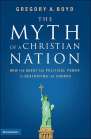
While Jesus acknowledged political realities, he refused to invest his hopes and energies in politics as a solution to the world’s problems. In an examination of moments drawn from history and our own day, Boyd shows that whenever the church is co-opted by politics, we are seen as self-righteous jerks rather than God’s loving servants.

This needlessly turns people away from Christ.

Boyd is tirelessly working to cast a new vision, which is really an old vision, for evangelical Christians who have lost sight of the gospel. It’s time to abandon the quest for political power and begin living out the beautiful kingdom that Christ began with his life and ministry.

D.D. Flowers, 2012.

* Read the final post: Vision for 21st Century Evangelicalism, Book Five

Vision for 21st Century Evangelicalism, Intro

In every generation there are books whose author seeks to give correctives to popular thinking, and offer up a new vision for the future of the church. In order to do this successfully, I believe that authors must “return to the roots” of Christian faith and practice—helping his audience to see the wisdom of the past in context, in order to discover hope for the future.

Contextualizing the New Testament—making it applicable to our own day by first understanding it in the biblical context—is absolutely essential in every season and situation of the church. As Bob Dylan has sung, “the times they are a-changing.” And we must learn to read the Scriptures afresh if we want to discern together what it means to be Christ in community.

In my experience, American evangelicals are largely unable to contextualize, unaware of Christian history, and ignorant of the broad spectrum of theology that has been appreciated by the church down through the years. There are many reasons for this, which I will not go into in this series of posts. But I think it is necessary to ask that you agree with me that this is indeed the case before you can fully benefit from reading this series.

If you agree, or you are just curious, please keep reading.

In this series of posts, I would like to share five books with you that I believe are timely to American evangelicalism. The authors of these books come from a variety of backgrounds within evangelicalism. In case you have been disconnected, or just haven’t heard, I want to bring these books to your attention and try to convince you to read them (or buy the audio book and listen) at your convenience.

Look, I know that you are busy. I also know that reading may not be your thing. If that is the case, then I recommend reading with a partner or a small group. Set a goal and be intentional about it. Whatever it takes to digest the messages in these books. It will be well worth your time.

You might be passionately wrapped up in a specific issue right now (e.g. social justice, parenting, church planting, evangelism, etc.). I humbly suggest that you can still follow your passions and make room for these books.

If you are apart of an evangelical church, the messages set forth by these authors are critical for our time. I believe they will all in some way contribute to your spiritual journey, helping to fine-tune your own calling.

All of the books that I will share with you are very readable. Each book less than 200 pages! They are all written wonderfully well at the popular level. Some of the authors are biblical scholars, pastors, itinerant speakers, and one is a church planter and personal friend.

The books will address issues pertaining to: (1) Theology; (2) the Gospel; (3) the Bible; (4) Christology; and (5) Faith and Politics.

There are many provocative authors and books that touch on other important issues that will not be included in the list of forthcoming books. Nevertheless, I do believe that the books I have selected will go to the heart of our present situation, and the implications of those messages will spill over into everything else.

Finally, there will be a drawing for a book giveaway (one of the five books of your choice) for the person who follows the entire series and shares each post on facebook or twitter. Make sure we are friends on those networks.

Let me know that you have posted each link and that you want to be entered into the drawing for a free book! You can do this by giving me a link and a personal note in the comment section at the end of this series.

D.D. Flowers, 2012.

Read the next post: Vision for 21st Century Evangelicalism, Book One


Monumental Myth

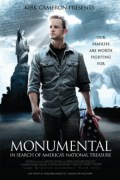
Have you heard? Kirk Cameron is starring in the upcoming documentary “Monumental: In Search of America’s National Treasure” which opens in select theaters March 27th.

I truly like Kirk Cameron, even though I disagree with many of his positions. I recognize that the Lord is able to use all of us, despite our sappy Left Behind performances and our support of some really terrible theology. But really, I do like Kirk Cameron.

As a teacher, I know the great responsibility I have to teach the truth. I know that I have got it wrong before. I know that somewhere I’m getting it wrong now. And odds are that I will get it wrong in the future. I think that describes us all. Regardless, we must do our best to pursue truth and walk in it as best we understand it. I believe that Kirk is doing that.

It’s clear to me that Kirk loves the Lord and is passionate about others coming to faith in Christ. I don’t doubt that at all. I rejoice in his testimony. I don’t have to agree with his evangelism style or his decision to play Buck Williams in a movie that propagates an idea foreign to the NT. The Lord has used him to build the kingdom.

For that I’m thankful. He’s a brother in Christ.

Having said that, I’m convinced that he sincerely believes what he is promoting in his upcoming pseudo-documentary. I suspect that it is one more revisionist plug from Christian fundamentalists during an election year.

I hope I’m wrong, but by the looks of things, it’s more of the same.

I wish Kirk would come and sit in on my Christian History class. I would love to introduce him to the historical context of the 17th and 18th century British movements leading up to the early colonial period, and subsequent American Revolution. I would like to present my case that the founding fathers were not seeking to establish a Christian nation. This is most clearly evidenced by an absence of any reference to Jesus in the founding documents, and the Treaty of Tripoli, which sets forth that the U.S. was not in any sense founded on the Christian religion.

Were some of the early leaders Christian? Well, sure. They were white weren’t they? There wasn’t much else those days for white Westerners. It can hardly be denied that some of them were simply nominal Christians—carrying on their religion like a family tradition. Thanks to Constantine in the 4th century, Europe had considered itself “Christian” for about 1400 hundred years—even during the Crusades, Inquisitions, and the drowning of Anabaptists. [Insert sarcasm now] So yeah, they were “Christian” alright… every single one of them.

Deism was the new way to be fashionable as a Westerner during the Enlightenment of the 17th and 18th centuries. Deism holds a belief in a “Creator” or “nature’s God” who rarely intervenes in human affairs, though he might show up to bless nationalistic endeavors. Deism was a growing religious philosophy that believed that miracles would violate nature (hence, “supernatural”). Therefore, deists believed that miracles are not possible. They also rejected divine revelation. Deists believed that the Bible should merely be used to further lawful societies and to encourage some level of morality within the culture.

I’m not going to discuss each founding father here, but I should mention a few key fathers. George Washington was a freemason and a deist. He wouldn’t take communion with his wife. We have no correspondence of him mentioning Jesus or faith in Christ. John Adams spoke harshly at times about Christianity and religion in general in his private correspondence. He was a Christian Unitarian that believed the church service was good for everyone because it promoted morals and values among the masses.

Yes, there’s ample evidence that John Jay was an evangelical Christian. He actually tried to keep Catholics from holding office. And Patrick Henry was indeed vocal about his Christian faith as the leader of independence in Virginia. Nevertheless, we should not be so quick to conclude what we hope or wish to be true because of a few that were more vocal about their faith. Politicians do this all the time today. Do you still believe that Bill Clinton is a Southern Baptist?

Benjamin Franklin and Thomas Jefferson were deists. Franklin admits it in his writings, when he wasn’t drunk or inventing something. Jefferson went so far to deny the divinity of Christ. He even created his own compilation of Jesus’ life from the gospels, which he entitled, “The Life and Morals of Jesus of Nazareth.” He removed all evidence of the “supernatural” for a presentation of Jesus as a good moral teacher who is only to be admired, not worshipped. Rationalism at its finest!

Let’s be clear about this. The founding fathers sought to establish a nation free from big government, burdensome taxes, and state-sponsored religion. Religious nation? I’ll grant that much. Christian nation? Huh, what’s that? The major shapers of America concluded that it’s not even possible.

What about the pilgrims you say? Oh, you mean the glorified stories of the Puritan fundamentalists? Well, you see, they wanted to enforce OT laws and create model theocratic cities. They are the ones who first hijacked the “city on a hill” language that Jesus used to describe the church. Instead, they used it to describe their new theocratic societies in America (e.g. Massachusetts Bay Colony led by William Bradford).

The Puritans claimed that America was the new Israel, the Indians were the savage Canaanites, and that God had given them the command to kill in his name. Many politicians throughout the years have used this sort of religious rhetoric to pander to fundamentalist evangelicals who still embrace the Christian nation myth. It’s also great for demonizing your enemies and gaining support for the expansion of empire when “God is on our side!”

Except for the fundamentalist Puritans, the rest of the colonialists acknowledged that the “Christian” state had been a total disaster in Europe. Roger Williams, who began the first Baptist church on American soil, rejected the theocratic view of the Calvinistic pilgrims, detested the idea of a Christian nation, and argued for religious liberty and separation of church and state–an idea that the Anabaptists had been ruthlessly persecuted for a century earlier. It finally caught on!

What you have here are Christian revisionists trying to build a case for an American Christian heritage based off of a glorified retelling of the pilgrim landing and the Puritan idea, singling out a few lone patriots who said some things about Jesus, the vague deistic references to God in founding documents, and the celebration of biblical virtues that even the atheists in that day advocated.

A person has to ignore the larger social, economic, political, and religious climate of early North American colonialism to advance the Christian nation myth.

So, if you want to “go back to the beginning” and find a nation embracing biblical morals and values, you will find some of that for sure. But if your eyes are wide open, you’re also going to find war, lies, greed, genocide, slavery, witch trials, and manifest destiny.

If you’re honest, you will, much like Pliny the Roman historian, seek to dig up the glorious past of Rome in order to inspire the citizens of the day to embrace moral reform, only to discover that the history of empire is a bloody shame. There is no glorious past.

Where are the likes of Roger Williams today? Where are those Baptists? It’s hard to find them in 2012. For many Baptists today, and plenty other evangelical groups, will likely support the monumental myth that is promoted in this film. Kirk’s new movie will be more fodder for the Christian fundamentalists among us who refuse to listen to the real historians telling them it just ain’t so, and to Jesus’ words that still read “my kingdom is not of this world” (Jn 18:36).

D.D. Flowers, 2012.

Suggested Reading:

“Lies My Teacher Told Me: Everything Your American History Textbook Got Wrong” by James W. Loewen; “Was America Founded As a Christian Nation: A Historical Introduction” by John Fea; “Founding Faith: How Our Founding Fathers Forged a Radical New Approach to Religious Liberty” by Steven Waldman; “Revolution Within the Revolution: The First Amendment in Historical Context 1612-1789” by William Estep; “A People’s History of the United States: 1492 to Present” by Howard Zinn; “The Myth of a Christian Nation: How the Quest for Politics is Destroying the Church” by Gregory Boyd; “Resident Aliens” by Stanley Hauerwas


Top Ten Favorite Books

I have often been asked: “What are your favorite books?”

I’m continually reading books from the softer side of Christian spirituality to the thick analytical works of NT scholarship. I’ll give you a list of my favorite “top ten” books from my entire library.

Furthermore, I’ll rate my favorites according to which books have impacted my thinking the most (i.e. turning points) on my journey. Many great works will be excluded. Perhaps in the future I will make another list.

I will not include the Bible in my list. Undoubtedly, growing up in the church, the Scripture has shaped me in ways I shall never know. So, if it concerns you that the Bible is not on my list, I like to remember that it shouldn’t be placed alongside other popular works of men anyway.

The following books are not in the order in which I read them; they are rated according to their greatest level of influence on my life.

  1. “The Centrality and Supremacy of the Lord Jesus Christ” by T. Austin-Sparks
  2. “Surprised by Hope: Rethinking Heaven, the Resurrection, and the Mission of the Church” by N.T. Wright
  3. “Resident Aliens” by Stanley Hauerwas
  4. “The Normal Christian Life” by Watchman Nee
  5. “Is God to Blame? Beyond Pat Answers to the Problem of Suffering” by Gregory Boyd
  6. “Pagan Christianity? Exploring the Roots of Our Church Practices” by Frank Viola and George Barna
  7. “The Myth of a Christian Nation: How the Quest for Political Power is Destroying the Church” by Gregory Boyd
  8. “The Cost of Discipleship” by Dietrich Bonhoeffer
  9. “The Secret of the Strength: What Would the Anabaptists Tell This Generation” by Peter Hoover
  10. “Created for Community: Connecting Christian Belief with Christian Living” by Stanley Grenz

What books have been most influential in your life?