Category Archives: Culture

I Was in Theater 9

I had gone to a midnight premiere before, but never one that was so crowded. A close friend was in town, and my wife and I were looking forward to the release of The Dark Knight Rises. We were excited about seeing the biggest Box Office release of the summer, even if it meant waiting in a long hot line.

Arriving an hour and a half early was not early enough. The only available seats were on the first and second rows of theater 9. We sat on the second row fairly close to the exit door. I initially thought we had terrible seats, but it was really best being that my wife is almost 8 months pregnant.

I do remember feeling uneasy with the large crowd. It was a combination of the Batman costumes, rowdy young people, the dark theater, a heightened sensitivity to terrorism, feeling protective of a pregnant wife, and the fact that there were no theater ushers or security guards.

I thought to myself, “Did we make a mistake? Maybe we should have stayed home.” I trusted that the crowd would settle down when the movie started. And it did settle down, until the roar of applause that came at the end of the movie. The movie was a fitting finish to the triology. We enjoyed a late night at the Cinemark Tinseltown 17 in The Woodlands, TX.

It was the next morning that we learned about what happened in Aurora, Colorado. Our hearts have been heavy since learning of this horrific event. We have been praying for all of those directly involved in the mass shooting that took place in theater 9 at Cinemark Century 16.

Many of the questions that follow events like this one are rather predictable. Why did this happen? How could anyone do this to other human beings? What can be done to insure this doesn’t happen again? And the most pressing question for believers and skeptics alike, Where was God when a young man shot a room full of innocent people?

I don’t believe these questions can be answered sensitively with talks of “total depravity” or threats of hell for the wicked, nor should they be reduced to careless clichés (e.g. “God is in control” or “Everything happens for a reason”), or treated carefully with a reckless rendering of Scripture to support a “God can do whatever he wants” theology.

No, we can only come close to real answers when we recognize Jesus as the full expression of God. Jesus is God in the flesh (Jn 1:1-14). He is God’s desire for humanity. God has acted once and for all in Jesus.

Since Christ is the “exact representation” of God (Heb 1:3), it is theologically and biblically accurate to say that God was not responsible for the shooting in Aurora. Jesus doesn’t shoot up movie theaters, fly planes into buildings, or cause miscarriages.

God doesn’t do these things nor does he desire these things, regardless of how much good may come of these tragic events. We can rejoice that God is able to bring good out of evil without attributing the evil actions of others to a divine plan and making God out to be a moral monster.

Let’s be crystal clear about this. Whatever the Lord did in the OT, or however you may interpret the conquest narratives of ancient Israel, in the NT God has been made fully known in Christ… period.

Instead of perpetuating violence, Jesus (the full and final revelation of God) confronted evil in the cross and resurrection. He defeated evil by overcoming it with good. The cross of Christ is God’s response to evil. Evil doesn’t belong. It’s not a part of his Gospel program.

Therefore, he still confronts this evil today with the truth of the cross and the hope of the resurrection. In every act of Christian love, the Lord is speaking truth to the darkness. We are his vessels.

Christian theology offers the only reasonable and satisfactory explanation for evil. God is love fully expressed in Christ. Evil is a result of human and angelic beings (demons) misusing their God-given freedom—the freedom that makes love possible.

Evil is only presently “allowed” in so far that it testifies to the nature of God’s free universe—a universe that will be judged and transformed in the return of Christ for the consummation of heaven and earth. It will not be the end of this world as we know it, but a new age upon the earth where evil is finally struck down and cast out with power from on high (Rev 21).

To be sure, the war is a real one that continues to be waged, but the Lord has determined that there is victory for those who believe in this good news and choose to confront evil with cruciformed living.

Resurrection and renewal is promised to us who persevere in this way and usher in God’s new way of being human on the earth. In the meantime, we must continue believing that God is right here in our pain and suffering.

While God is capable of acting on his own, the social Trinitarian God mostly chooses to act through humans and angels. We may never know the many decisions that were made which led to the evil acts in theater 9, but we can rest assured that God does not sit idly by, nor does he arbitrarily answer our prayers. As we learn from Dan 10, there is a real battle of the wills.

This should prompt us to be proactive against the evil that is alive in our communities. Pray without ceasing against the spiritual evils around you. Love the lost, the brokenhearted, the confused, the depressed, and the forgotten… even enemies. Heal the sick and cast out demons.

Don’t stay home. Take the light of Christ into a dark theater. And make no mistake… the Lord is there with you.

Where was God at approximately 12:39 am on Friday July 20, 2012? I believe the Lord has answered in Christ, “I was in theater 9.”

D.D. Flowers, 2012.


Vision for 21st Century Evangelicalism, Book Four

Gregory Boyd is the founder and senior pastor of Woodland Hills Church in St. Paul, Minnesota. He is also the founder and president of Christus Victor Ministries, currently undergoing a transformation.

ReKnew.org will be launched on June 30th.

For sixteen years Boyd taught theology at Bethel College in St. Paul. He is a graduate of the University of Minnesota, Yale Divinity School, and Princeton Theological Seminary. He has authored or coauthored over twenty books.
In 2010, Boyd was listed as one of the twenty most influential Christian scholars alive today.

In April 2004—an election year—Boyd preached a sermon series entitled The Cross and the Sword, which addressed the Christian’s call to love one’s enemies and to give exclusive allegiance to Christ and his kingdom.

As a consequence of challenging the highly politicized American evangelicalism, refusing to promote certain political agendas from the pulpit, and for preaching a radical non-violent commitment to Christ, Boyd lost about 20% of his congregation. Those who left Woodland Hills were later replaced with others who agreed with his vision.

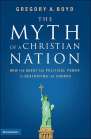
From Boyd’s controversial sermon series came the book, The Myth of a Christian Nation: How the Quest for Political Power is Destroying the Church (Zondervan 2006). This book got Boyd a front-page New York Times profile in July 2006. He was also featured in CNN’s 2007 religious special, “God’s Warriors.” And an interview with Charlie Rose about the book.

I read the book when it was first published. It has not only been one of the most influential books in my life, a milestone in my personal thought, I believe it offers the clarity of vision evangelicalism needs right now—especially this election year.

Here are the contents of the book:

  1. The Kingdom of the Sword
  2. The Kingdom of the Cross
  3. Keeping the Kingdom Holy
  4. From Resident Aliens to Conquering Warlords
  5. Taking America Back for God
  6. The Myth of a Christian Nation
  7. When Chief Sinners Become Moral Guardians
  8. One Nation Under God?
  9. Christians and Violence: Confronting the Tough Questions

Boyd says, “My Thesis, which caused such an uproar, is this: I believe a significant segment of American evangelicalism is guilty of nationalistic and political idolatry.” Boyd believes evangelicals have fused their faith with certain political ideologies. Something Jesus never did.

“For some evangelicals, the kingdom of God is largely about, if not centered on, “taking America back for God,” voting for the Christian candidate, outlawing abortion, outlawing gay marriage, winning the culture war, defending political freedom at home and abroad, keeping the phrase “under God” in the Pledge of Allegiance, fighting for prayer in the public schools and at public events, and fighting to display the Ten Commandments in government buildings” (p.11).

Boyd dismantles the myth that America is a Christian nation, claiming that the myth “blinds us to the way in which our most basic and most cherished cultural assumptions are diametrically opposed to the kingdom way of life taught by Jesus and his disciples.”

He says that this myth “clouds our vision of God’s distinctly beautiful kingdom” and “harms the church’s primary mission” in the world. He believes that the American flag has “smothered the glory of the cross.”

Boyd contrasts the different versions of the “power over” kingdom of the world with that of the “power under” kingdom of God. “Allegiance to the kingdom of God,” Boyd says, “ is confused with allegiance to America, and lives that are called to be spent serving others are spent trying to gain power over others.”

What is the role of the government until Christ comes? How ought the Christian relate to politics and still carry out Christ’s commission? Boyd persuasively addresses these questions and much more—expositing the words of Christ and the teachings of the apostles in fresh relevant ways.

He even deals with common objections: “What about self-defense?” and “What about Christians in the military?” or “Don’t your views lead to passivity?”

Boyd writes, “Jesus’ teachings aren’t a set of pacifistic laws people are to merely obey, however unnatural and immoral they seem. Rather, his teachings are descriptions of what life in God’s domain looks like and prescriptions for how we are to cultivate this alternative form of life.”

While Jesus acknowledged political realities, he refused to invest his hopes and energies in politics as a solution to the world’s problems. In an examination of moments drawn from history and our own day, Boyd shows that whenever the church is co-opted by politics, we are seen as self-righteous jerks rather than God’s loving servants.

This needlessly turns people away from Christ.

Boyd is tirelessly working to cast a new vision, which is really an old vision, for evangelical Christians who have lost sight of the gospel. It’s time to abandon the quest for political power and begin living out the beautiful kingdom that Christ began with his life and ministry.

D.D. Flowers, 2012.

* Read the final post: Vision for 21st Century Evangelicalism, Book Five


Vision for 21st Century Evangelicalism, Book Two

Scot McKnight is an American author, New Testament scholar, historian of early Christianity, and theologian. He is currently the Karl A. Olsson Professor in Religious Studies at North Park University.

Prior to joining the NPU faculty in 1994, he taught at Trinity Evangelical Divinity School. McKnight will join the faculty at Northern Baptist Theological Seminary this Fall 2012.

McKnight has written more than twenty books. His book, The Jesus Creed, won the Christianity Today book award for 2004 in the area of Christian living. He currently has one of the most popular evangelical blogs online. He has written widely on the historical Jesus and early Christianity. He is an authoritative voice for evangelicals today.

The next book I’m recommending in this series is McKnight’s most recent work, The King Jesus Gospel: The Original Good News Revisited (Sept. 2011).

His book comes with a forward from N.T. Wright and Dallas Willard. Wright says, “This book could be one of God’s ways of reminding the new generation of Christians that it has to grow up, to take responsibility for thinking things through afresh, to look back to the large world of the full first-century gospel in order then to look out on the equally large world of twenty-first century gospel opportunity.”

As you might have guessed with a subtitle like, “The Original Good News Revisited,” McKnight sees that our biggest evangelical problem is “that we have an entire culture shaped by a misunderstanding of the gospel” (p. 27).

He is confident that this problem is evident by some sobering statistics and the failure of the church to transform society with the gospel. McKnight points out that, according to the Barna Group, 75 percent of Americans have made some sort of “decision” for Christ, but only about 25 percent of Americans actually attend a church fellowship regularly (p. 19).

McKnight writes, “We cannot help but conclude that making a decision is not the vital element that leads to a life of discipleship.” He continues with, “Our focus on getting young people to make decisions—that is, “accepting Jesus into our hearts”—appears to distort spiritual formation” (p. 20).

While McKnight affirms the evangelical conviction that a person must be born again or saved, he contends that this salvation must always and only be understood within the biblical narrative and a call to radical discipleship—the way in which it is proclaimed in the New Testament.

He writes, “Evangelicalism is known for at least two words: gospel and (personal) salvation. Behind the word gospel is the Greek word euangelion and evangel, from which words we get evangelicalism and evangelism. Behind salvation is the Greek word soteria. I want now to make a stinging accusation. In this book I will be contending firmly that we evangelicals (as a whole) are not really “evangelical” in the sense of apostolic gospel, but instead we are soterians.”

He goes on to say, “Here’s why I say we are more soterian than evangelical: we evangelicals (mistakenly) equate the word gospel with the word salvation. Hence, we are really “salvationists.” When we evangelicals see the word gospel, our instinct is to think (personal) “salvation.” We are wired this way. But these two words don’t mean the same thing, and this book will do its best to show the differences” (p. 29).

McKnight believes that the apostolic gospel was a gospel culture gospel, not a salvation culture gospel. He believes the early church did not have the struggle that we now have in America. The salvation culture gospel “will always create the problem of discipleship.”

A salvation culture does not require The Members or The Decided to become The Discipled for salvation. Why not? Because its gospel is a gospel shaped entirely with the “in and out” issue of salvation. Because it’s about making a decision. In this book we want to show that the gospel of Jesus and that of the apostles, both of which created a gospel culture and not simply a salvation culture, was a gospel that carried within it the power, the capacity, and the requirement to summon people who wanted to be “in” to be The Discipled. In other words, it swallowed up a salvation culture into a gospel culture (p. 33).

McKnight sets out to convince evangelicals that its time to rethink the gospel according to the Scriptures. From a critique of the Reformation efforts to reshape the apostolic gospel into a “salvation” gospel, to the popular efforts of modern day men to reduce the gospel to a sinner’s prayer, McKnight deconstructs the current evangelical proclamation in order to construct a NT-styled evangelism. He calls it “gospeling” a Christian resurrection gospel—retelling the saving story of Jesus as the completion of Israel’s story.

In order to further whet your appetite for this book, here are a few comparisons that McKnight makes between the King Jesus Gospel and the salvation gospel of many evangelicals today:

(1) the gospeling of Acts summons listeners to confess Jesus as Messiah and Lord, while our gospeling seeks to persuade sinners to admit their sin and find Jesus as Savior; (2) the gospeling was not driven by the salvation story or the atonement story. It was driven by the Story of Israel; (3) neither Peter nor Paul focuses on God’s wrath when they evangelize in Acts, nor do they describe the saving Story of Jesus as an escape from hell; (4) NT gospeling was politically subversive to the agendas of empire; (5) the early apostles evangelized by telling the complete Story of Jesus within the Story of Israel (pgs. 133-144).

McKnight says, “Our gospel preaching and evangelism tend to tell the story of how to be saved personally. There is a major difference between the Story of Jesus and a Plan of Salvation” (p. 144). I could not agree more with McKnight’s observations and his refreshing look at the King Jesus Gospel.

There are some complimentary overlaps between McKnight’s book and the previous book in this series, N.T. Wright’s book Surprised by Hope. A good bit of the evangelical theology that Wright seeks to correct in his book makes us up much of the backbone within the salvation gospel that McKnight rightfully critiques. They both offer up a new vision for 21st century evangelicalism.

Read them, digest them, search the Scriptures, and see if they do not ring true with you as they do with me.

D.D. Flowers, 2012.

Read the next post: Vision for 21st Century Evangelicalism, Book Three

*See the intro post for information on the free book giveaway at the end of this series. It’s not too late to get in on the drawing!


Vision for 21st Century Evangelicalism, Book One

N.T. Wright is one of the leading voices within New Testament scholarship today. Wright taught New Testament studies for twenty years at Cambridge, McGill, and Oxford Universities. He presently holds the Chair in New Testament and Early Christianity at St. Andrews, Scotland.

Wright, a prolific author, has written over forty books, including both scholarly and popular works. His major academic series Christian Origins and the Question of God is making no small contribution to NT studies. There are six proposed volumes in this series. The fourth volume is anticipated as being Wright’s magnum opus on Paul.

Wright undoubtedly stands at the summit of NT scholarship. I sincerely believe he is the most important of Christian thinkers alive today. His writings offer fresh insight and a stimulating challenge to evangelical Christianity.
Therefore, it comes as no surprise as to why I have chosen one of his books as the first in a list of five books offering up a new vision for evangelicalism.

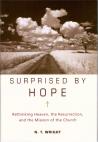
In his book Surprised by Hope: Rethinking Heaven, the Resurrection, and the Mission of the Church (Feb. 2008), Wright challenges the notion of “going to heaven when you die” and spending an eternity in some bodiless future. For if this was the case, Wright says, “then what’s the fuss about putting things right in the present world?”

Is our evangelical language of our future existence reflective of NT orthodoxy? Do we have a consistent biblical message on “life after death?” Wright doesn’t believe so, and he claims we have instead embraced a Gnostic view of the future that fouls up our presentation of the gospel in the present. He believes we have lost sight of the biblical vision for the future.

Our future home is not “heaven”—for this is where God is presently—another dimension altogether. Our hope is in this spiritual heaven coming down to earth. The climax of all human history is the consummation of God’s spiritual realm (heaven) breaking through to our earthly existence. Therefore, in Wright’s view, it is “life after life after death” that we find our hope, and a hope for the world.

Wright’s greatest emphasis is on “resurrection” and “new creation” that has already begun in this world. It is time to realize the great significance with that which is at the heart of our faith in Christ (1 Cor. 15:12-28). He writes, “it is (resurrection), principally, the defining event of the new creation, the world that is being born with Jesus.”

It is in the resurrection of Christ that happened in this old creation that gives us hope for a new creation taking place right now in the 21st century.

“Hope is what you get when you suddenly realize that a different worldview is possible…” (pg.75).

This “new creation” should not be confused with baptizing the culture into Christianity and attempting to enact a utopian dream, as some evangelicals have embraced. Wright says that his misplaced trust in the myth of progress does not work because it does not fully account for evil.

This myth may sometimes run parallel to our Christian hope, but it “veers off toward a very different destination” that ignores the need for the cross of Christ upon the natural fallen creation. It doesn’t see the need for change within, only uniform capitulation to a set order of ideas.

Wright declares, “What matters is eschatological duality (the present age and the age to come), not ontological dualism (an evil “earth” and a good “heaven”)” (pg. 95). Evangelicals have also been guilty of preaching the apocalyptic demise of the space-time universe! Therefore, we all must get ready to be raptured for another world altogether.

This belief in a Platonic escapism has pervaded our theology and demanded that we adopt a popular dispensationalist view of the future—a future where we “fly away” and are “raptured” to spend an eternity in a glorified retirement home in the sky.

Wright believes that embracing the biblical vision of the future will lead us to a proper practice of the church. If our beliefs about heaven and the resurrection are wrong, then we are not entirely about the Lord’s business in ushering in the Kingdom of God, more specifically in ways keeping with the example of Christ who has revealed what it means to be human.

It is time we abandon this empty belief for one that appreciates the hope given to us in the NT—a hope where God restores his good creation and finishes the work he began in the universe. Wright states, “What creation needs is neither abandonment nor evolution but rather redemption and renewal; and this is both promised and guaranteed by the resurrection of Jesus from the dead” (pg. 107).

Wright draws our attention to Christ’s ascension as well as his resurrection. Because of the ascension of Christ, we not only have a savior who is indwelling us and present with his people, but a Lord who is at the same time “gone on ahead of us” by being the first to enter into our promised resurrected existence.

In other words, the work of Christ is finished and yet to be realized. It is reflective of the “already, but not yet” tension of the Kingdom of God.

We await a savior to complete the work he began in us. This completion shall come by way of the parousia or his “coming.”  Wright very simply writes, “he will in fact be “appearing” right where he presently is—not a long way away within our own space-time world but in his own world, God’s world, the world we call heaven” (pg. 135).

Wright challenges our traditional picture of our journey being completed upon death. He argues that there is indeed a temporary “paradise” for believers awaiting the resurrection of the dead and the completion of all things. But if evangelicals ignore the finished work of Christ through the final resurrection of the dead, then we miss the entire Christian hope.

God’s judgment is a good thing, something that believers ought to celebrate—for evil will be dealt with once and for all and heaven will make its home on earth. On the other hand, the judgment gives the unbeliever much to worry about.

While Wright calls into question our modern interpretations of hell that are reflective of a theology from the Dark Ages, he finds it impossible not to believe in some sort of “ultimate condemnation” for those who have rejected God’s purposes for the earth. He says that these folks will cease to bear the divine image, and by their own choice become “beings that once were human but now are not.”

Wright believes that whatever “hell” is in reality, beyond the bizarre biblical metaphors, it should suffice for evangelicals to agree that it is a horrible end. And that should be enough. It is time to stop arguing over evangelical views about hell. Belief in a literal hell is not the true test of orthodoxy.

Wright’s main idea is this:

Heaven and hell ought not be the focal point of the Gospel.

The resurrection and ascension is not designed to take us away from this earth but instead to make us agents of transformation, anticipating the day when, “the earth shall be full of the knowledge of the Lord, as the waters cover the sea.”

Wright looks at the themes of justice, beauty, and evangelism. What do these look like in light of this radical message of hope? What does this look like in retrospect to the resurrection of Christ and the promise that we will inherit the same? Furthermore, what should the mission of the church be in light of this biblical hope for the future? Wright believes it is “to live consciously between the resurrection of Jesus in the past and the making of God’s new world in the future” (pg. 213).

Finally, I have chosen Surprised by Hope as the first book in this series because it is a much-needed theological challenge to popular evangelicalism. It gives us a biblical vision of God’s good future for heaven and earth.

I pray that Wright’s message will begin a move among evangelical churches to return to the biblical hope for the future, and offer the world more than an escape from a devil’s hell for a distant realm in a bodiless heaven.

For those interested, you may also purchase the 6-session DVD study with this book. It is an excellent resource for both independent and group study.

D.D. Flowers, 2012.

Read the next post: Vision for 21st Century Evangelicalism, Book Two

* See the first post Vision for 21st Century Evangelicalism, Intro for information on the free book giveaway at the end of this series.