Category Archives: Christology

Vision for 21st Century Evangelicalism, Book Three

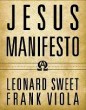
There is a great deal of talk about Jesus within evangelicalism today, but oddly enough the church has lost sight of who Christ is and what it means to make him the center of our lives. I’m confident that the third book that every evangelical needs to read for a fresh vision is the book, Jesus Manifesto: Restoring the Supremacy and Sovereignty of Jesus Christ (June, 2010).

Leonard Sweet and Frank Viola combine their voices to trumpet a resounding reminder that we never “graduate beyond Christ” in the Christian faith. And Christ isn’t found only in the center of things, but along the “corners and on the edges” as well.

Leonard Sweet occupies the Chair of Evangelism at Drew University in New Jersey and contributes weekly to http://www.sermons.com and a podcast, “Napkin Scribbles.” He has authored numerous articles, sermons, and forty books.

Frank Viola is a best-selling author, international conference speaker, and a personal friend. Some of his books include Pagan Christianity?, Finding Organic Church, Reimagining Church, The Untold Story of the New Testament Church, and the best-selling From Eternity to Here.

Sweet and Viola believe we have created a “narcissistic” and a “best-seller” Christianity which is “self-centeredness wrapped up as ‘spirituality,’ which has become the latest fashion accessory for the person who has everything” (p. 100).

As I look across the present post-modern landscape of Christianity, I see several camps of believers pushing their way through the crowd to stand on the rooftop of evangelicalism with their megaphone in hand (i.e. books, magazines, blogs, etc.) proclaiming a gospel tailored to fit their own tradition. And you dare not challenge that tradition!

There are several current groups and “movements” that are all trying to highlight the neglected sides of historic and “traditional” Christianity. We have the reformed “defenders of orthodoxy,” the emerging brand, the missional-minded, and the organic house church folk, just to name a few.

I do believe that most of the people in these groups truly love the Lord and his church, but many of them are in danger of becoming preoccupied with some thing else other than Christ.

There is indeed much to be disheartened with in Christianity today. Yet, there is a growing number of evangelicals that are discovering that pop-culture Christianity is leaving them high and dry. “Whether they realize it or not,” says Sweet and Viola, “people are looking for a fresh alternative—a third way” (p. xiii).

Sweet and Viola believe there are three features present in every spiritual awakening in the Christian church: (1) a rediscovery of the “living Word,” or the Scriptures and its authority; (2) a rediscovery of the living Christ and His supremacy; and (3) a rediscovery of the living Spirit and the Spirit’s gifts and power to manifest Christ in the context of that culture.  (p. xvii)

We’re living in some hot times economically, politically, and socially. Christians are engaging in an exchange of ideas (not without some name-calling and finger-pointing). It’s evident that even those who have been the most outspoken for the “supremacy of Christ” and right “doctrine” have succumbed to rhetorically burning people at the stake in the name of Jesus.

Where is Christ in word and deed? Sweet and Viola write, “Whatever you are occupied with comes out of your mouth. It’s what you talk about most of the time” (p.19).

And we should not just be hearers of Jesus only, but doers of him.

Is “mission” our center? Is it community? Maybe discipleship? Some say it’s preaching and others say it’s ministry. If we say that Christ is central and supreme, what does that mean concerning justice? What does his universe look like when we are first seeking Christ and his kingdom?

When Christ is not central and supreme in our lives, everything about life shifts out of orbit and moves out of kilter. So for Christians, our first task is to know Jesus. And out of that knowing, we will come to love Him, adore Him, proclaim Him, and manifest Him. (p. 2)

That’s why this book has been written. It addresses the present challenges we face as many “things” compete for the centrality and supremacy of the person Jesus Christ. We are called to be “living epistles” or “Jesus Manifestos” in our world. It’s about being true to Christianity.

So what is Christianity? It is Christ. Nothing more. Nothing less. Christianity is not an ideology or a philosophy. Neither is it a new type of morality, social ethic, or worldview. Christianity is the ‘good news’ that beauty, truth, and goodness are found in a person. And true humanity and community are founded on and experienced by connection to that person. (p. xvi)

Jesus Manifesto has been purposely written in an “ancient devotional tone” of writing. In the spirit of Watchman Nee, Jeanne Guyon, Andrew Murray, and T. Austin-Sparks, this book is a fresh call to the post-modern church: “Let us fix our eyes on Jesus, the author and finisher of our faith…” (Heb. 12:2).

“So then, just as you received Christ Jesus as Lord, continue to live in him, rooted and built up in him, strengthened in the faith as you were taught, and overflowing with thankfulness.”   Paul, Colossians 2:6,7

As evangelicals, can we agree upon the person of Christ, and cease from all of our heresy hunting and doctrinal division? “Receiving Christ also means receiving all who belong to Him” (p. 147).

The future of evangelicalism depends upon our willingness to embrace all Christ followers and extend grace to the outsider.

What Others Have Said…

“One more sign of a Christianity that is beginning to look like Jesus again. Our great challenge over the past few decades has not been one of right believing but of right living. Viola and Sweet create a harmony here that invites you to give the world a Christianity worth believing in … after all they will know we are Christians, not by our bumper stickers and t-shirts — but by our love.” 
Shane Claiborne—author, activist, and recovering sinner    http://www.simpleway.org

“From beginning to end, authentic Christianity is all about Jesus and, ultimately, nothing but Jesus. No one has proclaimed this more clearly and persuasively than Viola and Sweet. Jesus Manifesto is an important and powerful prophetic call for the Martha-like Church to get back to doing “the one thing that is needful.” 
Gregory A. Boyd—Senior Pastor, Woodland Hills Church, Maplewood, MN; Author, Present Perfect, The Myth of a Christian Nation, and The Jesus Legend.

“This is a really exhilarating reintroduction to a Jesus who seems sometimes to have become a stranger to the Church; a passionate and joyful celebration of God with us, which cuts right through churchy quarrelling and brings us back to wonder, love and praise – and the urgent desire to make Him known to all.”  Rowan Williams—Archbishop of Canterbury

“I look for books that call us to love Jesus and make His name more widely known. In Jesus Manifesto, Sweet and Viola ask us to step away out of the “Youniverse” (their word) of narcissistic religion and away from the pop-culture Jesus who is just a nice man. Throughout the book, they exalt Jesus as the divine Savior and ask the church to do the same. I believe this book will spark a renewed love for Christ by pointing us to the deep mystery of His person. You will be motivated to love and serve more deeply as your life is focused on Jesus the Messiah.”
 Ed Stetzer—President of LifeWay Research http://www.edstetzer.com

Read more endorsements at:  www.thejesusmanifesto.org

Read the next post: Vision for 21st Century Evangelicalism, Book Four

D.D. Flowers, 2012.


Vision for 21st Century Evangelicalism, Intro

In every generation there are books whose author seeks to give correctives to popular thinking, and offer up a new vision for the future of the church. In order to do this successfully, I believe that authors must “return to the roots” of Christian faith and practice—helping his audience to see the wisdom of the past in context, in order to discover hope for the future.

Contextualizing the New Testament—making it applicable to our own day by first understanding it in the biblical context—is absolutely essential in every season and situation of the church. As Bob Dylan has sung, “the times they are a-changing.” And we must learn to read the Scriptures afresh if we want to discern together what it means to be Christ in community.

In my experience, American evangelicals are largely unable to contextualize, unaware of Christian history, and ignorant of the broad spectrum of theology that has been appreciated by the church down through the years. There are many reasons for this, which I will not go into in this series of posts. But I think it is necessary to ask that you agree with me that this is indeed the case before you can fully benefit from reading this series.

If you agree, or you are just curious, please keep reading.

In this series of posts, I would like to share five books with you that I believe are timely to American evangelicalism. The authors of these books come from a variety of backgrounds within evangelicalism. In case you have been disconnected, or just haven’t heard, I want to bring these books to your attention and try to convince you to read them (or buy the audio book and listen) at your convenience.

Look, I know that you are busy. I also know that reading may not be your thing. If that is the case, then I recommend reading with a partner or a small group. Set a goal and be intentional about it. Whatever it takes to digest the messages in these books. It will be well worth your time.

You might be passionately wrapped up in a specific issue right now (e.g. social justice, parenting, church planting, evangelism, etc.). I humbly suggest that you can still follow your passions and make room for these books.

If you are apart of an evangelical church, the messages set forth by these authors are critical for our time. I believe they will all in some way contribute to your spiritual journey, helping to fine-tune your own calling.

All of the books that I will share with you are very readable. Each book less than 200 pages! They are all written wonderfully well at the popular level. Some of the authors are biblical scholars, pastors, itinerant speakers, and one is a church planter and personal friend.

The books will address issues pertaining to: (1) Theology; (2) the Gospel; (3) the Bible; (4) Christology; and (5) Faith and Politics.

There are many provocative authors and books that touch on other important issues that will not be included in the list of forthcoming books. Nevertheless, I do believe that the books I have selected will go to the heart of our present situation, and the implications of those messages will spill over into everything else.

Finally, there will be a drawing for a book giveaway (one of the five books of your choice) for the person who follows the entire series and shares each post on facebook or twitter. Make sure we are friends on those networks.

Let me know that you have posted each link and that you want to be entered into the drawing for a free book! You can do this by giving me a link and a personal note in the comment section at the end of this series.

D.D. Flowers, 2012.

Read the next post: Vision for 21st Century Evangelicalism, Book One


The Resurrection of Jesus of Nazareth

A Brief Survey of the Historical Evidence

Christians celebrate the death of Jesus on what is known as Good Friday. It is a rather odd thing to celebrate someone’s death, especially when it was such a brutal and barbaric execution. Some skeptics today have written believers off as sick delusional people. No doubt, it is an old charge. It was even strange to Pliny the Younger who investigated the early church’s worship of the crucified Jesus—those who sang “a hymn to Christ as to a god” (Pliny, Letters 10.96-97).

But for those who are Christians, Good Friday is a time of deep theological reflection. The biblical narrative from creation to fall, from exilic despair to salvific hope, from sinner’s debt to atoning sacrifice, has reached its climax in the life and death of Christ—the true Israelite, the promised Messiah who takes away the sins of the world.

It is a beautiful death because it is the first and only death in the history of mankind that has the power to save—the Creator God becomes human flesh and displays boundless love to his broken creation. The idea of it is too good to be compared to any ancient myth of dying and rising gods, and it is so self-incrementing that any man would or could make it up only to endure the wrath of empire for proclaiming it.

However, the death of Jesus holds no power if he stays dead. That is why the apostle Paul was so adamant about it to the Corinthians who were arguing about the future of those who had died before Christ’s Second Coming (parousia). He writes:

If Christ has not been raised, our preaching is useless and so is your faith. More than that, we are then found to be false witnesses about God, for we have testified about God that he raised Christ from the dead. But he did not raise him if in fact the dead are not raised. For if the dead are not raised, then Christ has not been raised either. And if Christ has not been raised, your faith is futile; you are still in your sins (1 Cor 15:14-17 NIV).

There has been no shortage of books, articles, and journal entries written on the resurrection of Jesus, especially in the last few decades.[1] Dale Allison has stated that the historicity of the resurrection of Jesus is the “prize puzzle of New Testament research.”[2] There are excellent presentations by historical Jesus scholars that have been published in defense of the resurrection—arguments that are concerned with the reliability of the biblical text, the historical possibility of the event, and the reasonability of belief in such a miraculous occurrence.

It is the purpose of this paper to bring out some of the strongest points used in defense of the physical resurrection of the historical Jesus. This paper will persuasively argue on behalf of the following points: (1) the reliability of the NT, eyewitness testimony, and multiple attestation; (2) the empty tomb, resurrection appearances, and the growth of the early church; (3) the philosophical and scientific reasonability of miracles, ancient and modern.

EVIDENCE FOR THE RESURRECTION

Reliability of the NT, Eyewitness Testimony & Multiple Attestation

All four of the Gospels record the death and resurrection of Jesus (Matt 28; Mk 16; Lk 24; Jn 20). However, the inspiration and trustworthiness of the Bible is no longer assumed. Truthfully, the reliability of the Bible has even been heavily attacked since the Enlightenment. While a case could be built for the death and resurrection of Jesus apart from the New Testament sources, the author of this paper is not so willing to give up on the reliability of the NT and the Gospels as historical ancient biographies of Jesus.[3]

Daniel Wallace has recently written, “In Greek alone, there are more than 5,600 manuscripts today… altogether about 20,000 handwritten manuscripts of the NT in various languages.” [4] Even if someone were to destroy all of those manuscripts, the NT could be entirely reconstructed with the one million quotations by the early church fathers![5]

Some critics will respond, what about all those discrepancies? There are certainly textual variants in the many manuscripts we have, but the careful reader should not let the skeptical NT textual critic, Bart Ehrman, convert them to agnosticism just yet.[6] F.F. Bruce has written, “The variant readings about which any doubt remains among textual critics of the New Testament affect no material question of historic fact or of Christian faith and practice.”[7]

In fact, the more historical and textual criticism that is being done on the NT Gospels, the more scholars are recognizing just how meticulous the ancient authors were in their creative retelling of the life of Christ. For instance, Luke, a companion of the apostle Paul, says he consulted with the “eyewitnesses” and “carefully investigated everything from the beginning” (Lk 1:2-3). Luke’s concern to give an “orderly account” of the things that happened in the first half of the century simply can’t be denied if any historian is consistent with their treatment of historical texts.

The apostle Paul passes along an early creedal statement about Jesus:

For what I received I passed on to you as of first importance: that Christ died for our sins according to the Scriptures, that he was buried, that he was raised on the third day according to the Scriptures and that he appeared to Peter, and then to the Twelve. After that, he appeared to more than five hundred of the brothers at the same time, most of whom are still living, though some have fallen asleep. Then he appeared to James, then to all the apostles, and last of all he appeared to me also, as to one abnormally born (1 Cor 15:3-8 NIV).

James D.G. Dunn has written that scholars can be “entirely confident” that this tradition was formulated within months of Jesus’ death.[8] So, with the early dating of the Gospels being within approximately 30-40 years of the actual events, the careful oral transmission and tradition between Jesus and the writing of the Gospels, and the multiple eyewitness testimony that Jesus was seen in a resurrected form (something that it seems they had a difficult time finding the words to express), it is fair to say that something out of the ordinary happened.

The majority of scholars agree on some basic events in the life of Jesus. E.P. Sanders has written, “There are no substantial doubts about the general course of Jesus’ life: when and where he lived, approximately when and where he died, and the sort of thing that he did during his public activity …”[9]

No real scholar in the field denies these things. Even the liberal Jesus Seminar scholar, John Dominic Crossan, admits that the crucifixion of Jesus is historical “as sure as anything historical can be.”[10] It is one of the major points of agreement between liberal and conservative Jesus scholars. For any person to deny the crucifixion of Jesus of Nazareth, they must be ignorant of history or purposely distorting the facts. Ancient historians such as Josephus, Tacitus, Lucian, Mara Bar-Serapion, and the Jewish Talmud, mention that Jesus was crucified.[11] Mainstream scholars agree with the biblical text: Jesus really lived, he was crucified, he died, and he was buried in a borrowed tomb. (Mk 15:42-47; Matt 27:57-61; Lk 23:50-54).

Empty Tomb, Resurrection Appearances, & Growth of the Early Church

The empty tomb is recorded and admitted by Christians, enemies of Jesus, and skeptics alike—in ancient and modern times. All four canonical Gospels mention the empty tomb. Paul affirms the empty tomb with the early creed in 1 Cor 15:3-4, and so does Luke in Acts 13:29. While there are scholars today that refuse to acknowledge an empty tomb (e.g. Crossan believes that Jesus’ body was discarded with criminals and eaten by dogs), most scholars recognize the empty tomb as a historical fact.

The empty tomb makes the most historical sense. If the body was not missing, the early Christian message could have been easily stamped out with, “Resurrected? We have his body right here!” The big question is ‘why was it empty?’ The Jewish polemic against the Christian message was that the disciples had stolen the body (Matt 28:11-15; Justin Martyr’s Dialogue with Trypho, 108; Tertullian’s On Spectacles, 30). Matthew writes, “And this story has been widely circulated among the Jews to this very day” (28:15).

The swoon theory was first proposed in the eighteenth century.[12] This theory claims that Jesus was not really dead after all, but merely slipped into a coma, later to be revived in the cold conditions of the dark tomb. Let there be no mistake. The Romans knew how to kill condemned criminals.[13] While there may have been an occasion where someone escaped the cross (e.g. when Romans fled the scene of battle), the historical evidence in the case of Jesus does not allow for a great escape. The medical evidence indicates a certain death (Jn 19:34).[14]

David Strauss, a nineteenth century liberal scholar, was unconvinced of the swoon theory, saying that a half-dead Jesus would not have convinced his disciples of a glorified resurrection.[15] Strauss points out that you can’t talk about the empty tomb without considering the transformation that took place with the disciples who had previously abandoned Jesus. What else can explain what they claimed they saw, and empowered them to speak the message of the risen Jesus?

According to a small few, the disciples actually had some sort of mass LSD trip, a group hallucination.[16] There are many reasons why this theory doesn’t add up. In short, the disciples claimed to have touched him, ate with him, yet he walked through walls! Also, there has never been one documented account of an entire group of people having the same hallucinations.[17] And the disciples would need to be under a continual psychotic delusion to face martyrdom with non-resistance, declaring that Jesus had been raised from the dead.

Michael Licona writes: “Historians are not chained to using a psychological explanation that is stacked against the supernatural in order to obtain purely natural conclusions in their historical work. They need to go beyond psychological conjectures and employ method carefully.”[18]

Other theories have been proposed: Jesus had a twin brother that dropped in after the crucifixion and appeared to the disciples; the women went to the wrong tomb; and the resurrection was only spiritual. But none of these theories can account for all of the historical evidence, what the disciples believed were resurrection appearances, the teaching of the apostles, and the growth of the early church in the face of intense persecution.

I know in their own terms what they saw was the raised Jesus. That’s what they say and then all the historic evidence we have afterwards attest to their conviction that that’s what they saw. I’m not saying that they really did see the raised Jesus. I wasn’t there. I don’t know what they saw. But I do know that as a historian that they must have seen something.[19]

Whatever they saw, it was enough to change the mind of James, the brother of Jesus, and Saul of Tarsus, a zealous Pharisee and persecutor of the church. James becomes the leader of the Jerusalem church (Acts 15), and he is later martyred for his belief that Jesus had been raised from the dead. What could have happened to prompt the brother of Jesus to become one of the church’s greatest leaders? An encounter with the risen Jesus is the most likely of all possible scenarios.

Saul of Tarsus had a first-hand encounter with the resurrected Christ, while on his way to persecute the church in Damascus, Syria (Acts 9). Something happened to this Saul, student of the great Jewish teacher, Gamiliel (Acts 22:3). He said his transformation from persecutor to apostle was a result of being confronted by the resurrected and glorified Christ. What could change this zealous teacher of the Law? The apostle Paul had met the risen Jesus.

N. T. Wright makes the claim that he knows nothing else that could explain the initial birth and rapid expansion of the early church, except that Jesus was really raised from the dead. Wright states that there are two things “historically secure” about the first Easter: the empty tomb and the meeting with the resurrected Jesus. Nothing in Second-Temple Judaism would have produced such a radical claim that someone (i.e. a crucified Messiah) would be raised to life in the middle of human history.[20] Wright says, “It is therefore historically highly probable that Jesus’ tomb was indeed empty on the third day after his execution, and that the disciples did indeed encounter him giving every appearance of being well and truly alive.”[21]

There is another piece of evidence that adds further weight to the story. Fitting with the principle of embarrassment, the Gospel writers report that it was women who first found the empty tomb and met the risen Jesus (Matt 281-10; Mk 16:1-11; Lk 24:1-11). This is rather peculiar since a woman’s testimony was not even considered as a reliable witness in a first century law court (Josephus, Ant 4.219).

It comes as no surprise that the disciples did not believe their report (Lk 24:11). If they were making up a story about a crucified and resurrected Messiah, especially when the whole idea was foreign to Judaism in the first place, the last thing they would do is have women as the first eyewitnesses to the empty tomb and resurrection. But no attempt is made to gloss over this embarrassing episode.

This bit of the story adds to the historical credibility of the empty tomb. The physical resurrection of Jesus is the best explanation for the empty tomb, as well as the experiences of the disciples, and the rapid growth of the early church in the face of overwhelming opposition from the same world that condemned Jesus.

Limitations of Science & Boundaries of Human Reason

There are certain biases and presuppositions that must be acknowledged on the outset of an investigation into the case for the resurrection. The seventeenth and eighteenth century Enlightenment has conditioned much of the West to separate faith and reason. The church has often been guilty of refusing to take serious the discoveries of science. The sloppy practice of using the Scriptures to attack and defend scientific theories has furthered the idea that faith and reason are at odds with one another.

Of course, there is such a thing as bad science, something that many evolutionary biologists and skeptics of religion today refuse to acknowledge. But who will argue that it was right for the church to denounce Galileo’s heliocentrism—that the earth revolves around the sun? Like many European intellectuals who grew tired of the abuses of the Roman Catholic Church, some modern skeptics and scholars abandon faith altogether, reject any spiritual dimensions to life and the cosmos, only to rely solely upon science as the only infallible guide to epistemology (what we can know and how can we know it). Is this sound?

The thinking of David Hume has left an indelible mark on Western society. Hume rejected the idea of miracles, largely based on his naturalistic perspective that the laws of nature prohibit them from happening. Hume wrote:

The Christian Religion not only was at first attended with miracles, but even at this day cannot be believed by any reasonable person without one. Mere reason is insufficient to convince us of its veracity: And whoever is moved by Faith to assent to it, is conscious of a continued miracle in his own person, which subverts all the principles of his understanding, and gives him a determination to believe what is most contrary to custom and experience.[22]

Would the resurrection of Jesus be a violation of natural laws? Are miracles to be entirely ruled out because Hume concluded that they are contrary to nature and the whole of human experience?

There are currently three main views of natural law: the regularity theory, the nomic necessity theory, and the causal dispositions theory. None of these theories actually allow for miracles to be understood as violations of the laws of nature. Instead, miracles are naturally impossible events that require an unknown or “supernatural” force to interrupt the natural world at a certain time and place.

Naturalism may indicate that dead people stay dead. But if there is a God who created the world, and sent his Son to reveal his divine program, then how can skeptics be so certain that this God wouldn’t raise Jesus from the dead in order to vindicate him and affirm divine revelation? It is just the sort of thing God would do to reveal himself and redeem mankind for a new world—a world that he has not left to simply wind down, grow cold, and become stardust.

William Lane Craig writes:

When a scientific anomaly occurs, it is usually assumed that some unknown natural factors are interfering, so that the law is neither violated nor revised. But suppose the law fails to describe or predict accurately because some supernatural factors are interfering? Clearly the implicit assumption of such laws is that no supernatural factors as well as no natural factors are interfering. Thus, if the law proves inaccurate in a particular case because God is acting, the law is neither violated nor revised. If God brings about some event which a law of nature fails to predict or describe, such an event cannot be characterized as a violation of a law of nature, since the law is valid only under tacit assumption that no supernatural factors come into play in addition to the natural factors.[23]

It is for the reason of “miracles” and the divinity attributed to Jesus that some “historians” find reason not to trust anything the Gospel writers say. They believe the Gospels are tainted with wishful thinking. Therefore, it is hard to determine who the “historical Jesus” really is after all. Crossan has written the following on the possibility of a resurrection miracle: “I do not think this event ever did or could happen… I do not think that anyone, anywhere, at any time brings dead people back to life.”[24]

Historians should not be so quick to dismiss the miraculous as human inventions by lunatic disciples wanting to start their own religion on a failed Messiah.[25] Paul Rhodes Eddy and Gregory Boyd have written:

Most within the guild of historical-critical scholarship identify the historical-critical method with this unequivocal commitment to the presupposition of naturalism. For such scholars, talk about a naturalistic historical-critical method is redundant, and talk about about a historical-critical method that is not unequivocally committed to naturalism is a contradiction in terms.[26]

Eddy and Boyd suggest an alternative method they call an “open historical-critical method” that is not unequivocally committed to naturalism and is open to events that defy natural explanation. The method is “critical” in that it first looks for “natural” causes to bizarre events, but at the same time it is “open” to the appeals of “supernatural” occurrences, not rejecting them on an a priori basis.[27] Scholars must be willing to follow the evidence wherever it leads them.

Other contemporary NT scholars also argue for the historical probability of miracles, thus substantiating the claims of the NT. Craig Evans believes that the same criteria used for supporting the authentic words of Jesus in the Gospels, can also be applied to miracles. The historical criteria are multiple attestation, dissimilarity, and embarrassment.[28]

As already previously argued, all of these can be found in the resurrection story. Craig Keener has arguably written the greatest work on the subject of miracles. In his two-volume work, Miracles: The Credibility of the New Testament Accounts, Keener challenges David Hume’s epistemological skepticism, and presents a monumental case for miraculous phenomena from late antiquity up to contemporary times. He begins by pointing out that all of the many ancient sources acknowledge that Jesus was a worker of miracles. Keener describes the importance of miracles in the Gospels:

Most scholars today working on the subject thus accept the claim that Jesus was a healer and exorcist. The evidence is stronger for this claim than for most other specific historical claims that we could make about Jesus or earliest Christianity. Scholars often note that miracles characterized Jesus’ historical activity no less than his teaching and prophetic activities did. So central are miracle reports to the Gospels that one could remove them only if one regarded the Gospels as preserving barely any genuine information about Jesus.[29]

Keener mentions how Walter Wink, a NT scholar and member of the Jesus Seminar, shifted his “materialistic” assumptions about reality after a divine healing of his own. Wink says, “I have no difficulty believing that Jesus actually healed people, and not just of psychosomatic diseases.” Wink writes that any scholar who would deny the truth of his story because of their worldview, do so “not on historical grounds, but on the basis of their” antisupernaturalistic assumptions.[30]

Therefore, it is important to study the historical Jesus by first discarding of the presupposition that naturalism can fully account for the way things are in the world. As Craig has written, “If we begin by presupposing naturalism, then of course what we wind up with is a purely natural Jesus. This reconstructed, naturalistic Jesus is not based on evidence, but on definition.”[31] So, based on the amount of observable evidence, there is good reason to believe in miracles today.

EVIDENCE THAT DEMANDS A VERDICT

The very laws of nature (as we know them) are continually sustained by God’s power. He has revealed himself in the natural order and in the spiritual order. But more specifically, God’s good will for creation has been made known in the person of his Son, Jesus Christ of Nazareth. And he has displayed his saving power by raising this Jesus from the dead. However, it is right to conclude that no amount of scientific or historical data can conclusively prove that Jesus rose from the dead. Belief in miracles, the resurrection of Jesus particularly, is not born from historical evidence alone. John Meier candidly writes:

Can miracles happen? Do miracles happen? In my view, these wide-ranging questions are legitimate in the arena of philosophy or theology. But they are illegitimate or at least unanswerable in a historical investigation that stubbornly restricts itself to empirical evidence and rational deductions or inferences from such evidence.[32]

C. E. B. Cranfield sums up his survey of the evidence in this way:

A positive proof of its truth is just not to be had by such means. Certainty with regard to it can come to us only by the work of the Holy Spirit making us free to believe. But it seems to me that the evidence available to us—and I have tried now a good many times to weigh it as carefully and honestly and objectively as I can—is such that, though I cannot prove that God raised Jesus from the dead by historical-critical methods, I can believe it without any way violating my intellectual or moral integrity. For myself, I must declare that I do indeed confidently believe it.[33]

Finally, there are at least five established facts in the case for the resurrection. These “minimal facts” are the death of Jesus by crucifixion, the empty tomb, the disciple’s resurrection claims, the conversions of James and Paul, and the rapid growth of the early church in the face of suffering and death. This is compelling evidence for the resurrection of Jesus that every skeptic must confront with historical, logical, and consistent reasons of rebuttal if they wish to challenge mainstream biblical and historical scholarship, or engage in an attack on the gospel of Jesus.

After normal causations are exhausted as an explanation for the resurrection story, the historical evidence points to the “high probability” that Jesus rose from the dead.[34]

D.D. Flowers, 2012.

NOTE: This academic paper was put into a popular three-part post “Why I Believe in the Resurrection of Jesus” here at the blog. There are active links and videos in that series of posts.


[1] A few major scholars such as Dale Allison, Raymond Brown, Peter Carnley, David Catchpole, William Lane Craig, John Dominic Crossan, James D.G. Dunn, Bart Ehrman, Gary Habermas, Gerd Ludemann, Willi Marxsen, Gerald O’Collins, Richard Swinburne, A.J.M. Wedderburn and N.T. Wright have weighed in on the topic.

[2] Dale Allison, Resurrecting Jesus: The Earliest Christian Tradition and Its Interpreters (New York: T&T Clark, 2005), 200.

[3] See Richard Burridge, What are the Gospels? A Comparison with Graeco-Roman Biography (Grand Rapids: Eerdmans, 2004). Burridge calls for an understanding of the gospels an ancient biographies.

[4] Daniel B. Wallace, Revisiting the Corruption of the New Testament: Manuscript, Patristic, and Apocryphal Evidence (Grand Rapids: Kregel, 2011), 28.

[5] Ibid.

[6] Bart Ehrman is a NT textual critic, and former evangelical Christian. See his book, Misquoting Jesus: The Story Behind Who Changed the Bible and Why (New York: HarperSanFrancisco, 2005). Also, see Nicholas Perrin’s response to Ehrman in his book, Lost in Transmission: What Can We Know About the Words of Jesus (Nashville: Thomas Nelson, 2007).

[7] F. F. Bruce, The New Testament Documents: Are They Reliable? (Downers Grove: InterVarsity Press, 1981), 14-15.

[8] James D. G. Dunn, Jesus Remembered. Christianity in the Making, Vol. 1 (Grand Rapids: Eerdmans, 2003), 855.

[9] E. P. Sanders, The Historical Figure of Jesus (London: Penguin, 1993), 11.

[10] John Dominic Crossan, The Historical Jesus: The Life of a Mediterranean Peasant (New York: HarperSanFrancisco, 1992), 145.

[11] Josephus, Antiquities 18.64; Tacitus, Annals 15.44; Lucian of Samosata, The Death of Pererine 11-13; Mara Bar Serapion, BL Add. 14658; and the Talmud, Sanhedrin 43a. The Quran denies that Jesus was crucified on a Roman cross (Surah 4:157-158). This is a rather embarrassing historical blunder on behalf of the Quran. This is not some insignificant textual variant or slight discrepancy in the Islamic text. It is a historical contradiction.

[12] Early proponents were: Karl Friedrich Bahrdt, Karl Venturini, Heinrich Paulus, and Friedrich Schleiermacher. The muslim, Mirza Ghulam Ahmad, proposed that Jesus survived the crucifixion in journeyed to India. See his book, Jesus in India (1899).

[13] See the ancient writer, Seneca Moral Epistles 101; and Martin Hengel, Crucifixion, trans. John Bowden (Philadelphia: Fortress Press, 1977), 22-23.

[14] “interpretations based on the assumption that Jesus did not die on the cross appear to be at odds with modern medical knowledge.” The Journal of the American Medical Association “On the Physical Death of Jesus Christ” Vol. 255 (March 21, 1986), 1463.

[15] David Strauss, A New Life of Jesus. 2 vols (Edinburgh: Williams & Norgate, 1879).

[16] Oddly enough, Strauss actually popularized this theory. In Strauss’ view, the disciples were tripping with the resurrected Christ! This view is not taken seriously by any scholar or medical expert today. See Jake O’Connell “Jesus’ resurrection and collective hallucinations.” Tyndale Bulletin 60, no. 1 (January 1, 2009): 69-105.

[17] Gary Habermas and Michael Licona, The Case for the Resurrection of Jesus (Grand Rapids: Kregel Publications, 2004), 105-108.

[18] Michael Licona, The Resurrection of Jesus: A New Historiographical Approach. (Downers Grove: InterVarsity, 2010), 567-568.

[19] Paula Fredriksen (Boston University) in an interview by Peter Jennings in Search for Jesus (American Broadcasting Corp. [ABC], July 2000).

[20] Douglas W. Kennard, Messiah Jesus: Christology in His Day and Ours (New York: Peter Lang, 2008), 335. Kennard writes: “No O.T. text claims the time of third day resurrection of Messiah, but a sentiment grew among Pharisaic second Temple Judaism that began to see the Biblical text describe the general resurrection and even a Messianic resurrection on the third day.” Also see Wright’s Resurrection of the Son of God, 321-322. It can at least be said that the traumatized disciples were not thinking that Jesus was going to rise from the dead

[21] N. T. Wright, The Resurrection of the Son of God, Vol. 3: Christian Origins and the Question of God (Minneapolis: Fortress Press, 2003), 686-687.

[22] David Hume, An Inquiry Concerning Human Understanding (New York: Cambridge University Press, 2007), 10.2.101. Hume is saying that it is a miracle that anyone could ever be dumb enough to believe in the Christian faith!

[23] William Lane Craig, Reasonable Faith: Christian Truth & Apologetics (Wheaton: Crossway, 2008), 262.

[24] Crossan, Jesus: A Revolutionary Biography (San Francisco: HarperSanFrancisco, 1994), 94-95.

[25] The following contemporary perspectives on miracles take the notion seriously: R. Swinburne, The Concept of Miracle (New York: Macmillan, 1970); F.J. Beckwith, David Hume’s Argument against Miracles: A Critical Analysis (Lanham, MD: University Press of America, 1989); T.C. Williams, The Idea of the Miraculous: The Challenge to Science and Religion (New York: Macmillan, 1990); J. Houston, Reported Miracles: A Critique of Hume (New York: Cambridge University Press, 1994); R.D. Geivett and G.R. Habermas, eds., In Defense of Miracles: A Comprehensive Case for God’s Action in History (Downers Grove: InterVarsity Press, 1997); C.S. Keener, Miracles: The Credibility of the New Testament Accounts, 2 vols. (Grand Rapids: Baker Academic, 2011).

[26] Paul Rhodes Eddy and Gregory Boyd, The Jesus Legend: A Case for the Historical Reliability of the Synoptic Jesus Tradition (Grand Rapids: Baker Academic, 2007), 51-52.

[27] Ibid., 53.

[28] Craig Evans, Fabricating Jesus: How Modern Scholars Distort the Gospels (Downers Grove: InterVarsity Press, 2006), 140.

[29] Craig S. Keener, Miracles: The Credibility of the New Testament Accounts, Vol. 1 (Grand Rapids: Baker Academic, 2011), 23-24.

[30] Ibid., 103.

[31] Craig, 279.

[32] John P. Meier, A Marginal Jew: Rethinking the Historical Jesus, Vol. 2 (New York: Doubleday, 1994), 511. Meier is not saying that miracles are not real events in time and space, nor is he doing “covert” apologetics.

[33] C.E.B. Cranfield, “The Resurrection of Jesus.” The Historical Jesus in Recent Research. eds. James D.G. Dunn and Scot McKnight (Winona Lake: Eisebrauns, 2005), 390-391.

[34] David J. Norman, “Doubt and the resurrection of Jesus.” Theological Studies 69, no. 4 (December 1, 2008): 786-811.


Christ, Community, & Christian Ethics

Christ, Community, & Christian Ethics:             The Legacy of Dietrich Bonhoeffer
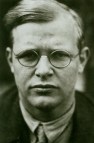
Since his death, and especially in the last two decades, Dietrich Bonhoeffer (1906-1945) has stirred the hearts and minds of Christians worldwide. It is through his life and writings that he has earned a place in history as one of the greatest theologians of the twentieth century. Bonhoeffer presented a stimulating challenge to a church that had colluded with the secular powers, and that had lost the will to resist evil with Christian discipleship.

Bonhoeffer is popularly remembered for his attention to Christ’s demands in the Sermon on the Mount. He provocatively discussed these demands in his book Discipleship. He wrote, “When Christ calls a man he bids him come and die.”[1] However, it is his works on Christology, ecclesiology, and theological ethics that readers have appreciated Bonhoeffer as an innovative Christian thinker.[2] Above all it was Bonhoeffer’s ingenuity amidst a crippled church and his resilience in the face of an evil political regime that has led to his enduring legacy as a Nazi resister.

It is the purpose of this paper to survey the literary and theological contributions of Bonhoeffer by: (1) briefly discussing his particular situation and context, (2) appraising his ideas born out of social, cultural, and political adversity, (3) offering praise and critique of his unique contributions to Christian faith and living. More specifically, this paper will highlight those literary works of Bonhoeffer that reveal the thinking behind his actions as a disciple of Christ. This paper will conclude with a sensitive critique of Bonhoeffer’s theological ethics.

THE WORLD OF DIETRICH BONHOEFFER  

Nazi Germany and the Confessing Church

Adolf Hitler ascended to power in Germany in January of 1933. The German Christian Church eventually fell complacent, even submissive to the ideals of the Third Reich. Bonhoeffer shortly after became a founding member of a new church, a “Confessing Church” formally founded at Barmen in May of 1934. Bonhoeffer and the Confessing Church dedicated itself to remaining free of the anti-Semitism that had plagued Germany.
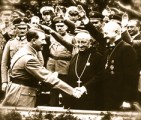
The Barmen Declaration, principally authored by Swiss theologian Karl Barth, plainly stated what the German church had always believed according the Scriptures. Therefore, it rejected the state’s takeover of the church, it repudiated the anti-Semitic agenda of the Nazis, and it denounced other heresies set forth by German Christians.[3]

The following excerpt directly addresses extreme nationalism:

We reject the false doctrine, as though the State, over and beyond its special commission, should and could become the single and totalitarian order of human life, thus fulfilling the Church’s vocation as well. We reject the false doctrine, as though the Church, over and beyond its special commission, should and could appropriate the characteristics, the tasks, and the dignity of the State, thus itself becoming an organ of the State. The Church’s commission, upon which its freedom is founded, consists in delivering the message of the free grace of God to all people in Christ’s stead, and therefore in ministry of his own Word and work through sermon and sacrament. We reject the false doctrine, as though the Church in human arrogance could place the Word and work of the Lord in the service of any arbitrarily chosen desires, purposes, and plans (Theological Declaration Concerning the Present Situation of the German Evangelical Church, 8.23-27).[4]

The Confessing Church received increasing pressure from the Gestapo, and Bonhoeffer soon found himself in the minority as the Evangelical Church turned away from the Gospel of Jesus, the Jewish Messiah. In August of 1937, the Confessing Church was declared illegal. The following month, the Gestapo shut down the church’s Finkenwalde seminary. Twenty-seven of Bonhoeffer’s students were arrested, others were forced to join the army. In January of the next year, the Gestapo banned Bonhoeffer from Berlin, and the Nazis began burning down churches.

Union Seminary and the Harlem Experience

Bonhoeffer first visited the United States in 1931 to study at Union Theological Seminary in New York. He developed a friendship with four Union students: Jean Lasserre (French), Erwin Sutz (Swiss), Paul Lehmann (American), and Albert Franklin “Frank” Fisher (African American).

Jean Lasserre, a devout pacifist, was a major influence on Bonhoeffer’s understanding of the Sermon on the Mount. It is true that Bonhoeffer likely read the antiwar novel All Quiet on the Western Front in seminary, but it was the viewing of the film with Lasserre that brought a lasting change in Bonhoeffer. Eric Metaxas writes:

The sadness of the violence and suffering on the screen brought Bonhoeffer and Lasserre to tears, but even worse to them was the reaction in the theater. Lassarre remembered American children in the audience laughing and cheering when Germans, from whose point of view the story was told, were killing the French. For Bonhoeffer, it was unbearable. Lassarre believed that on that afternoon Bonhoeffer became a pacifist. Lassarre spoke often about the Sermon on the Mount and how it informed his theology. From that point forward it became a central part of Bonhoeffer’s life and theology, too, which eventually led him to write his most famous book, The Cost of Discipleship.[5]

While Lasserre helped to shape Bonhoeffer’s thinking on non-violent resistance, it was Frank Fisher an African American from Alabama that would have the greatest influence on Bonhoeffer’s life and theology. Bonhoeffer was not all that impressed with many liberal churches in New York that had given up the centrality of Christ for social activism, but he was captivated by the experience of Abyssinian Baptist Church in Harlem.

Fisher introduced him to the African American community that sang and preached Christ with great passion and conviction. It was there at Abyssinian that Bonhoeffer heard Christ-centered preaching that fueled action for social justice on behalf of the oppressed Negro people. At the time, Bonhoeffer had never seen such bigotry and racism.

Bonhoeffer once remarked that there was no “analogous situation in Germany” that compared to the treatment of blacks by whites. “It is a bit unnerving that in a country with so inordinately many slogans about brotherhood, peace, and so on, such things still continue completely uncorrected,” said Bonhoeffer.[6] His experiences in Harlem would prepare him for what he would soon encounter in his own country with the Jews.

Bonhoeffer would return to America a second time in June of 1939 to take a teaching position at Union Theological Seminary, as he avoided the military call-up issued by Germany. But Bonhoeffer was deeply troubled as he contemplated the will of God for his life and for Germany in such a dark hour under Hitler. In a letter to Reinhold Neibuhr, he wrote:

I have had time to think and to pray about my situation and that of my nation and to have God’s will for me clarified. I have come to the conclusion that I have made a mistake in coming to America. I must live through this difficult period of our national history with the Christian people of Germany. I shall have no right to participate in the reconstruction of Christian life in Germany after the war if I do not share the trials of this time with my people.[7]

After only twenty-six days in New York, Bonhoeffer resigned and returned to Germany the following month. He committed himself to endure the hardships of his people during wartime.[8]

From Pacifist Pastor to Nazi Resister

World War II began on September 1, 1939 when Germany invaded Poland. In October of 1940, the Gestapo banned Bonhoeffer from speaking in public, and soon after was forbidden to publish his writings. Bonhoeffer had already been receiving inside information for some time from his brother-in-law, Hans von Dohnanyi, who worked with Military Intelligence, and was part of a growing resistance to Hitler.

After having been silenced by the Gestapo, Bonhoeffer would learn of new horrifying details about the Third Reich that prompted him to begin taking an active role against Hitler for the sake of Germany and the church. He was convinced that Hitler must be removed from power.
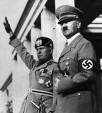
Hitler was unveiling an evil plan, which he had been waiting to act on since his rise to power. “Hitler received moral support for his claim to be the God-given executor of historical justice, and only a small remnant was able to perceive, precisely here, Satan in the form of an angel of light,” wrote Bonhoeffer.[9]

In July of 1940, Bonhoeffer made the decision to serve as a “V-Man” (Verbindungsmann, or confidential agent) for Military Intelligence under another lead military resister, Admiral Canaris. Metaxas writes:

Canaris and the others in German military leadership thought that Hitler’s bestial nature was unfortunate, but they had no idea it was something that he cultivated and celebrated, that it was part of an ideology that had been waiting for this opportunity to leap at the throats of every Jew and Pole, priest and aristocrat, and tear them to pieces. The German generals had not seen the dark river of blood bubbling beneath the surface of the new Germany, but suddenly here it was, gushing like a geyser. Despite all the hints and warnings, it was too gruesome to be believed.[10]

Bonhoeffer’s sister-in-law once wrote to him saying, “You Christians are glad when someone else does what you know must be done, but it seems that somehow you are unwilling to get your own hands dirty and do it.”[11]

To be clear, it wasn’t out of pressure that Bonhoeffer joined the resistance and decided to get his “hands dirty” in the process, it was out of conviction. Eberhard Bethge, friend and biographer, remembers Bonhoeffer’s shift “from confession to resistance” when they were together during a call to salute Hitler: “Bonhoeffer raised his arm in the regulation Hitler salute, while I stood there dazed. “Raise your arm! Are you crazy?” he whispered to me, and later: “We shall have to run risks for very different things now, but not for that salute!”[12] Bonhoeffer embraced the double-life, the lies, and the deception that goes along with being a conspirator and Nazi resister, and he felt strongly it was the will of God for his life.

Bonhoeffer continued writing and pastoring while he kept his front as Abwehr agent with the Nazi regime. He was engaged in a “high-stakes game of deception upon deception”—convinced that he was being obedient to God. Metaxas writes: “Bonhoeffer was not telling little white lies. In Luther’s famous phrase, he was “sinning boldly.”[13]

The resistance made several attempts to assassinate Hitler, but all attempts failed. Bonhoeffer did manage to help Jews escape Germany and keep pastors out of the military. He made frequent trips abroad in order to communicate with the allies that there was a real resistance to Hitler.

The Nazis were bearing down on the Confessing Church and all those who conspired against them. It was shortly after one resister’s failed attempt to detonate a bomb in his overcoat while in the presence of Hitler that the Gestapo began to close in on the conspirators. In April of 1943, Bonhoeffer was arrested with the rest of the resistance. The Nazis knew of his efforts to help Jews while under the guise as an Abwehr agent. And they would later discover Bonhoeffer’s involvement in the assassination plot.

Bonhoeffer was incarcerated at Tegel prison in Berlin for two years, with a short stint at a Gestpo prison for interrogations. He continued to write letters and papers from prison.[14] He encouraged the inmates there, and even established a relationship with a solider that wanted to escape with Bonhoeffer.[15] But he refused to escape and put the lives of those he loved in further danger. Finally, he was taken to Flossenbürg concentration camp, marched naked to the gallows, and executed for high treason on April 9, 1945. He was 39 years old. His final words were, “This is the end. For me, the beginning of life.”[16] Less than a month later, the war was over.

IDEAS BORN IN ADVERSITY

The Centrality of Christ

In the Summer of 1933, Bonhoeffer gave a series of lectures on Christology at the University of Berlin. Prior to these lectures, he had already been in dialogue with his students about the role Christ plays in all matters of life, including matters of the state.

What was the church going to do about the growing threat of the Nazi regime? How would she respond on behalf of the poor and the oppressed, racist social policy, and the prospect of war? For Bonhoeffer, making Christ central means living in the world, it means social action.

[Bonhoeffer] decried the church’s hesitation to hear Christ’s gospel in movements toward social justice. Crass opportunism coupled with cowardly passivity had rendered the church irrelevant to average workers who had as little use for a capitalist Christ impervious to their needs as for a church rallying the troops around the flag of privilege.[17]

The church in Germany had compartmentalized her faith to a great degree. She had joined the Zeitgeist, the spirit of the age. It was later during Bonhoeffer’s incarceration that he would reflect on his time as a “world come of age.” Jeffrey Pugh writes, “By this Bonhoeffer had in mind a world of increasing maturity that was able to arrange itself very well without the tutelage of religion or God.”[18] Therefore, Bonhoeffer envisioned a new sort of Christianity, with Christ at the center—a new brand of “religionless” Christianity. The only way to get at this kind of faith is to have a real, holistic encounter with the living Christ.

The eternal Christ cannot be shaped to fit our own agendas. As Bonhoeffer said in his lectures, “There are only two ways possible of encountering Jesus: man must die or he must put Jesus to death.”[19] Bonhoeffer believed that the person and work of Christ is central to Christian faith. He said, “This complete Christ is the historical Jesus, who can never in any way be separated from his work.”[20] Christology and soteriology cannot be separated and continue to be true Christian faith.

The soterian (salvation) gospel alone, divorced from obedience to the teachings of Christ, is no gospel at all. Bonhoeffer stated, “It is through the work that I recognize the gracious God. My sin is forgiven, I am no longer in death, but in life. All this depends upon the person of Christ, whether his work perishes in the world of death or abides in a new world of life.”[21] According to Bethge, the Christology lectures in the Summer of 1933 were “the high point of Bonhoeffer’s academic career.”[22]

Christ in Community

Bonhoeffer believed that truth is a person (Jn 14:6). He said, “Truth is not something in itself, which rests for itself, but something that happens between two. Truth happens only in community.”[23] The discovery of God’s will in Christ happens in the context of community. His doctoral dissertation, at the age of twenty-one, was entitled, Sanctorum Communio (The Communion of Saints), and was first published in 1930.[24] Karl Barth called his work a “theological miracle.”[25]

From the very beginning, Bonhoeffer was captured by the sociology of the church, “Christ existing as community.” The Volkskirche (church-of-the-people) would lay in stark contrast to Hitler’s new Germany. For Bonhoeffer, without the church, the communion of saints, all that exists is a community of sinners. That community is broken and incapable of existing for the good of humanity. Only by embracing Christ in community can the world be healed—reconciled to God and to each other.

Bonhoeffer writes, “Community with God exists only through Christ, but Christ is present only in his church-community, and therefore community with God exists only in the church.”[26] In his Life Together (1938), Bonhoeffer writes, “Christianity means community through Jesus Christ and in Jesus Christ.”[27]

God has willed that we should seek and find His living Word in the witness of a brother, in the mouth of a man. Therefore, the Christian needs another Christian who speaks God’s Word to him. He needs him again and again when he becomes uncertain and discouraged, for by himself he cannot help himself without belying the truth. He needs his brother man as a bearer and proclaimer of the divine word of salvation. He needs his brother solely because of Jesus Christ. The Christ in his own heart is weaker than the Christ in the word of his brother; his own heart is uncertain, his brother’s is sure. And that also clarifies the goal of all Christian community: they meet one another as bringers of the message of salvation. As such, God permits them to meet together and gives them community.[28]

This community is bound together in Trinitarian love, a spiritual love. Bonhoeffer contrasts this spiritual love with a human love—a love with conditions and boundaries—a self-love. He writes, “Human love produces human subjection, dependence, constraint; spiritual love creates freedom of the brethren under the Word.”[29] Christ existing as community is manifested in a church that is sustained by a spiritual love, even using that love as its only weapon.[30]

Like the church’s true leader, the communion of saints overcomes through cross-bearing. Bonhoeffer writes, “It is the fellowship of the Cross to experience the burden of the other. If one does not experience it, the fellowship he belongs to is not Christian. If any member refuses to bear that burden, he denies the law of Christ.”[31]

In Bonhoeffer’s view, the church in Germany was guilty of rejecting an incarnational communion of Christ on the earth, and for the earth. The hour was late. The church should seize the moment and boldly profess that Christ alone is Fuehrer, and his Volkskirche is the only life-giving community on earth, or be condemned by her silence.

Theological Ethics

Bonhoeffer was one of the first evangelical theologians to recognize the great evil taking place within the Third Reich, especially as it concerned Hitler’s policies against the Jews. Hans von Dohnanyi warned Bonhoeffer that Hitler was making plans to persecute the Jewish people.[32] Before the Third Reich released the Aryan paragraph, discriminating against Jews, Bonhoeffer presented an essay on The Church and the Jewish Question—a call for the church to take action.

He proposed that there were three possible ways the church could respond toward the state: (1) admonish the state’s actions, (2) help the victims regardless of their religious affiliation, (3) not only bandage the victims under the wheel of the state, but “jam a spoke in the wheel itself.”[33]

What exactly did Bonhoeffer have in mind at this time? It is hard to say. While he was certainly insinuating direct political action, it does not appear that Bonhoeffer was thinking of an assassination plot at this time. There is no indication that he had given up his views on pacifism. However, it appears that his ethics were evolving.[34] Bonhoeffer said the church is the “boundary of the state” and must hold the state accountable as God’s instrument of righteousness.[35] This would have no doubt smacked of revolution.

Metaxas writes: “Bonhoeffer’s three conclusions… were too much for almost everyone. But for him they were inescapable. In time, he would do all three.”[36] Geffrey Kelly writes: “Church timidity on this issue was one of the reasons he joined the political resistance movement.”[37] A few years later, after being fully convinced that the church was either unwilling or incapable of responding to the actions of the state, Bonhoeffer would find an opportunity to “jam a spoke in the wheel” of the Third Reich.

When Bonhoeffer returned from America in 1939, he knew that war was inevitable. Dohnanyi had given him disturbing evidence of the evil holocaust well underway. One month before the war officially began, Bonhoeffer became a civilian agent of the Abwehr. Disguised as Nazi military intelligence, Bonhoeffer would aid the escape of Jews and join in a plot to assassinate Hitler. He then began writing Ethics at Klein-Krössin. It is in this book that we glean insights into Bonhoeffer’s thinking. For Bonhoeffer, his actions begin with the will of God.

The will of God may lie very deeply concealed beneath a great number of possibilities. The will of God is not a system of rules which is established from the outset; it is something new and different in each different situation in life, and for this reason a man must ever anew examine what the will of God may be. The heart, the understanding, observation and experience must all collaborate in this task. It is not longer a matter of man’s own knowledge of good and evil, but solely of the living will of God; our knowledge of God’s will is not something over which we ourselves dispose, but it depends solely upon the grace of God, and this grace is and requires to be new every morning.[38]

Bonhoeffer believed that proper ethical action must first be rooted in the will of God. The will of God is not always a “concrete” reality. It is at this point where Bonhoeffer’s thinking takes a radical shift from anything he had previously articulated about the will of God, and his own complicit actions against the state. In a broken and fragmented world, doing the will of God might require actions that are less than the ideal—even actions that are evil in themselves.

Bonhoeffer declared, “What is worse than doing evil is being evil. It is worse for a liar to tell the truth than of a lover of truth to lie.”[39] Considering the context of Ethics, it is safe to assume that Bonhoeffer has his own evil deeds in mind. However, those evil deeds done by righteous men are better than the alternative—a person could actually be evil like Hitler—which is far worse.

The following example illuminates Bonhoeffer’s odyssey of reasoning (rationalizing?) the idea:

For example, a teacher asks a child in front of the class whether it is true that his father often comes home drunk. It is true, but the child denies it. The teacher’s question has placed him in a situation for which he is not yet prepared… The child’s answer can indeed be called a lie; yet this lie contains more truth, that is to say, it is more in accordance with reality than would have been the case if the child had betrayed his father’s weakness in front of the class. According to the measure of his knowledge, the child acted correctly. The blame for the lie falls back entirely upon the teacher.[40]

Bonhoeffer believes the Third Reich stands in the place of the teacher who has abused her power. Is the Christian, or the lover of truth, obliged to “tell the truth” to those who have no interest in the truth—those who indeed despise the truth?

Bonhoeffer did not believe so. In fact, the lover of truth should lie, and lie for all he is worth. For Bonhoeffer, this is the “living truth.” Metaxas writes: “Bonhoeffer knew that the flipside of the easy religious legalism of ‘never telling a lie’ was the cynical notion that there is no such thing as truth, only ‘facts.’ This led to the cynical idea that one must say everything with no sense of propriety or discernment, that decorum or reserve was ‘hypocrisy’ and a kind of lie.”[41]

Therefore, Bonhoeffer was seeking a new kind of ethics in a world where he believed the rules had changed so dramatically under Nazism. According to Bonhoeffer, the old ethics simply did not work any longer. James Burtness has written that Bonhoeffer’s work throughout his adult life reveals the formulation of an “ethical theology.” This theology knows the difference between believing and behaving, between confessing and acting, but attempts to demonstrate connections at every point.[42]

For Bonhoeffer, his theological ethics were always rooted in what he believed was a Christo-centric worldview.

CONCLUSION—PRAISE & CRITIQUE

Finally, what can be said about Bonhoeffer’s shift from the pacifist solution to the problem of evil to involving himself in a conspiracy to kill another human being, even one as wicked and tyrannical as Adlof Hitler? It is rather difficult to understand his thinking because his words so often required a great level of secrecy. Stanley Hauerwas has written:

That we cannot know how he understood his participation in the attempt to kill Hitler and thus how his whole life “makes sense” is not a peculiarity Bonhoeffer would think unique to his life. The primary confession of the Christian may be the deed which interprets itself, but according to Bonhoeffer our lives cannot be seen as such a deed. Only “Jesus’ testimony to himself stands by itself, self-authenticating.” In contrast, our lives, no matter how earnestly or faithfully lived, can be no more than fragments.[43]

While it might be impossible to piece together the “fragments” of Bonhoeffer and acquire answers to all the questions that could be asked of him, it is still necessary to include a brief critique of Bonhoeffer’s expressed thoughts and actions–remembering that he is a fallible man following an infallible Christ.

Bonhoeffer believed that the “will of God” is the launching pad into a world of ethical decisions. I agree that the will of God is not always concrete or a rule to be applied legalistically. However, it should be a serious concern for all disciples to recognize that Christ is the full expression of God’s will for human beings. Christ has expressed the will of God in his own life and teachings—even in the face of his mortal enemies. Therefore, God’s will always looks like Jesus dying for those that crucified him.

The church must give up on the myth of redemptive violence, and dispel the disease of “necessary evils.” The cycle of violence ends on a cross, and exposes the hearts of evil men, even disarming them in shame. If the church ever needs to “jam a spoke in the wheel” of the state again, it should be in the form of creative cross-shaped living. The way of the sword always loses.

Dietrich Bonhoeffer was a pastor and a prophet to a church that had largely traded the God of the Scriptures for a god of nationalism. His prophetic voice is still needed today.[44]  Bonhoeffer did not abandon the church or the German people in one of the darkest hours the world has ever known. He continually counted the cost of discipleship, even as he anticipated his ensuing martyrdom. While not without sin, he was truly a great man of faith.

The courage of Bonhoeffer to stand up and speak truth to power is part of his lasting legacy. His unbridled faith and his belief in a hopeful future despite the odds breathe life into the dark corners of a suffocating, cynical world. His lasting contributions are his passion for the centrality of Christ, his insight into the community life of the church, and his untiring devotion to the cause of social justice in the ongoing quest for an ethical theology.

D.D. Flowers, 2012.

Get the new biography by Eric Metaxas, Bonhoeffer: Pastor, Martyr, Prophet, SpyAlso, view the documentary by Martin Doblmeier, Bonhoeffer: Pacifist, Pastor, Nazi Resister (2004), and the movie, Bonhoeffer: Agent of Grace (2000).

[1] Dietrich Bonhoeffer, The Cost of Discipleship, (New York: Touchstone, 1995), 89.

[2] This paper will focus on Bonhoeffer’s thinking set forth in the following books: Sanctorum Communio: A Theological Study of the Sociology of the Church (MN: Fortress Press, 1998); Christ the Center (New York: Harper & Row, 1978); Ethics (New York: Touchstone, 1995); and Life Together (London: SCM Press, 1954).

[3] Eric Metaxas, Bonhoeffer: Pastor, Martyr, Prophet, Spy (Nashville: Thomas Nelson, 2010), 222.

[4] Ferdinand Schlingensiepen, Dietrich Bonhoeffer 1906-1945: Martyr, Thinker, Man of Resistance (New York: T&T Clark, 2010), 411.

[5] Metaxas, 112-113. The German title of the book is Nachfolge. The English translation is Discipleship.

[6] Ibid., 114.

[7] Eberhard Bethge, Dietrich Bonhoeffer: A Biography (Minneapolis: Fortress Press, 2000), 655.

[8] For more on Bonhoeffer’s transformational experiences in America, see Ruth Zerner’s, “Dietrich Bonhoeffer’s American experiences: people, letters, and papers from Union Seminary.” Union Seminary Quarterly Review 31, no. 4 (June 1, 1976): 261-282.

[9] Schlingensiepen, 242.

[10] Metaxas, 351.

[11] Ibid., 359.

[12] Bethge, 681.

[13] Metaxas, 370.

[14] See Bonhoeffer’s, Letters and Papers from Prison (New York: Touchstone, 1997).

[15] Metaxas, 493.

[16] Schlingensiepen, 378.

[17] Geffrey B. Kelly and F. Burton Nelson, A Testament to Freedom: The Essential Writings of Dietrich Bonhoeffer (New York: Harper Collins, 1995), 111.

[18] Jeffrey C. Pugh, Religionless Christianity: Dietrich Bonhoeffer in Troubled Times (New York: T&T Clark, 2008), 45.

[19] Dietrich Bonhoeffer, Christ the Center (New York: Harper & Row, 1978), 35; Bonhoeffer’s “Christology” lectures were entitled “Christ the Center” in English publications.

[20] Christ the Center, 39.

[21] Ibid., 38.

[22] Kelly and Nelson, 111.

[23] Christ the Center, 50.

[24] Kelly and Nelson, 54.

[25] See Clifford Green, ‘Human sociality and Christian community’, in John W. de Gruchy ed., The Cambridge Companion to Dietrich Bonhoeffer (Cambridge: Cambridge University Press, 1999), 122.

[26] Dietrich Bonhoeffer, Sanctorum Communio: A Theological Study of the Sociology of the Church (Minneapolis: Fortress Press, 1998), 158.

[27] Dietrich Bonhoeffer, Life Together (London: SCM Press, 1954), 21.

[28] Life Together, 22-23.

[29] Ibid., 37.

[30] Sanctorum Communio, 202.

[31] Life Together, 101.

[32] Schlingensiepen, 125.

[33] Kelly and Nelson, 130-132.

[34] Bonhoeffer did not begin writing Ethics for another seven years, but his ideas on the relationship between church and state were already moving him to a new position.

[35] Christ the Center, 63.

[36] Metaxas, 155.

[37] Kelly and Nelson, 131.

[38] Dietrich Bonhoeffer, Ethics (New York: Touchstone, 1995), 41.

[39] Ibid., 67.

[40] Ibid., 362-363. Christian ethicist, Stanley Hauerwas, discusses this analogy in his article: “Bonhoeffer on truth and politics.” Conrad Grebel Review 20, no. 3 (September 1, 2002): 40-57. For a lengthy discussion on the context of Bonhoeffer’s theological ethics, see: Heinz Eduard Tödt, Authentic Faith: Bonhoeffer’s Theological Ethics in Context (Grand Rapids: Eerdmans, 2007).

[41] Metaxas, 366.

[42] James H. Burtness, Shaping the Future: The Ethics of Dietrich Bonhoeffer (Philadelphia: Fortress Press, 1985), 25.

[43] Stanley Hauerwas, “Dietrich Bonhoeffer’s political theology” (Conrad Grebel Review 20, no. 3 September 1, 2002: 17-39), 19.

[44] For a modern application of Bonhoeffer’s ideas, see David Wellman’s, “Dietrich Bonhoeffer’s ethic of resistance in George W Bush’s America: a call to progressive Christians in the United States.” Union Seminary Quarterly Review 60, no. 1-2 (January 1, 2006): 69-77.