
Category Archives: Christianity

Will the Real Heretics Please Stand Up? Part II

I pointed out in the previous post that many in the church are caught up with the spirit of the heresy hunter.

This War on Theological Terrorism is nothing more than arrogance and intolerance being passed off as “truth telling” for the sake of Christian orthodoxy.

I gave a few examples of how the real source of division is not from those proposing that Love Wins or from anyone else questioning our traditional “safe for the whole family” interpretations of Scripture. Mostly what we are seeing are the gatekeepers of conservative Christianity behaving badly.

It’s really nauseating. There have been more outcries against Rob Bell’s ambiguity regarding hell than there has been toward American greed, idolatry, militarism, and intolerance. And all of that is in the church! Excuse me while I throw up in my trashcan.

Are there real doctrinal threats? Yes. Are heretics alive today? Yes.

But before we look at what the NT qualifies as heresy, and who are true heretical threats, let’s think about the seriousness of the error made by heresy hunters.

Forsaking Love For Heresy Hunting

Let’s consider the stern warning given to Ephesus by Jesus in John’s apocalypse. I think it speaks to a certain segment of evangelicalism today.

I see what you’ve done, your hard, hard work, your refusal to quit. I know you can’t stomach evil, that you weed out apostolic pretenders. I know your persistence, your courage in my cause, that you never wear out. But you walked away from your first love—why? What’s going on with you, anyway? Do you have any idea how far you’ve fallen? A Lucifer fall! Turn back! Recover your dear early love. No time to waste, for I’m well on my way to removing your light from the golden circle. You do have this to your credit: You hate the Nicolaitan business. I hate it, too. Are your ears awake? Listen. Listen to the Wind Words, the Spirit blowing through the churches. I’m about to call each conqueror to dinner. I’m spreading a banquet of Tree-of-Life fruit, a supper plucked from God’s orchard.  Rev 2:2-7 (MSG)

Notice that the Ephesian church was commended for their love of the truth in the face of pretenders, but they were firmly warned that their very identity as lovers of Christ would soon be lost if they chose instead to be known as haters of heresy. They would lose any ability to influence the world for the good news of Jesus.

The Nicolaitans (false teachers) may be carrying on some nasty business, but the work of the church is to love Maker and neighbor.

As far as I can tell, I think the Christian fundamentalist movement of the early 20th century against extreme German (ir)rationalists and other European liberals (scholars denying the deity of Christ) has continued unabated into the 21st century against anyone challenging any conservative or reformed theological tradition deemed acceptable by the gatekeepers… no matter how peripheral the issue may be. If you oppose these men, they will write a book against you. You can count on it.

It’s time to stand up against this behavior by refusing to buy into the fear mongering, tattle telling, and name-calling that has many Christians forsaking their first love.

Who Are The Real Heretics?

I think the criteria by which we may discern false prophets and teachers from faithful followers of Christ should begin and end with the following:

1. Do they accept that Christ is the Messiah, the Son of the Living God?

In Matthew 16:15, Jesus asked, “Who do you say that I am?” This has to be the question of the ages. Believer or pretender? How a person answers this question determines how we regard them. Faithful teachers will avow the words of Peter, “You’re the Christ, the Messiah, the Son of the living God” (v. 16). Does the person in question answer in the affirmative?

And who is a liar? Anyone who says that Jesus is not the Christ. Anyone who denies the Father and the Son is an antichrist. Anyone who denies the Son doesn’t have the Father, either. But anyone who acknowledges the Son has the Father also.  1 John 2:22-23 (NLT)

Declaring “Christ is Lord” is saying something (Rom 10:9-10).  Don’t think for a second that this is not a meaningful confession. Now maybe it has in our day lost some of its original meaning, but it’s not something you should easily ignore because you don’t like the one confessing it. Get over yourself. Love demands that you take them seriously.

If they confess Christ, then consider their behavior.

2. Do they lead moral lives, and are they leading others to do the same?

The Old and New Testaments are clear that beliefs and behavior are signs of a person’s standing with the Lord. You can’t separate belief from behavior (Rom 6; Eph 2:1-9; Jam 1:19-27).

Regardless of whether not we think a person’s theology is bad, or that their prophecies are true, it’s how they live that reflects their heart in relation to the Lord. If they speak truth but live like the devil, they’re a false teacher.

If they confess Christ, does their life bear evidence of Christ at work within them (Jn 15)? Jesus said to examine the tree. Does their tree bear fruit of the gospel? Are others coming into the mystery of Christ and his eternal purpose through their ministry? Are folks being set free?

And you will know the truth, and the truth will set you free. Jesus, John 8:32 (NIV)

Paul spoke about what Christian evidence looks like in Galatians 5:22-23. He said it looks like love, joy, peace, patience, kindness, faithfulness, gentleness, and self-control.

If their conduct is worthy of the gospel of Jesus, then ask their community.

3. Are they supported by reputable members of the Christian church?

What are members in their local Christian community saying about them? And what are folks in your own community saying? What you hear matters to a certain extent (Eph 1:15-17).

You will want to check with those believers you respect who are outside of your own tradition. Let’s be honest, denominational thinking can cloud our judgment. Don’t just ask a Jew… ask a Gentile. Don’t just ask another Baptist… ask a Methodist, an Anabaptist, and a democrat.

Also, what are outsiders saying about them (1 Tim 3:7)? You may have to talk to them to get the real story. If you go to the religious leaders, they may say, “he’s a drunkard and a fornicator” as they did our Lord. Instead, what does the unbelieving neighbor across the fence say about them?

We should all put down any gossip or misinformation we hear in this process (Prov 16:28). Don’t listen to hearsay. If you can, go to the person directly (Matt 18:15-19). If you can’t, speak with those who know them. If you can’t do that, then read their book(s) or blog for yourself. Pray and ask the Lord for discernment.

Remember that many distortions and lies were told about Jesus and the early church. Imagine hearing “eat my flesh and drink my blood” out of context. That can (and did) start some nasty rumors. It was troubling enough to Jesus’ original audience.

So, don’t just get ticked off and leave the scene. Ask questions. Seek understanding. Get clarity before jumping to conclusions about another brother and sister in Christ. Always think the best and believe the best about another person. That’s how love works.

Look at it this way… you may not simply be rejecting a troublemaker, you may actually be opposing the Lord himself. If they are a believer, you’re doing just that. And if they’re an unbeliever, you should be heaping hot coals and giving cold water in Jesus’ name, not being hateful and ugly to those you deem to be a theological threat.

Confession, behavior, and community. All of these must be considered together. None of these questions should be considered apart from the others. Do they all check out? If so, embrace them in the Lord.

So What Is Heresy?

What should be considered “heresy” in the church?

While there may be some unsettling notions that challenge some of our core theological ideas, I believe we can set up a clear boundary around what should be recognized as real heresy.

Heresies are those doctrines and teachings that undermine the person and work of Christ. Real heresies contradict the testimony about Jesus that has been handed down to us by the apostles. 

Real heresies strip the incarnate Christ of his elevated position of God’s highest honor (Phil 2:6-11). Christ is the exact representation of God’s being (Heb 1:3). He himself is the way, the truth, and the life. No one comes to the Father but by him (Jn 14:6). He is the only mediator between God and man (1 Tim 2:5). He is the divine Word made in human flesh (Jn 1:1-14).

Anyone who denies the earliest and most reliable testimony of the person and work of Jesus should be considered a false teacher propagating doctrines of demons. These teachings are meant to deceive and lead others astray. Both the NT and the early church testify to this.

No doubt, some have unknowingly been a conduit for this demonic activity. But unfortunately, many conservative evangelical Christians have broadened “heresy” and false teachers to include anyone that questions what they deem “historical” orthodox Christianity. I have found that it’s usually a critique of Western Christianity that gets you labeled a heretic these days.

But this isn’t heresy according to the NT.

For example, some believe that those claiming that Genesis 1-2 is an ancient pre-scientific cosmology (not to be read literally) are heretics. It wouldn’t be the first time. They did it to Copernicus and Galileo. Of course, now you will be considered an idiot if you don’t believe in heliocentrism. Think about it. Our history of over-reacting really needs to stop with this generation.

The gatekeepers may say it’s mere novelty that drives an emerging evangelicalism. But they need to humble themselves and remember that some things which appear new to them, others have found to be old forgotten teachings and traditions of the church. And then leave room for legitimate insights into faith, science, and biblical theology.

Remain Humble, Teachable, and Loving

Finally, let’s return to the verse we began with in the first installment.

The “teaching that you have learned” (Rom 16:17) could be used to mean what some people first learned in their 8th grade Sunday School class with Mrs. Jones. I’m sure old lady Jones may have been a godly woman who loved the Lord, but neither she nor your pastor is the final arbiter of truth.

Truth is discovered in communion with Christ and the church—even those members of the church that make us uncomfortable.

This often means that our knowledge of the truth will need to be revised and expanded after many seasons of Christian growth. The truth doesn’t change, but our perceptions of the truth will in due season.

The interpretation of Romans 16:17 that allows you to defend everything you’ve ever been taught by your mom, your denomination, your favorite pastor, and John Calvin… just isn’t what the apostles had in mind.

The apostles were referring to those things that have been clearly taught about the person and work of Christ.

Dear brothers and sisters, we must remain humble. I surmise that there is much about my own theology that falls short of God’s glory. If I knew what needed to be corrected, I would (on most days) gladly do it.

Can you say the same?

Walk in the light you have. Remain humble, teachable, and loving.

Are you getting all of your life from the living Christ, or from all of your theological opinions? Do we share Christ together? If so, all that is left is love. Without it we’re just making noise. It doesn’t even matter who is right or wrong when love is lost (1 Cor 13).

Hear the words of Jesus…

Let me give you a new command: Love one another. In the same way I loved you, you love one another. This is how everyone will recognize that you are my disciples—when they see the love you have for each other.  Jesus, John 13:34-35 (MSG)

Love and teach the truth. And leave the heretics to Jesus.

D.D. Flowers, 2012.


Vision for 21st Century Evangelicalism, Book Five

Christian Smith (PhD, Harvard University) is the William R. Kenan Jr. Professor of Sociology and director of the Center for the Study of Religion and Society at the University of Notre Dame. He is the award-winning author or coauthor of numerous books, including What is a Person? Rethinking Humanity, Social Life, and the Moral Good From the Person Up and Souls in Transition: The Religious and Spiritual Lives of Emerging Adults.

While Smith is no biblical scholar or theologian, he is a gifted writer whose insights into the church are helping to reveal one of the greatest challenges facing 21st century evangelicalism.

That’s why I believe there is no better book to recommend as we complete this series of five books than Smith’s most recent work, The Bible Made Impossible: Why Biblicism is Not a Truly Evangelical Reading of Scripture (2011).

Smith believes that American evangelicals are suffering from what he calls “biblicism.” This commitment to biblicism has led to what he calls, “pervasive interpretive pluralism.” Evangelicals are often guilty of misusing the Bible, even idolizing the Bible and their interpretations, and judging other Christians against their “plain” and “self-evident” readings of an ancient text. Therefore, leaving little to no room for unity among the Body of Christ.

By “biblicism” I mean a theory about the Bible that emphasizes together its exclusive authority, infallibility, perspicuity, self-sufficiency, internal consistency, self-evident meaning, and universal application. Different communities within American evangelicalism emphasize various combinations of these points differently. But all together they form a constellation of assumptions and beliefs that define a particular theory and practice (p.4).

Smith doesn’t question the inspiration of Scripture, though he does call for a redefining and understanding of what “God-breathed” really means. Instead, Smith claims that the current theory and practice of biblicism is “misguided and impossible” to maintain. Smith says, “It does not and cannot live up to its own claims.”

Smith believes evangelicals have made all sorts of dangerous assumptions about the Bible’s nature, purpose, and function. He unpacks these assumptions and gives ample evidence of how evangelicals prove, by their endless divisions and factions, there is no consensus on what the Bible teaches about many issues.

Regardless of the actual Bible that God has given his church, Biblicists want a Bible that is different. They want a Bible that answers all their questions, that tells them how to have marital intimacy, that gives principles for economics and medicine and science and cooking—and does so inerrantly. They essentially demand—in God’s name, yet actually based on a faulty modern philosophy of language and knowledge—a sacred text that will make them certain and secure, even though that is not actually the kind of text that God gave (p.128).

He says, “Christians remain deeply divided on most issues, often with intense fervor and sometimes hostility toward one another.” If biblicists were correct in their assumptions about the Bible, then there ought to be a solid consensus on what it teaches, especially on the most important matters. But there isn’t, and there never will be.

What then is a truly evangelical reading of Scripture?

It means living with Scriptural ambiguities. It means dropping the compulsion to harmonize everything. It means being able to distinguish the difference between dogma, doctrine, and opinion. It means extending the right hand of fellowship toward all believers. It looks like a more inclusive study of Christian traditions and historical interpretations.

And it means moving beyond the biblical text onto Christ himself—the Word made flesh.

Smith says this would help to create an atmosphere where Christians could address disagreements in love and grace, “perhaps toward overcoming pervasive interpretive pluralism.”

If the early church lived without “the Bible” for nearly four hundred years, surely 21st century evangelicals can stop to consider “the role of the church, the Holy Spirit, and the “rule of faith” in the function of scriptural authority for Christians.”

Finally, Smith calls for a “Christocentric” hermeneutic. There is no way to hold to biblicism when the function of Scripture is soley to exalt the living Christ who can be known in the church today.

Perhaps, if and once people have really grasped the good news of Jesus Christ—what really matters, in light of which anything else must make sense—God is happy to let his people work their lives out in different forms of church government and using different modes of baptism, for example. Perhaps some diversity in such matters is okay. And perhaps God has not interest in providing to us all of the specific information people so often desire about the “end times,” divine foreknowledge, and the destiny of the unevangelized. Further, perhaps God wants us to figure out how Christians should think well about things like war, wealth, and sanctification, by thinking christologically about them, more than by simply piecing together this and that verse of scripture into an allegedly coherent puzzle picture (p.112).

The Bible Made Impossible will challenge you on many levels. I encourage you to consider what Smith has written about the problem of pervasive interpretive pluralism and the biblicists abuse and misuse of Scripture. And hear his evangelical alternative to a biblicist reading of the Bible.

If evangelicalism is going to take a step closer to the heart of God in Christ, we must deal with the division over the Bible that is ripping the church apart, and confusing a lost world. There is a better way.

Thanks for reading!

D.D. Flowers, 2012.

Attention: If you have followed this series, please remember to leave a comment letting me know that you have shared each post via social networking or your blog over this past summer. I will enter your name in a drawing for one of the five books, and I will announce the winner on Monday in the comment section below. Thanks!


I Was in Theater 9

I had gone to a midnight premiere before, but never one that was so crowded. A close friend was in town, and my wife and I were looking forward to the release of The Dark Knight Rises. We were excited about seeing the biggest Box Office release of the summer, even if it meant waiting in a long hot line.

Arriving an hour and a half early was not early enough. The only available seats were on the first and second rows of theater 9. We sat on the second row fairly close to the exit door. I initially thought we had terrible seats, but it was really best being that my wife is almost 8 months pregnant.

I do remember feeling uneasy with the large crowd. It was a combination of the Batman costumes, rowdy young people, the dark theater, a heightened sensitivity to terrorism, feeling protective of a pregnant wife, and the fact that there were no theater ushers or security guards.

I thought to myself, “Did we make a mistake? Maybe we should have stayed home.” I trusted that the crowd would settle down when the movie started. And it did settle down, until the roar of applause that came at the end of the movie. The movie was a fitting finish to the triology. We enjoyed a late night at the Cinemark Tinseltown 17 in The Woodlands, TX.

It was the next morning that we learned about what happened in Aurora, Colorado. Our hearts have been heavy since learning of this horrific event. We have been praying for all of those directly involved in the mass shooting that took place in theater 9 at Cinemark Century 16.

Many of the questions that follow events like this one are rather predictable. Why did this happen? How could anyone do this to other human beings? What can be done to insure this doesn’t happen again? And the most pressing question for believers and skeptics alike, Where was God when a young man shot a room full of innocent people?

I don’t believe these questions can be answered sensitively with talks of “total depravity” or threats of hell for the wicked, nor should they be reduced to careless clichés (e.g. “God is in control” or “Everything happens for a reason”), or treated carefully with a reckless rendering of Scripture to support a “God can do whatever he wants” theology.

No, we can only come close to real answers when we recognize Jesus as the full expression of God. Jesus is God in the flesh (Jn 1:1-14). He is God’s desire for humanity. God has acted once and for all in Jesus.

Since Christ is the “exact representation” of God (Heb 1:3), it is theologically and biblically accurate to say that God was not responsible for the shooting in Aurora. Jesus doesn’t shoot up movie theaters, fly planes into buildings, or cause miscarriages.

God doesn’t do these things nor does he desire these things, regardless of how much good may come of these tragic events. We can rejoice that God is able to bring good out of evil without attributing the evil actions of others to a divine plan and making God out to be a moral monster.

Let’s be crystal clear about this. Whatever the Lord did in the OT, or however you may interpret the conquest narratives of ancient Israel, in the NT God has been made fully known in Christ… period.

Instead of perpetuating violence, Jesus (the full and final revelation of God) confronted evil in the cross and resurrection. He defeated evil by overcoming it with good. The cross of Christ is God’s response to evil. Evil doesn’t belong. It’s not a part of his Gospel program.

Therefore, he still confronts this evil today with the truth of the cross and the hope of the resurrection. In every act of Christian love, the Lord is speaking truth to the darkness. We are his vessels.

Christian theology offers the only reasonable and satisfactory explanation for evil. God is love fully expressed in Christ. Evil is a result of human and angelic beings (demons) misusing their God-given freedom—the freedom that makes love possible.

Evil is only presently “allowed” in so far that it testifies to the nature of God’s free universe—a universe that will be judged and transformed in the return of Christ for the consummation of heaven and earth. It will not be the end of this world as we know it, but a new age upon the earth where evil is finally struck down and cast out with power from on high (Rev 21).

To be sure, the war is a real one that continues to be waged, but the Lord has determined that there is victory for those who believe in this good news and choose to confront evil with cruciformed living.

Resurrection and renewal is promised to us who persevere in this way and usher in God’s new way of being human on the earth. In the meantime, we must continue believing that God is right here in our pain and suffering.

While God is capable of acting on his own, the social Trinitarian God mostly chooses to act through humans and angels. We may never know the many decisions that were made which led to the evil acts in theater 9, but we can rest assured that God does not sit idly by, nor does he arbitrarily answer our prayers. As we learn from Dan 10, there is a real battle of the wills.

This should prompt us to be proactive against the evil that is alive in our communities. Pray without ceasing against the spiritual evils around you. Love the lost, the brokenhearted, the confused, the depressed, and the forgotten… even enemies. Heal the sick and cast out demons.

Don’t stay home. Take the light of Christ into a dark theater. And make no mistake… the Lord is there with you.

Where was God at approximately 12:39 am on Friday July 20, 2012? I believe the Lord has answered in Christ, “I was in theater 9.”

D.D. Flowers, 2012.


Vision for 21st Century Evangelicalism, Book Four

Gregory Boyd is the founder and senior pastor of Woodland Hills Church in St. Paul, Minnesota. He is also the founder and president of Christus Victor Ministries, currently undergoing a transformation.

ReKnew.org will be launched on June 30th.

For sixteen years Boyd taught theology at Bethel College in St. Paul. He is a graduate of the University of Minnesota, Yale Divinity School, and Princeton Theological Seminary. He has authored or coauthored over twenty books.
In 2010, Boyd was listed as one of the twenty most influential Christian scholars alive today.

In April 2004—an election year—Boyd preached a sermon series entitled The Cross and the Sword, which addressed the Christian’s call to love one’s enemies and to give exclusive allegiance to Christ and his kingdom.

As a consequence of challenging the highly politicized American evangelicalism, refusing to promote certain political agendas from the pulpit, and for preaching a radical non-violent commitment to Christ, Boyd lost about 20% of his congregation. Those who left Woodland Hills were later replaced with others who agreed with his vision.

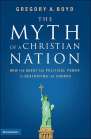
From Boyd’s controversial sermon series came the book, The Myth of a Christian Nation: How the Quest for Political Power is Destroying the Church (Zondervan 2006). This book got Boyd a front-page New York Times profile in July 2006. He was also featured in CNN’s 2007 religious special, “God’s Warriors.” And an interview with Charlie Rose about the book.

I read the book when it was first published. It has not only been one of the most influential books in my life, a milestone in my personal thought, I believe it offers the clarity of vision evangelicalism needs right now—especially this election year.

Here are the contents of the book:

  1. The Kingdom of the Sword
  2. The Kingdom of the Cross
  3. Keeping the Kingdom Holy
  4. From Resident Aliens to Conquering Warlords
  5. Taking America Back for God
  6. The Myth of a Christian Nation
  7. When Chief Sinners Become Moral Guardians
  8. One Nation Under God?
  9. Christians and Violence: Confronting the Tough Questions

Boyd says, “My Thesis, which caused such an uproar, is this: I believe a significant segment of American evangelicalism is guilty of nationalistic and political idolatry.” Boyd believes evangelicals have fused their faith with certain political ideologies. Something Jesus never did.

“For some evangelicals, the kingdom of God is largely about, if not centered on, “taking America back for God,” voting for the Christian candidate, outlawing abortion, outlawing gay marriage, winning the culture war, defending political freedom at home and abroad, keeping the phrase “under God” in the Pledge of Allegiance, fighting for prayer in the public schools and at public events, and fighting to display the Ten Commandments in government buildings” (p.11).

Boyd dismantles the myth that America is a Christian nation, claiming that the myth “blinds us to the way in which our most basic and most cherished cultural assumptions are diametrically opposed to the kingdom way of life taught by Jesus and his disciples.”

He says that this myth “clouds our vision of God’s distinctly beautiful kingdom” and “harms the church’s primary mission” in the world. He believes that the American flag has “smothered the glory of the cross.”

Boyd contrasts the different versions of the “power over” kingdom of the world with that of the “power under” kingdom of God. “Allegiance to the kingdom of God,” Boyd says, “ is confused with allegiance to America, and lives that are called to be spent serving others are spent trying to gain power over others.”

What is the role of the government until Christ comes? How ought the Christian relate to politics and still carry out Christ’s commission? Boyd persuasively addresses these questions and much more—expositing the words of Christ and the teachings of the apostles in fresh relevant ways.

He even deals with common objections: “What about self-defense?” and “What about Christians in the military?” or “Don’t your views lead to passivity?”

Boyd writes, “Jesus’ teachings aren’t a set of pacifistic laws people are to merely obey, however unnatural and immoral they seem. Rather, his teachings are descriptions of what life in God’s domain looks like and prescriptions for how we are to cultivate this alternative form of life.”

While Jesus acknowledged political realities, he refused to invest his hopes and energies in politics as a solution to the world’s problems. In an examination of moments drawn from history and our own day, Boyd shows that whenever the church is co-opted by politics, we are seen as self-righteous jerks rather than God’s loving servants.

This needlessly turns people away from Christ.

Boyd is tirelessly working to cast a new vision, which is really an old vision, for evangelical Christians who have lost sight of the gospel. It’s time to abandon the quest for political power and begin living out the beautiful kingdom that Christ began with his life and ministry.

D.D. Flowers, 2012.

* Read the final post: Vision for 21st Century Evangelicalism, Book Five